By: Stephanie Diana Eubank
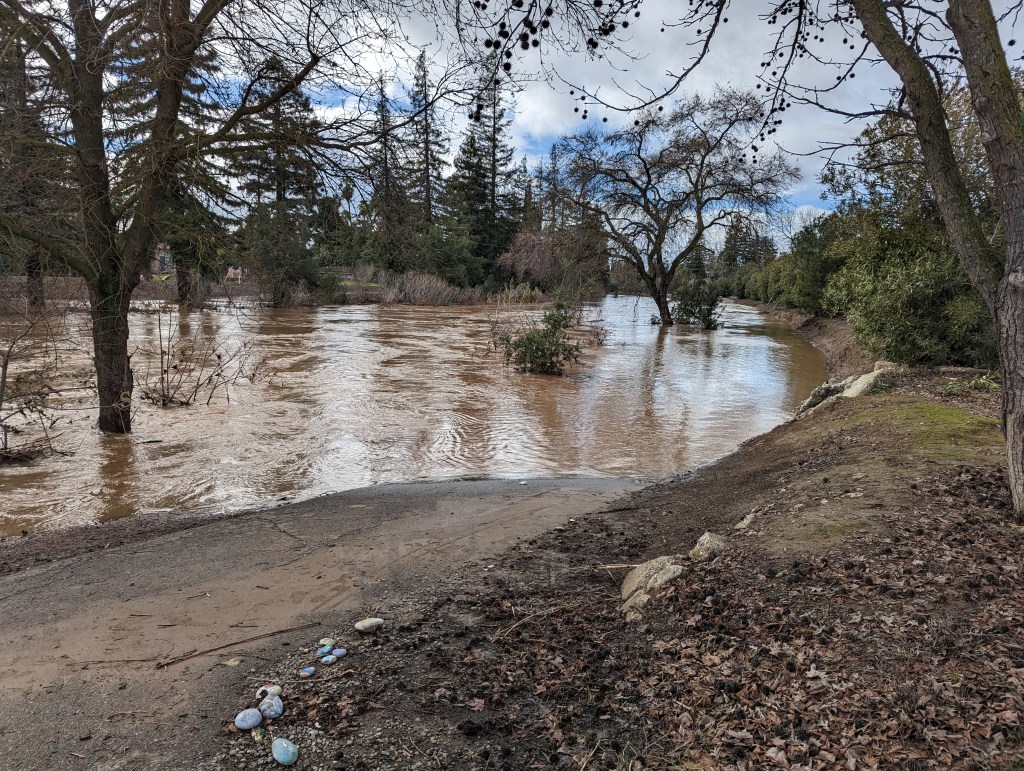
Many have probably seen the national news about the massive flooding, mudslides, high winds, power outages, and the like causing a state of emergency for the entire state of California. If you haven’t, the CNN news article https://www.cnn.com/2023/01/10/weather/california-flooding-atmospheric-river-tuesday/index.html . Other storms throughout the US are a result of the significant storms that hit California first. Such as the article, https://www.usatoday.com/story/news/weather/2023/01/12/southern-storms-deaths-alabama-tornado-damage/11041594002/ . And based on a News report I saw on local news (And I don’t know why in a post-Katrina world, this needs to be said) but per the CDC https://www.cdc.gov/disasters/foodwater/safe-water.html don’t drink flood water. With all the fires, earthquakes, and now flooding seen across the country in just the past week, we really need to think about emergency planning and rethink the concept based on a post-COVID world.
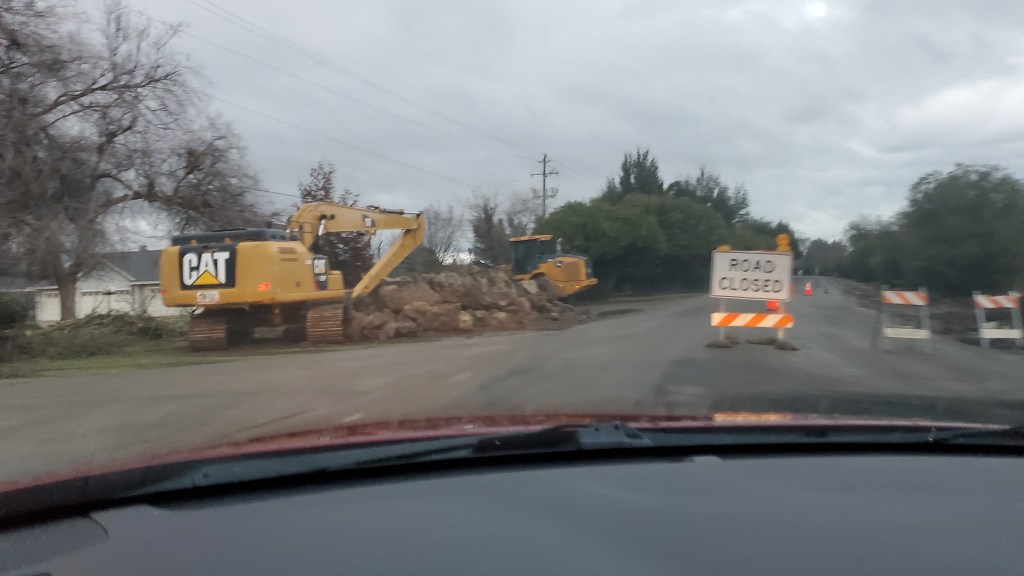
(Photograph taken by David Eubank 1/14/23)
This brings up a profound benefit to remote work and remote leadership that many businesses, big and small are not really capitalizing on. And unfortunately, it is a lesson that major finance organization learned during 9/11. What many might not know is that when 9/11 occurred, the financial institutions had servers in separate states and alternate main offices on the other side of the country, and secondary ones in non-vacation destinations. This resulted in a lack of damage to the financial industry due to 9/11, and instead, additional planning was put in place to continue to thwart issues caused by terrorism or acts of God. Since then, many financial organizations allow for more remote work and hybrid work well before COVID.
The financial industry has been capitalizing on remote work for decades now. Other industries have been growing remote workplaces, such as the distance learning industry at Southern New Hampshire University. So, when COVID hit, and everyone had a dry run of the freedom of remote work, companies saw this as a big shake-up, and many missed the potential for remote work to have some profound long-term business benefits. Specifically within the Emergency Planning arena in relation to business risk planning.
There is an IT Business Operations adage about how data makes and breaks companies. As such, having emergency planning that involves remote workers must be a staple. Having remote workers makes it so that when areas of Major California cities like San Francisco are dealing with significant flooding, fires, earthquakes, etc., care keeping the work going so those in the main office can get to safety. This also protects the data.
It is part of the essential Emergency Operations Planning or EOP to plan for data security during natural disasters. This must include wireless hardware that can be incorporated for escape. Such as laptops, backing up data regularly, and ensuring those who work onsite and remotely are armed with the right gear to protect their proprietary data.
While companies and their leadership work on their issues regarding remote work and miss out on their opportunity to benefit from remote work in emergencies, remote workers can take basic steps. As reported by CNBC (Ioannou, 2021), one in four people, per a survey done by UpWork, work remotely in the US. Further, according to the Forbes article (Segal, 2021); noted another UpWork Survey found that about a third of Americans became freelancers. Many have done this for flexibility and to allow for remote work. The same article also noted a growth in those doing long-term freelance work since 2020.
So, for those freelancers and small business entrepreneurs like myself, here are some items to invest in to help protect data while companies start to come onto the remote bandwagon.
- USB Data Blocker
- External Hard Drive that is portable (backing up data regularly, not just in a cloud, is critical to data safety).
- Waterproof laptop sleeve. (Flooding or just spilling coffee on the road for work or digital nomad life. These are great).
- A durable laptop is also great too. I personally love the tough book. I had one for years, and it survived two toddlers and my undergrad and masters program with all my traveling. I basically typed the keys of that thing.
- A good safety for your home is to ensure it is installed so it is not easily found or removed from your property. But an excellent waterproof safe is fantastic if you are evacuated and can only take a few items and no tech equipment.
To close out this article the advice I have for those dealing with evacuations is to follow your local emergency management planners and stay safe. For Businesses I recommend looking into ways to use remote work to your advantage cause it kind of sells itself and is obviously here to stay. Remember sharing is caring. For more information and content of mine see below. Also, like and subscribe.
- Youtube: https://www.youtube.com/@Wickedbofthewest
- Website: wickedbofthewestremoteconsulting.com
- Facebook: https://www.facebook.com/WickedBoftheWestBusinessConsulting
- Instagram: https://www.instagram.com/wickedbofthewestconsulting/
- Twitter: @SDEubank
- Blog: drstephaniebeardbaremoteresearch.org
- LinkedIn: https://www.linkedin.com/in/stephanie-diana-eubank-590b3757/
Work Cited
Salahieh, N., Hanna, J., Sutton, J., & Maxouris, C. (2023, January 11). Thousands of Californians under evacuation orders as flood threats continue and death toll of recent storms climbs to 17. CNN. Retrieved January 13, 2023, from https://www.cnn.com/2023/01/10/weather/california-flooding-atmospheric-river-tuesday/index.html
Santucci, J. (2023, January 13). 7 dead in Alabama, Georgia after tornadoes, severe storms ravage southeast: Updates. USA Today. Retrieved January 14, 2023, from https://www.usatoday.com/story/news/weather/2023/01/12/southern-storms-deaths-alabama-tornado-damage/11041594002/
Ioannou, L. (2021, February 6). 1 in 4 Americans will be working remotely in 2021, Upwork Survey reveals. CNBC. Retrieved January 14, 2023, from https://www.cnbc.com/2020/12/15/one-in-four-americans-will-be-working-remotely-in-2021-survey.html
Segal, E. (2021, December 10). U.S. freelance workforce continues to grow, with no signs of easing: New report. Forbes. Retrieved January 14, 2023, from https://www.forbes.com/sites/edwardsegal/2021/12/08/us-freelance-workforce-continues-to-grow-with-no-signs-of-easing-new-report/?sh=5c3d7c2b4f91
 Dr. Stephanie Diana Eubank DBA Remote Team Research (AKA Dr. Bear)