Strategies for Career Resilience in Modern Workplaces

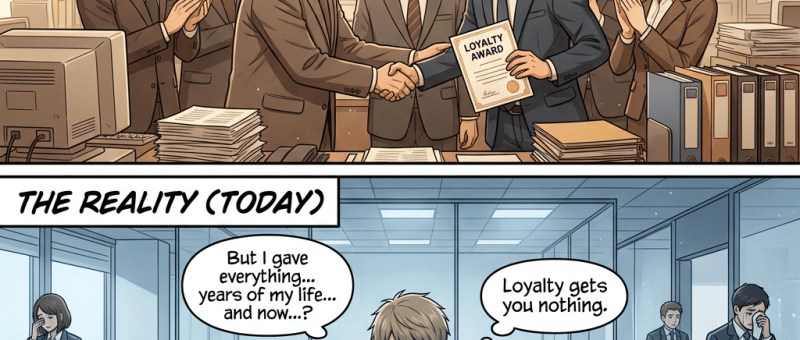
Split comic: “THE PROMISE (PAST),” “Your dedication is recognized!”, “We protect our family!”, “Hard work leads to stability!”, “LOYALTY AWARD”; “THE REALITY (TODAY),” “But I gave everything... years of my life... and now...?”, “Loyalty gets you nothing.”, “ALERT: Company Restructuring,” and “LAYOFF NOTICE.”

By: Dr. Stephanie Diana Eubank DBA

For decades, employees were told that loyalty, reliability, and hard work would be rewarded with job security. Many professionals built entire careers around the belief that if they consistently showed up, volunteered for extra work, and sacrificed personal time for the organization, they would be protected during difficult times.

Unfortunately, today’s workplace tells a different story.

Across industries, layoffs frequently impact employees regardless of tenure, loyalty, or willingness to go above and beyond. While reliability remains a valuable trait, it is not a guarantee of job protection.

The Myth of Loyalty as Job Protection

Many employees overestimate the protective value of loyalty. During restructures, organizations typically evaluate business needs, budgets, strategic priorities, and future workforce requirements rather than rewarding past sacrifices. Loyalty may be appreciated, but it is rarely a formal criterion during layoffs.

Why Doing Everything Doesn’t Always Earn Respect

Many employees become the go-to person who handles every request, fixes every problem, and absorbs responsibilities that should be shared across the team.

While this can create short-term visibility, it does not automatically translate into respect. Coworkers may begin to see the employee as a resource instead of a strategic contributor, while leaders may rely on the employee’s willingness to overextend rather than viewing them as leadership material.

Respect is more often earned through competence, credibility, influence, communication skills, and strategic thinking.

A Better Strategy: Build Skills and Career Resilience

1. Develop specialized skills and certifications.
2. Build and maintain a professional network.
3. Keep your resume and portfolio updated.
4. Strengthen leadership and communication skills.
5. Focus on transferable skills such as problem-solving and adaptability.

How Employees Can Earn Genuine Respect

• Deliver consistent, high-quality work.
• Demonstrate accountability.
• Build expertise.
• Collaborate effectively.
• Communicate professionally.
• Innovate and solve problems.
• Maintain healthy boundaries.
• Mentor and support others.

How Organizations Can Break This Culture

Organizations should reward outcomes instead of overwork, create transparent career development pathways, invest in employee development, recognize strategic contributions, and encourage sustainable performance.

How Wicked B of the West Business Consulting Can Help

Many organizations unintentionally create cultures that reward burnout and unhealthy loyalty patterns. Wicked B of the West Business Consulting helps organizations prepare for the future of work through leadership development, remote and hybrid work strategy, organizational design, process improvement, workplace culture assessments, employee retention initiatives, accessibility consulting, and change management support.

By building sustainable systems rather than relying on employee overextension, organizations can retain top talent and improve performance.

Book Spotlight

Remote Work Is Here to Stay: Rethinking Operations Management in the Modern Work Era is now available for purchase on Amazon. The book explores practical strategies for navigating remote and hybrid work while building sustainable, high-performing organizations.

Conclusion

Loyalty is admirable, but it should not be mistaken for a job security strategy. Employees who invest in skills, relationships, adaptability, and professional growth are better positioned to succeed in an evolving workplace.

References (APA 7th Edition)

Augustine, A. (2026). Loyalty tax: Why loyal employees are being hit hardest by layoffs.
Castrillon, C. (2026). 7 ways workplace loyalty can backfire on long-term employees.
Frone, M. R., & Blais, A.-R. (2020). Organizational downsizing, work conditions, and employee outcomes.
Sucher, S. J. (2023). The hidden costs of layoffs.
Careerminds. (2026). New data shows how companies manage layoffs and employees experience them.

Book Information   
 Remote Work Is Here to Stay: Rethinking Operations Management in the Modern Work Era   
 Available on Amazon: https://www.amazon.com/dp/B0H5BPJCHJ   

If you enjoy this content like and subscribe.  Additionally, if you are interested in consulting services, please feel free to reach out to me through my social media channels.  Remember remote is here to stay.    

YouTube: https://www.youtube.com/@Wickedbofthewest    

Website: wickedbofthewestremoteconsulting.com    

Facebook: https://www.facebook.com/WickedBoftheWestBusinessConsulting    

Instagram: https://www.instagram.com/wickedbofthewestconsulting/    

Blog: drstephaniebeardbaremoteresearch.org    

LinkedIn: https://www.linkedin.com/in/stephanie-diana-eubank-dba/    

TikTok: https://www.tiktok.com/@ DrStephanieDEubank    

New Website: wickedbofthewestconsulting.com    

Email: stephaniedeubank@gmail.com    

TikTok: @ DrStephanieDEubank  

New Website: wickedbofthewestconsulting.com   

Remote Work: The Pet to Threat Bias Exposed

PET TO THREAT; STAGE 1: THE PROTÉGÉ - SUPPORTED & VALUED; STAGE 2: THE THREAT - COMPETENCE & INFLUENCE GROW

By: Dr. Stephanie Diana Eubank DBA

The “pet to threat” phenomenon describes a workplace dynamic in which a highly valued employee is initially supported, mentored, and celebrated, only to become viewed as a threat once their competence, influence, visibility, or independence grows. The concept has been associated with the work of Dr. Kecia Thomas and has been discussed extensively in relation to workplace bias, favoritism, and changing power dynamics.

Remote and hybrid environments can unintentionally amplify favoritism, visibility disparities, and proximity bias. Employees who are physically present may receive more recognition, developmental opportunities, and informal access to decision makers than equally qualified remote workers. When combined with the pet-to-threat dynamic, high-performing employees can find themselves excluded from opportunities, meetings, and sponsorship relationships.

When employees believe advancement depends more on politics, favoritism, or maintaining a leader’s comfort than on performance, trust declines. Employees may engage less, withhold ideas, avoid innovation, and seek opportunities elsewhere. Team cohesion suffers because employees begin competing for visibility instead of collaborating. In remote and hybrid settings, this can occur quietly and remain undetected by leadership for extended periods.

Organizations that fail to address pet-to-threat behaviors risk losing their highest-performing employees. Research on remote work suggests that employee well-being, connection, fairness, and leadership quality are significant drivers of retention. When employees perceive unfair treatment, exclusion, or favoritism, turnover intentions increase regardless of work location.

How Companies Can Address the Problem

  • Use objective performance metrics and promotion criteria.
  • Create transparent career development pathways.
  • Train managers to recognize favoritism and proximity bias.

The pet-to-threat phenomenon is not simply an individual leadership problem. It is an organizational risk that can undermine trust, increase turnover, and damage workplace culture. In remote and hybrid workplaces, leaders must intentionally design fair systems that reduce favoritism, limit proximity bias, and ensure all employees have equal opportunities to contribute and succeed.

References (APA 7th Edition)

Donahue, K., Gilbert, T., Halpert, M., & Robertson Migas, P. (2021, June 29). The infuriating journey from pet to threat: How bias undermines Black women at work. Forbes. https://www.forbes.com/sites/forbeseq/2021/06/29/the-infuriating-journey-from-pet-to-threat-how-bias-undermines-black-women-at-work/

Dutot, V., Lichy, J., Doargajudhur, M., & Orhan, M. A. (2026). Hybrid work and relational dynamics: Leadership, favoritism and employee outcomes. Journal of Organizational Effectiveness: People and Performance. https://doi.org/10.1108/JOEPP-01-2026-0062

Lasisi, T. T., Constanta, E., & Eluwole, K. K. (2022). Workplace favoritism and workforce sustainability: An analysis of employees’ well-being. Sustainability, 14(22), 14991. https://doi.org/10.3390/su142214991

Lezcano, A. M., Zajac, S. A., Johnson, S. K., & Holladay, C. L. (2026). Rethinking return-to-office: The positive impact of remote work on well-being, connection, and employee retention. Frontiers in Psychology, 17. https://doi.org/10.3389/fpsyg.2026.1848857

Lezcano, A. M., Zajac, S. A., Johnson, S. K., & Holladay, C. L. (2026). Rethinking return-to-office: The positive impact of remote work on well-being, connection, and employee retention. Frontiers in Psychology, 17. https://doi.org/10.3389/fpsyg.2026.1848857

Conclusion

The pet-to-threat phenomenon is not simply an individual leadership problem. It is an organizational risk that can undermine trust, increase turnover, and damage workplace culture. In remote and hybrid workplaces, leaders must intentionally design fair systems that reduce favoritism, limit proximity bias, and ensure all employees have equal opportunities to contribute and succeed.

Book Information   
 Remote Work Is Here to Stay: Rethinking Operations Management in the Modern Work Era   
 Available on Amazon: https://www.amazon.com/dp/B0H5BPJCHJ   

If you enjoy this content like and subscribe.  Additionally, if you are interested in consulting services, please feel free to reach out to me through my social media channels.  Remember remote is here to stay.    

YouTube: https://www.youtube.com/@Wickedbofthewest    

Website: wickedbofthewestremoteconsulting.com    

Facebook: https://www.facebook.com/WickedBoftheWestBusinessConsulting    

Instagram: https://www.instagram.com/wickedbofthewestconsulting/    

Blog: drstephaniebeardbaremoteresearch.org    

LinkedIn: https://www.linkedin.com/in/stephanie-diana-eubank-dba/    

TikTok: https://www.tiktok.com/@ DrStephanieDEubank    

New Website: wickedbofthewestconsulting.com    

Email: stephaniedeubank@gmail.com    

TikTok: @ DrStephanieDEubank  

New Website: wickedbofthewestconsulting.com   
Toxic Leadership: The Hidden Costs to Organizations

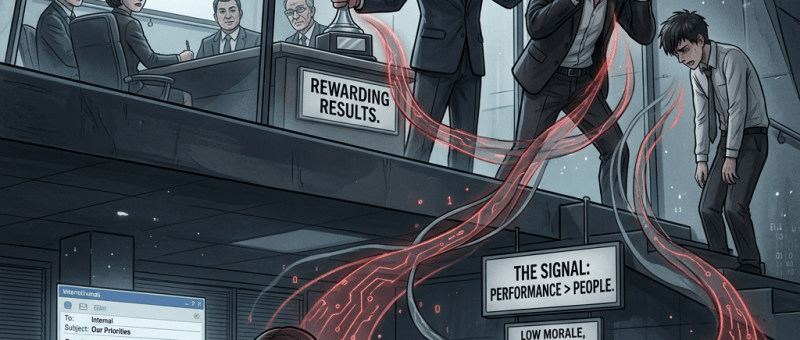
Office illustration contrasting profit rewards with employee abuse, low morale, and falling retention

By: Dr. Stephanie Diana Eubank DBA

Every organization sends signals through the behaviors it rewards, tolerates, and excuses. When companies repeatedly protect abusive leaders because they generate revenue, deliver results, or maintain political influence, they send a powerful message to employees: performance matters more than people. The result is not only damage to trust and engagement, but also long-term costs in productivity, retention, reputation, and legal exposure.

Employees closely observe how leadership responds to complaints about bullying, intimidation, favoritism, retaliation, or other abusive conduct. When credible concerns are ignored, minimized, or explained away, workers often conclude that psychological safety is absent and that reporting problems may harm their careers. Research has linked tyrannical and abusive leadership with workplace bullying, turnover intentions, emotional exhaustion, and job insecurity.

Employees who feel devalued are less likely to demonstrate discretionary effort, innovation, collaboration, and organizational commitment. Toxic leadership environments frequently create distraction, stress, and disengagement. Instead of focusing energy on organizational goals, employees devote time and emotional resources to self-protection, conflict avoidance, or finding a new job. Over time, high-performing employees often leave, while remaining employees may experience reduced engagement and increased cynicism.

Organizations that tolerate abusive leaders often experience elevated turnover. Recruitment, onboarding, training, and lost institutional knowledge create significant replacement costs. Beyond direct expenses, constant turnover disrupts team cohesion, customer relationships, and operational continuity. Research consistently shows connections between abusive supervision, workplace bullying, and turnover intentions.

Employers that fail to address abusive behavior may also increase exposure to complaints, investigations, and litigation when misconduct crosses into unlawful harassment, discrimination, retaliation, or hostile work environment claims. The U.S. Equal Employment Opportunity Commission (EEOC) notes that unlawful harassment can create intimidating, hostile, or abusive work environments and encourages employers to establish effective reporting systems, training, and corrective actions.

How Companies Can Do Better

  • Hold leaders accountable for behavior, not just business results.
  • Include leadership behavior metrics in performance evaluations.
  • Create confidential and trusted reporting channels.
  • Investigate complaints promptly, objectively, and consistently.
  • Protect employees from retaliation.
  • Provide leadership coaching and development focused on emotional intelligence.
  • Conduct regular climate and engagement surveys.
  • Tie promotions and bonuses to demonstrated people leadership skills.
  • Model respect, inclusion, and transparency from the executive level.
  • Act decisively when patterns of abusive behavior are identified.

The true culture of an organization is revealed by what it tolerates. When companies excuse abusive leaders, they communicate that employee well-being is secondary to protecting power. Organizations that prioritize accountability, respect, and psychological safety are more likely to retain talent, strengthen morale, increase productivity, and reduce legal risk.

Author Book Spotlight

Stephanie Eubank is the author of a book currently available on Amazon. This article can include a customized promotional blurb, book title, and Amazon link. Example: “If you enjoy practical insights on leadership, workplace culture, neurodiversity, and organizational effectiveness, be sure to check out Stephanie Eubank’s latest book, now available on Amazon.”

References (APA 7th Edition)

Trepanier, S.-G., Peterson, C., Fernet, C., & Austin, S. (2024). How tyrannical leadership relates to workplace bullying and turnover intention over time: The role of coworker support. Scandinavian Journal of Psychology, 65, 469-478. https://doi.org/10.1111/sjop.12982

Li, M., Ahmed, A., Syed, O. R., Khalid, N., & Munoz, J. E., Jr. (2022). Impact of abusive leader behavior on employee job insecurity: A mediating roles of emotional exhaustion and abusive peer behavior. Frontiers in Psychology, 13, 947258. https://doi.org/10.3389/fpsyg.2022.947258

U.S. Equal Employment Opportunity Commission. (n.d.). Harassment. https://www.eeoc.gov/harassment

Book Information   
 Remote Work Is Here to Stay: Rethinking Operations Management in the Modern Work Era   
 Available on Amazon: https://www.amazon.com/dp/B0H5BPJCHJ   

If you enjoy this content like and subscribe.  Additionally, if you are interested in consulting services, please feel free to reach out to me through my social media channels.  Remember remote is here to stay.    

YouTube: https://www.youtube.com/@Wickedbofthewest    

Website: wickedbofthewestremoteconsulting.com    

Facebook: https://www.facebook.com/WickedBoftheWestBusinessConsulting    

Instagram: https://www.instagram.com/wickedbofthewestconsulting/    

Blog: drstephaniebeardbaremoteresearch.org    

LinkedIn: https://www.linkedin.com/in/stephanie-diana-eubank-dba/    

TikTok: https://www.tiktok.com/@ DrStephanieDEubank    

New Website: wickedbofthewestconsulting.com    

Email: stephaniedeubank@gmail.com    

TikTok: @ DrStephanieDEubank  

New Website: wickedbofthewestconsulting.com   
Building High-Performing Teams in Remote Work

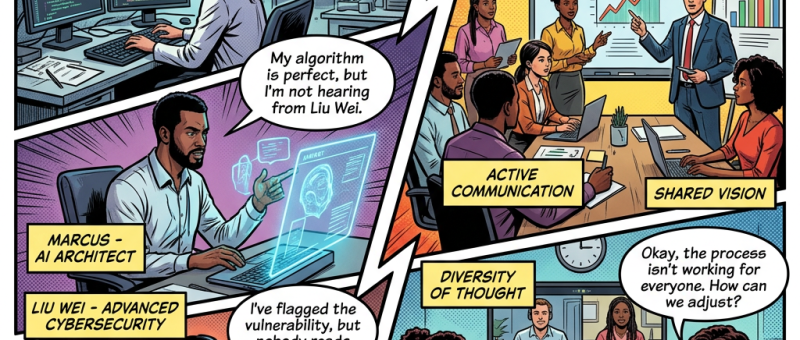
Comic comparing common hiring with intentional team design: quantum physicist, AI architect, and cybersecurity specialist work separately while a diverse team practices clear roles, active communication, shared vision, and diversity of thought; bottom text says organizations must balance deep technical skills with critical team processes and leadership, with caption "A Key Insight from Dissertation Research."

By Dr. Stephanie Diana Eubank, DBA 

One of the most significant findings from my dissertation research was that leaders in both traditional in-person environments and remote work environments frequently fail to utilize intentional team design strategies. Instead, organizations often focus heavily on hiring subject matter experts (SMEs) with deep technical expertise while paying far less attention to team dynamics, communication styles, collaboration capabilities, and leadership structures. 

While technical expertise is important, my research aligned with a growing body of literature suggesting that expertise alone does not create high-performing teams. In many cases, organizations unintentionally create conditions that mirror what Meredith Belbin described as the Apollo Effect, sometimes called Apollo Syndrome. Researchers have found that teams composed primarily of highly capable experts can underperform because individuals become overly focused on their own areas of expertise, priorities, or perspectives rather than collective team objectives. 

The Apollo Effect in Modern Organizations 

Belbin’s research demonstrated that teams filled with highly intelligent and accomplished individuals often struggled with collaboration, shared decision-making, and consensus-building. These teams frequently experienced excessive debate, siloed thinking, competing priorities, and reduced team cohesion. Rather than leveraging the collective strength of the group, members operated independently and unintentionally undermined overall team effectiveness. In some cases, so-called ‘dream teams’ performed worse than teams with fewer technical superstars but stronger collaboration and leadership structures. 

What makes this particularly important today is that the Apollo Effect is not limited to in-person teams. Similar challenges can emerge in remote and hybrid work environments when leaders fail to establish communication systems, accountability structures, knowledge-sharing practices, and role clarity. 

Remote and In-Person Teams Share the Same Design Problem 

One misconception is that remote work creates team dysfunction. My research suggests a different conclusion. The problem is often not the work location itself. The problem is poor team design. 

Organizations frequently invest substantial resources identifying technical experts while neglecting the human systems required for collaboration. When selection decisions prioritize expertise above communication, documentation, adaptability, and teamwork, organizations create conditions where the Apollo Effect can thrive regardless of whether employees work in an office, remotely, or through a hybrid arrangement. 

The Entry-Level Experience Paradox 

Another concerning trend is the growing expectation that applicants possess extensive experience for positions traditionally considered entry level. Organizations increasingly seek candidates with years of experience, advanced credentials, and extensive technical knowledge while offering compensation and advancement opportunities associated with early-career positions. 

The result is an organizational imbalance. Teams become overpopulated with specialists competing for limited advancement opportunities. Highly qualified employees enter roles beneath their experience levels, while organizations simultaneously struggle with retention, engagement, and leadership development. This practice can contribute to weakened organizational culture and reduced team sustainability because employees often feel underutilized, disconnected, or uncertain about long-term growth opportunities. 

Building Sustainable Teams 

Organizations seeking long-term success should expand their hiring and workforce development strategies beyond technical expertise. Effective team design includes role diversity, communication competencies, collaborative problem-solving, psychological safety, documentation practices, accountability systems, and leadership development. 

The most successful teams combine subject matter expertise with relationship-building capabilities. They balance technical knowledge with coordination, knowledge sharing, and a commitment to collective outcomes. 

A Chapter Dedicated to the Apollo Effect 

These themes are explored in greater detail in my book, Remote Work Is Here to Stay: Rethinking Operations Management in the Modern Work Era, now available on Amazon. One chapter specifically examines the Apollo Effect, discusses how it impacts both remote and traditional workplaces, and provides practical leadership strategies for designing resilient, sustainable, and high-performing teams. 

As organizations continue adapting to the future of work, leaders must move beyond the assumption that a collection of experts automatically becomes a high-performing team. Sustainable success requires intentional team design, leadership development, and organizational systems that encourage collaboration rather than competition. 

References (APA 7th ed.) 

Belbin. (n.d.). Belbin Apollo teams. https://www.belbin.com/resources/articles-directory/belbin-apollo-teams 

Gershkov, A., & Schweinzer, P. (2021). Dream teams and the Apollo effect. Journal of Mechanism and Institution Design, 6(1), 113-148. 

Gallup. (2025). A strategic guide for managing hybrid and remote teams. https://www.gallup.com/workplace/316313/understanding-and-managing-remote-workers.aspx 
 

Book Information   
 Remote Work Is Here to Stay: Rethinking Operations Management in the Modern Work Era   
 Available on Amazon: https://www.amazon.com/dp/B0H5BPJCHJ   

If you enjoy this content like and subscribe.  Additionally, if you are interested in consulting services, please feel free to reach out to me through my social media channels.  Remember remote is here to stay.    

YouTube: https://www.youtube.com/@Wickedbofthewest    

Website: wickedbofthewestremoteconsulting.com    

Facebook: https://www.facebook.com/WickedBoftheWestBusinessConsulting    

Instagram: https://www.instagram.com/wickedbofthewestconsulting/    

Blog: drstephaniebeardbaremoteresearch.org    

LinkedIn: https://www.linkedin.com/in/stephanie-diana-eubank-dba/    

TikTok: https://www.tiktok.com/@ DrStephanieDEubank    

New Website: wickedbofthewestconsulting.com    

Email: stephaniedeubank@gmail.com    

TikTok: @ DrStephanieDEubank  

New Website: wickedbofthewestconsulting.com   
Also, be sure to check out my first textbook on Operations Management. The book is titled “Remote Work Is Here to Stay: Rethinking Operations Management in the Modern Work Era.” You can purchase the textbook on Amazon at the link below.    

Why Expertise Alone Fails in Remote Collaboration

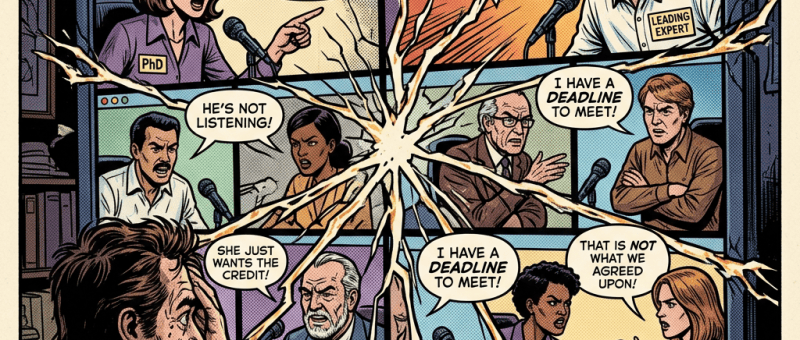
Comic titled "THE APOLLO EFFECT" showing arguing experts in video-call windows; text explains accomplished individuals failed by defending ideas and competing for influence, with speech bubbles claiming superiority, deadlines, credit, and leadership.

By Dr. Stephanie Diana Eubank, DBA 

Organizations often make the same mistake when building remote teams. They assemble a dream team of highly qualified subject matter experts, assume expertise will automatically lead to success, and then wonder why projects become delayed, fragmented, or plagued by miscommunication. 

The Apollo Effect, sometimes called Apollo Syndrome, found that teams composed entirely of highly intelligent and accomplished individuals often underperformed because members focused on defending their own ideas, pursuing individual objectives, and competing for influence instead of collaborating around shared goals. 

The Hidden Risk of Expertise 

Subject matter expertise is valuable. Organizations need specialists, analysts, engineers, project managers, and technical professionals. However, expertise alone does not guarantee effective teamwork. 

Apollo teams frequently struggle because members work within professional silos. Each individual may be highly capable, but without strong communication and coordination practices, the collective intelligence of the team becomes diluted. Decisions become slower, priorities become misaligned, and accountability becomes unclear. 

Why Remote Teams Need Even More Communication 

In a traditional office environment, many communication gaps are filled through informal interactions. Employees overhear conversations, stop by a coworker’s desk, or clarify questions in hallway discussions. 

Remote work changes that dynamic. 

Successful remote teams require intentional communication practices. Team members must document decisions, send follow-up emails, maintain project records, participate in meetings, and communicate progress regularly. Video calls, instant messaging, shared documents, and written procedures become essential tools for ensuring everyone remains aligned. 

Contrary to popular belief, remote work often requires more communication rather than less. Leaders cannot assume alignment simply because a meeting occurred. Teams must create communication systems that reinforce understanding and accountability. 

Documentation Is a Leadership Tool 

One of the greatest advantages of remote work is the emphasis on documentation. Clear written communication creates institutional knowledge, reduces misunderstandings, supports onboarding, and increases transparency. 

When communication is documented, organizations become less dependent on individual employees holding critical knowledge. Processes can be repeated, knowledge can be transferred, and teams can continue operating effectively even during turnover or growth. 

The Retention and Productivity Advantage 

While increased communication may initially seem like additional work, it produces significant long-term benefits. Research consistently shows that well-managed hybrid and remote teams can experience strong engagement, improved work-life balance, and stable productivity when expectations and communication structures are clear. 

Employees who feel informed, connected, and trusted are more likely to remain with their organizations. Clear communication also reduces rework, confusion, duplicated effort, and project delays. 

Moving Beyond the Apollo Effect 

The solution is not to avoid hiring experts. The solution is to balance expertise with collaboration. 

Organizations should evaluate communication skills, emotional intelligence, documentation habits, teamwork capabilities, and leadership potential alongside technical expertise. Leaders should establish communication norms, clarify team goals, create shared accountability mechanisms, and ensure knowledge sharing occurs regularly. 

The most successful remote teams are not simply collections of brilliant individuals. They are systems of connected professionals who understand how their work contributes to a larger collective objective. 

Conclusion 

Remote work has amplified the importance of communication. As organizations continue building distributed teams, leaders must avoid creating Apollo teams that prioritize individual brilliance over collective success. 

The future belongs to organizations that intentionally teach communication, collaboration, documentation, and leadership alongside technical expertise. When these elements work together, remote teams become more resilient, productive, and capable of delivering sustainable results. 

References 

Belbin. (n.d.). Belbin Apollo Teams. https://www.belbin.com/resources/articles-directory/belbin-apollo-teams 

Gallup. (2025). A Strategic Guide for Managing Hybrid and Remote Teams. https://www.gallup.com/workplace/316313/understanding-and-managing-remote-workers.aspx 

Gallup. (n.d.). Hybrid Workplace Strategies for Leaders and Managers. https://hr.uoregon.edu/sites/default/files/hybrid_workplace_strategies_gallup.pdf 

Gershkov, A., & Schweinzer, P. (2021). Dream Teams and the Apollo Effect. Journal of Mechanism and Institution Design, 6(1), 113-148. 
 

Book Information   
 Remote Work Is Here to Stay: Rethinking Operations Management in the Modern Work Era   
 Available on Amazon: https://www.amazon.com/dp/B0H5BPJCHJ   

If you enjoy this content like and subscribe.  Additionally, if you are interested in consulting services, please feel free to reach out to me through my social media channels.  Remember remote is here to stay.    

YouTube: https://www.youtube.com/@Wickedbofthewest    

Website: wickedbofthewestremoteconsulting.com    

Facebook: https://www.facebook.com/WickedBoftheWestBusinessConsulting    

Instagram: https://www.instagram.com/wickedbofthewestconsulting/    

Blog: drstephaniebeardbaremoteresearch.org    

LinkedIn: https://www.linkedin.com/in/stephanie-diana-eubank-dba/    

TikTok: https://www.tiktok.com/@ DrStephanieDEubank    

New Website: wickedbofthewestconsulting.com    

Email: stephaniedeubank@gmail.com    

TikTok: @ DrStephanieDEubank  

New Website: wickedbofthewestconsulting.com   
Also, be sure to check out my first textbook on Operations Management. The book is titled “Remote Work Is Here to Stay: Rethinking Operations Management in the Modern Work Era.” You can purchase the textbook on Amazon at the link below.    

The Future of Work: Flexibility and Leadership

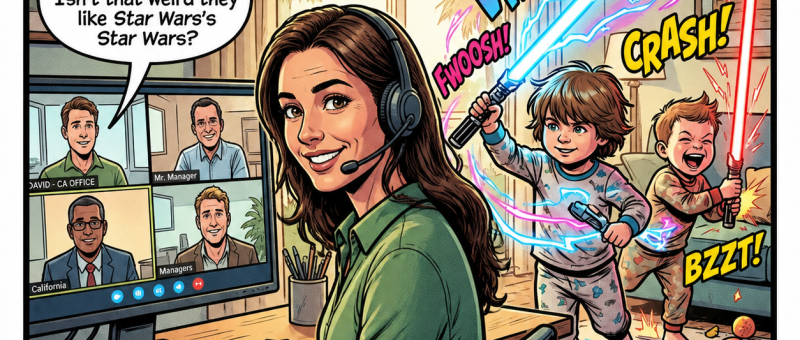
Woman working at computer during remote meeting

By Dr. Stephanie Diana Eubank, DBA

A few years ago, I was on a Zoom meeting with management when my two young sons, who were toddlers at the time, came running through the background playing with their light-up toy lightsabers. They were fully committed to their Star Wars adventure, complete with the authentic sound effects.

One of the managers looked at the screen and said, “You’re raising some nerds there. Isn’t that weird they like Star Wars?”

Without missing a beat, I replied, “Nope. Here in California, we grow our nerds fresh, free-range, all organic, high-quality nerds ready to take over the world.”

That moment has stayed with me because it perfectly captured the value of remote work and the ability to be present for both family and career.

The Gift of Being Present

As a working mother, I can honestly say I would not be half the mother I am today without remote work. Remote and hybrid work arrangements gave me the opportunity to build a meaningful career while also being present for my children. Remote work did not make parenting easy, but it gave me flexibility and allowed me to participate in the moments that matter most.

Gratitude for Leaders Who Saw the Future

Two women in the financial industry who have been mentors to me for more than a decade were the individuals who first gave me opportunities to work remotely. They trusted me, evaluated me on results, and understood that leadership is about outcomes rather than physical presence. I remain incredibly grateful for their mentorship and support.

Why Are Companies Still Fighting Remote Work?

Today, many organizations continue pushing return-to-office mandates. While there are legitimate business considerations, many of these decisions stem from a different issue: leaders were never trained to lead remote and hybrid teams.

Managing distributed teams requires different communication strategies, trust-building approaches, performance management methods, and leadership competencies. The challenge is not remote work. The challenge is that many organizations are using leadership models designed for a different era.

The Future of Work Requires New Leadership

Organizations that want to attract and retain talented employees, especially working parents, must embrace flexibility and modern leadership development. The future of work requires leaders who can effectively engage, develop, and support employees regardless of location.

Helping Organizations Prepare for the Future

Through Wicked B of the West Business Consulting, I help organizations prepare their leaders and workforce for the realities of the future of work. Training and consulting services include remote leadership development, hybrid team management, workforce development, employee engagement, change management, neurodiversity inclusion, and organizational design.

Organizations interested in leadership development and future-of-work training can contact me at stephaniedeubank@gmail.com.

Book Spotlight

I also explore these topics in my book, Remote Work Is Here to Stay: Rethinking Operations Management in the Modern Work Era, available on Amazon. The book includes an entire chapter dedicated to remote and hybrid leadership theory, practical leadership frameworks, communication strategies, and best practices for managing distributed teams.

Final Thoughts

My boys are older now, but I still stand by what I said years ago. We grow our nerds fresh, free-range, and organic. More importantly, remote work gave me the opportunity to watch them grow. Flexibility is not simply an employee benefit. For many families, it is the difference between making a living and being present for life’s most meaningful moments.

References (APA 7)
Gallup. A Strategic Guide for Managing Hybrid and Remote Teams.
Pew Research Center. Does Working From Home Make Work-Family Balance Easier? (2026).
Rencelj, M. (2024). How Does Remote Work Affect the Work-Life Balance and Well-Being of Mothers?
Wolter, S., & Kroll, C. (2025). Life and Work-Life Balance Satisfaction Among Parents Working From Home.

Book Information 
 Remote Work Is Here to Stay: Rethinking Operations Management in the Modern Work Era 
 Available on Amazon: https://www.amazon.com/dp/B0H5BPJCHJ 

If you enjoy this content like and subscribe.  Additionally, if you are interested in consulting services, please feel free to reach out to me through my social media channels.  Remember remote is here to stay.  

YouTube: https://www.youtube.com/@Wickedbofthewest  

Website: wickedbofthewestremoteconsulting.com  

Facebook: https://www.facebook.com/WickedBoftheWestBusinessConsulting  

Instagram: https://www.instagram.com/wickedbofthewestconsulting/  

Blog: drstephaniebeardbaremoteresearch.org  

LinkedIn: https://www.linkedin.com/in/stephanie-diana-eubank-dba/  

TikTok: https://www.tiktok.com/@ DrStephanieDEubank  

New Website: wickedbofthewestconsulting.com  

Email: stephaniedeubank@gmail.com  

TikTok: @ DrStephanieDEubank

New Website: wickedbofthewestconsulting.com 
Also, be sure to check out my first textbook on Operations Management. The book is titled “Remote Work Is Here to Stay: Rethinking Operations Management in the Modern Work Era.” You can purchase the textbook on Amazon at the link below.  

Understanding Long-Term Unemployment in 2026

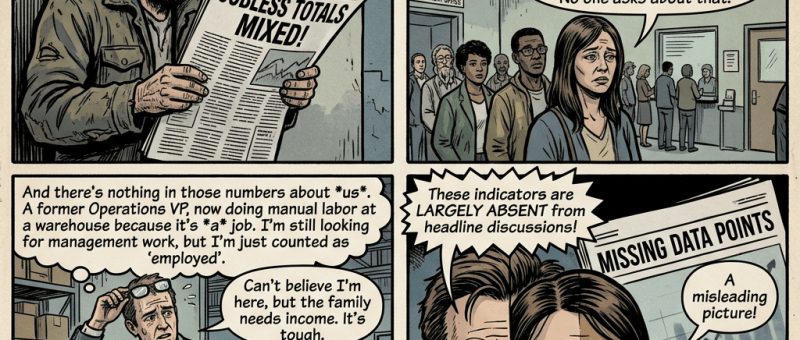
Comic titled “Washington, D.C., August 2026: The U.S. Employment Situation,” featuring mixed jobless totals, missing data points, and workers questioning a 4.1% unemployment rate.

By: Dr. Stephanie Diana Eubank DBA


The July 2026 U.S. Employment Situation report showed nonfarm payroll employment declining by 23,000 jobs while unemployment remained at 4.1%. However, two critically important workforce indicators remain largely absent from headline discussions. First, the report identifies 1.8 million long-term unemployed individuals who have been jobless for 27 weeks or longer, but it does not quantify how many have exhausted unemployment benefits or stopped receiving support but are still looking for employment. Second, national reporting does not adequately capture the growing number of highly skilled professionals, managers, executives, and specialists who are accepting lower-level positions simply to maintain income while continuing their search for roles aligned with their qualifications. These gaps create a misleading picture of labor market health and represent a missed opportunity for workforce development, leadership cultivation, and organizational transformation.


According to the Bureau of Labor Statistics (2026), approximately 1.8 million Americans were unemployed for 27 weeks or longer in July 2026, representing 25.5% of all unemployed workers. While the report tracks long-term unemployment, it does not report how many individuals have exhausted unemployment insurance eligibility. As a result, policymakers and employers may underestimate the financial and professional hardships facing experienced workers who have remained disconnected from meaningful employment.

Similarly, the official report does not measure the number of executives, project managers, engineers, analysts, educators, technology professionals, and other specialists who have accepted entry-level or lower-paying positions. This phenomenon, often referred to as underemployment, can conceal significant labor market stress. Workers may disappear from unemployment statistics while still being substantially underutilized.


Organizations frequently report talent shortages while simultaneously overlooking experienced professionals already present in the labor market. The decline in labor force participation to 61.4% suggests that many workers may be disengaging from the job market entirely. Economists have noted that declining long-term unemployment figures may actually reflect discouraged workers leaving the labor force rather than successfully obtaining suitable employment.

Rather than focusing exclusively on external recruitment, organizations have an opportunity to leverage workforce development strategies that maximize existing talent. Companies can expand internal mobility programs, create structured leadership pipelines, and redesign roles to better align employee capabilities with business needs.


One of the most overlooked solutions is the application of Six Sigma principles, process improvement initiatives, and cross-functional training programs. Many organizations maintain workforce silos that limit employee growth and organizational flexibility.

Through strategic cross-training, employees can develop competencies across departments while organizations build resilience against staffing shortages and economic uncertainty. Existing employees can be reshuffled into roles that better utilize their strengths while simultaneously creating advancement pathways for emerging leaders.

Organizations that invest in leadership development, Lean methodologies, process design, and workforce analytics gain a significant competitive advantage. Rather than viewing workforce challenges as a hiring problem alone, they can leverage existing talent, improve retention, and reduce the costs associated with external recruitment.


The July 2026 jobs report should be viewed as a call to action. Beneath the headline numbers is a substantial pool of experienced workers with leadership potential, specialized expertise, and operational knowledge. Many are seeking opportunities to contribute at higher levels than the positions they currently occupy.

Forward-thinking organizations can capitalize on this environment by implementing intentional workforce development programs. Developing leadership capabilities, succession planning initiatives, and career progression frameworks can transform underutilized talent into future organizational leaders.


As the founder of Wicked B of the West Business Consulting, I offer professional development courses designed to help organizations understand workforce trends, identify hidden talent, implement cross-training frameworks, develop remote leadership capabilities, and build scalable workforce development strategies. These programs help companies leverage labor market realities to attract, retain, and cultivate top talent.

Organizations interested in strengthening leadership pipelines, implementing Six Sigma-informed workforce development strategies, and improving organizational effectiveness can learn practical approaches through these courses and consulting programs.


For readers interested in workforce development, leadership, neurodiversity, remote work, and organizational design, my latest book is now available on Amazon. The book explores practical strategies for creating inclusive, adaptive workplaces capable of thriving in rapidly changing economic environments.


The July 2026 jobs report presents important labor market data, but it leaves crucial questions unanswered. How many long-term unemployed workers have exhausted benefits? How many highly qualified professionals are working below their skill level? Until these measures are tracked more effectively, employers risk overlooking a tremendous opportunity to cultivate leadership, strengthen workforce capability, and unlock hidden talent already available in the labor market.

References
Bureau of Labor Statistics. (2026, August 7). The Employment Situation – July 2026. U.S. Department of Labor. https://www.bls.gov/news.release/empsit.htm

Bureau of Labor Statistics. (2026, August 13). 1.8 million people had been unemployed 27 weeks or longer in July 2026. The Economics Daily. https://www.bls.gov/opub/ted/2026/1-8-million-people-had-been-unemployed-27-weeks-or-longer-in-july-2026.htm

Iacurci, G. (2026, August 7). Falling long-term unemployment isn’t good news, economists say. CNBC. https://www.cnbc.com/2026/08/07/long-term-unemployment-job-market-workers-labor-force.html

Book Information 
 Remote Work Is Here to Stay: Rethinking Operations Management in the Modern Work Era 
 Available on Amazon: https://www.amazon.com/dp/B0H5BPJCHJ 

If you enjoy this content like and subscribe.  Additionally, if you are interested in consulting services, please feel free to reach out to me through my social media channels.  Remember remote is here to stay.  

YouTube: https://www.youtube.com/@Wickedbofthewest  

Website: wickedbofthewestremoteconsulting.com  

Facebook: https://www.facebook.com/WickedBoftheWestBusinessConsulting  

Instagram: https://www.instagram.com/wickedbofthewestconsulting/  

Blog: drstephaniebeardbaremoteresearch.org  

LinkedIn: https://www.linkedin.com/in/stephanie-diana-eubank-dba/  

TikTok: https://www.tiktok.com/@DrStephanieDEubank  

New Website: wickedbofthewestconsulting.com  

Email: stephaniedeubank@gmail.com  

TikTok: @DrStephanieDEubank  

New Website: wickedbofthewestconsulting.com 
Also, be sure to check out my first textbook on Operations Management. The book is titled “Remote Work Is Here to Stay: Rethinking Operations Management in the Modern Work Era.” You can purchase the textbook on Amazon at the link below.  

Unions and AI: Shaping the Future of Work

By: Dr. Stephanie Diana Eubank DBA 

A few weeks ago, I received a text from one of my sisters who works in Human Resources. Completely out of the blue, she asked, ‘Do you think there will be human unions soon?’ My immediate response was another question: Do you mean unions for robots and AI systems doing labor and demanding representation? Or do you mean unions formed by people who are being replaced by AI? The truth is that both are fair questions. The fact that either interpretation seems plausible tells us a lot about where work is heading. 

For years, conversations about technology and labor have often been framed as a battle. Technology versus workers. Automation versus jobs. AI versus humans. But history suggests that the relationship is much more complicated. The current rise in union activity and the rapid adoption of artificial intelligence are symptoms of the same broader issue: workers and employers are renegotiating what value looks like in a changing economy. 

Recent labor data show that interest in unionization remains strong. The National Labor Relations Board reported receiving 3,286 union election petitions during fiscal year 2024, a 27% increase over the previous year and more than double the number filed in 2021. Public support for unions has also remained historically high, with Gallup reporting approximately 70% approval of labor unions, levels not consistently seen since the 1960s. 

Many people are surprised when they learn that modern Human Resources departments did not emerge solely from a desire to support employees. The history is more nuanced. Early personnel management functions developed alongside growing labor movements, labor regulation, and collective bargaining requirements during the twentieth century. As unions gained influence, companies increasingly needed specialists to manage labor relations, employee policies, and workplace disputes. In some organizations, personnel departments were used to improve worker relations and reduce labor conflict. In others, they were explicitly designed to discourage union organizing and maintain management control. 

That history does not make HR inherently bad, just as the existence of unions does not make management inherently bad. Both evolved as responses to workplace realities. HR can advocate for healthy workplaces, employee development, and fair employment practices. Unions can provide employees with collective bargaining power and a structured voice. Problems arise when either side views the other as the enemy instead of a stakeholder. 

The same principle applies to artificial intelligence. AI is not inherently good or bad. It is a tool. Like every major technological innovation before it, AI can be used to enhance human capability or to eliminate roles without adequately considering the human impact. The tool itself is neutral. The decisions surrounding its implementation are not. 

What fascinates me about my sister’s question is that it points toward a future where workers may increasingly organize around technology-related concerns. Employees are already asking questions about surveillance, automated performance management, algorithmic decision-making, job displacement, retraining opportunities, and revenue generated through AI-enabled productivity gains. Those concerns are not anti-technology. They are negotiations about value. 

Perhaps the more important lesson is that unions and AI are both feedback mechanisms. Rising union activity signals that workers want a stronger voice. Rapid AI adoption signals that organizations want greater efficiency and competitive advantage. Neither signal should be ignored. Instead, they should inform a larger conversation about how work is designed and how value is shared. 

Companies may be rediscovering a lesson that many business leaders learn repeatedly throughout history: people remain their greatest asset. Software can automate tasks. Algorithms can process information at staggering speed. Machines can scale production. Yet creativity, judgment, empathy, trust, collaboration, and relationship building remain deeply human strengths. Organizations that forget this often discover that efficiency alone does not create sustainable success. 

Likewise, employees may need to sharpen skills that are often overlooked: communication, negotiation, adaptability, and the ability to clearly articulate value. Whether discussing compensation, workplace flexibility, AI implementation, accommodations, professional development, or job design, the ability to communicate contribution and negotiate mutually beneficial outcomes will become increasingly important. 

Maybe the future is not about unions versus AI. Maybe it is about building workplaces where both labor and technology are represented in thoughtful decision-making. If AI is changing the nature of work, then workers deserve a seat at the table. If organizations are investing billions in technology, they should invest just as intentionally in the humans who make those technologies useful. 

So when my sister asked, ‘Do you think there will be human unions soon?’ I realized the better question might be this: What does meaningful representation look like in an age of artificial intelligence? However we answer that question, one thing seems clear. The future of work will belong to organizations and workers who learn how to communicate, negotiate, and create value together. 

References 

Gallup. (2024). Labor union approval at 70% (reported in 2024 Gallup polling). https://news.gallup.com/poll/12751/labor-unions.aspx 

National Labor Relations Board. (2024). Election reports and representation case activity. https://www.nlrb.gov/reports/agency-performance-report/election-reports/election-reports-fy-2024 

Society for Human Resource Management. (2023). How we got here: The 75-year evolution of SHRM and HR. https://www.shrm.org/topics-tools/news/hr-magazine/how-got-75-year-evolution-shrm-hr 

Book Information  
Remote Work Is Here to Stay: Rethinking Operations Management in the Modern Work Era  
Available on Amazon: https://www.amazon.com/dp/B0H5BPJCHJ  

If you enjoy this content like and subscribe.  Additionally, if you are interested in consulting services, please feel free to reach out to me through my social media channels.  Remember remote is here to stay.   

YouTube: https://www.youtube.com/@Wickedbofthewest   

Website: wickedbofthewestremoteconsulting.com   

Facebook: https://www.facebook.com/WickedBoftheWestBusinessConsulting   

Instagram: https://www.instagram.com/wickedbofthewestconsulting/   

Blog: drstephaniebeardbaremoteresearch.org   

LinkedIn: https://www.linkedin.com/in/stephanie-diana-eubank-dba/   

TikTok: https://www.tiktok.com/@stephanie.eubank6   

New Website: wickedbofthewestconsulting.com   
Email: Drstephaniedeubank@wickedbofthewestconsulting.com or stephaniedeubank@gmail.com   

TikTok: @stephaniedianaeubank   

New Website: wickedbofthewestconsulting.com  

Also, be sure to check out my first textbook on Operations Management. The book is titled “Remote Work Is Here to Stay: Rethinking Operations Management in the Modern Work Era.” You can purchase the textbook on Amazon at the link below.   

Join BEST Conference 2026: Insights on Team Design

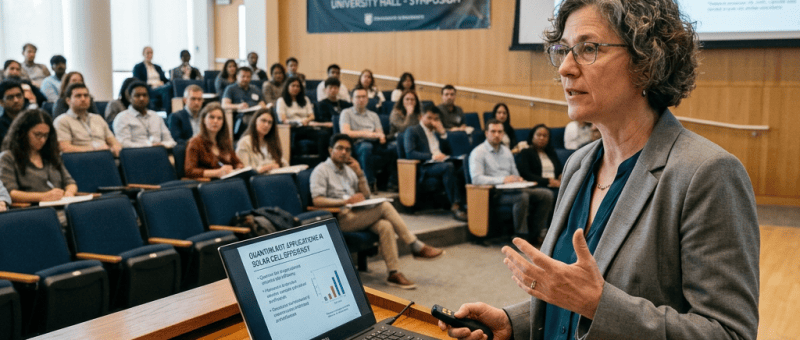
Academic conference presentation with laptop and research papers

By: Dr. Stephanie Diana Eubank DBA 

I am excited to announce that I will be presenting at the Multidisciplinary Conference on Business, Economics, Strategy, and Technology (BEST Conference 2026), taking place online October 20–22, 2026. The conference brings together researchers, educators, industry leaders, and professionals to discuss emerging issues in business, strategy, technology, and the future of work. 
 
Registration and conference tickets are still available for those interested in attending this international virtual event. 
 
My presentation will focus on one of the central topics of my post-doctoral research: the Apollo Effect and its implications for team design, leadership, communication, and productivity. 


The Apollo Effect originated from the work of Meredith Belbin and challenges the common assumption that assembling the most talented individuals automatically creates the highest-performing team. Research found that groups composed entirely of highly intelligent experts often struggled with collaboration, decision-making, communication, and execution. Rather than producing exceptional outcomes, these dream teams frequently underperformed because members competed for influence, challenged one another excessively, and neglected routine but essential work. 
 
This concept has become increasingly relevant within remote, hybrid, and technology-enabled workplaces. Organizations frequently concentrate on hiring top talent while overlooking the importance of complementary skills, collaboration structures, psychological safety, and intentional team design. 
 
My post-doctoral research examines how the Apollo Effect may influence leadership and followership experiences in modern organizations. Specifically, I am exploring how communication practices, role clarity, team composition, and organizational design affect productivity and employee engagement across workplace modalities. 
 
The discussion builds upon findings from my doctoral dissertation, The Double-Edged Sword: A Study in Remote Work from the Perspectives of Leadership and Followership on the Topics of Communication, Team Design, and Productivity. Through this continuing research, I hope to contribute new insights regarding how organizations can create balanced, high-performing teams without falling into the trap of assuming that expertise alone guarantees success. 
 
If you are interested in leadership, organizational behavior, team development, remote work, innovation, or strategic management, I encourage you to attend BEST Conference 2026. The event offers a valuable opportunity to learn from scholars and practitioners addressing some of the most important challenges facing organizations today. 
 
I look forward to sharing my research and engaging in discussion with colleagues from around the world. 
 

References 

Belbin, R. M. (2010). Management teams: Why they succeed or fail. Butterworth-Heinemann. 

Eubank, S. D. (2025). The Double-Edged Sword: A Study in Remote Work from the Perspectives of Leadership and Followership on the Topics of Communication, Team Design, and Productivity. Concordia University Chicago. 

BEST Conference. (2026). Multidisciplinary Conference on Business, Economics, Strategy, and Technology (BEST Conference 2026), October 20–22, 2026. 

Book Information  
Remote Work Is Here to Stay: Rethinking Operations Management in the Modern Work Era  
Available on Amazon: https://www.amazon.com/dp/B0H5BPJCHJ  

If you enjoy this content like and subscribe.  Additionally, if you are interested in consulting services, please feel free to reach out to me through my social media channels.  Remember remote is here to stay.   

YouTube: https://www.youtube.com/@Wickedbofthewest   

Website: wickedbofthewestremoteconsulting.com   

Facebook: https://www.facebook.com/WickedBoftheWestBusinessConsulting   

Instagram: https://www.instagram.com/wickedbofthewestconsulting/   

Blog: drstephaniebeardbaremoteresearch.org   

LinkedIn: https://www.linkedin.com/in/stephanie-diana-eubank-dba/   

TikTok: https://www.tiktok.com/@stephanie.eubank6   

New Website: wickedbofthewestconsulting.com   

Email: Drstephaniedeubank@wickedbofthewestconsulting.com or stephaniedeubank@gmail.com   

TikTok: @stephaniedianaeubank   

New Website: wickedbofthewestconsulting.com  

Also, be sure to check out my first textbook on Operations Management. The book is titled “Remote Work Is Here to Stay: Rethinking Operations Management in the Modern Work Era.” You can purchase the textbook on Amazon at the link below.   

Integrating AI in Business: Beyond Replacement

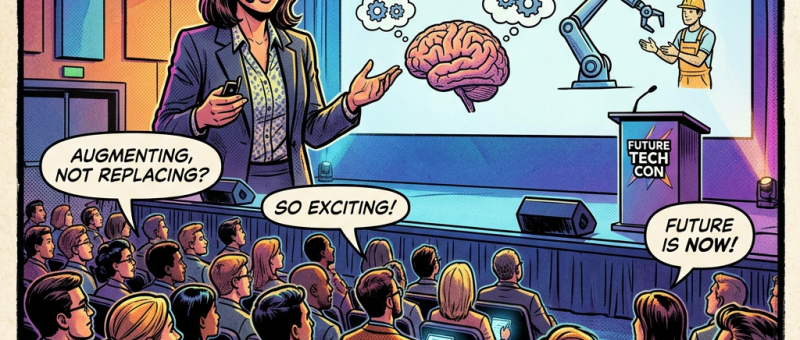
Presenter discussing AI augmenting workforce at conference

By Dr. Stephanie Diana Eubank 

When I wrote Remote Work Is Here to Stay: Rethinking Operations Management in the Modern Work Era, one of the topics I explored was how emerging technologies would reshape business operations. Today, artificial intelligence is becoming one of the most significant forces affecting organizations. 
 
Many companies initially approached AI as a workforce replacement strategy. However, recent evidence suggests that AI is most effective when it augments employees rather than replaces them. Several organizations that reduced staffing in favor of AI later discovered that the technology struggled with judgment, customer relationships, complex problem-solving, and decision-making. 


The real challenge is not replacing people with AI. The challenge is helping employees learn how to use AI effectively, ethically, and securely. 
 
Organizations face several risks when adopting AI, including data leakage, intellectual property exposure, inaccurate outputs, regulatory compliance issues, and overreliance on automation. Employees frequently receive access to AI tools without sufficient governance, training, or security guidance. 
 
To reduce risk, organizations should establish formal AI policies, provide ongoing AI literacy training, protect sensitive information, maintain human oversight for critical decisions, and focus on augmentation instead of replacement. 
 
AI can improve productivity, accelerate research, automate repetitive tasks, and support decision-making. However, the most successful organizations will be those that combine human expertise with artificial intelligence rather than viewing the technology as a replacement for people. 
 
This theme is discussed throughout my book, Remote Work Is Here to Stay: Rethinking Operations Management in the Modern Work Era. The future belongs to organizations that successfully integrate people, processes, and technology into cohesive operational systems. 
 
Available on Amazon: https://a.co/d/0iVtORjO 
 

APA 7 References 

Autio, C., et al. (2024). Artificial Intelligence Risk Management Framework: Generative Artificial Intelligence Profile. NIST. 

Gallup. (2023). 72% of top CHROs see AI replacing jobs and workers are not ready. 

MIT Sloan School of Management. (2025). AI is more likely to complement, not replace, human workers. 

NIST. AI Risk Management Framework. 

Stanford Human-Centered AI. (2025). What workers really want from artificial intelligence. 

CNBC. (2026). Employers who laid off workers citing AI are already starting to regret it. 

Book Information  
Remote Work Is Here to Stay: Rethinking Operations Management in the Modern Work Era  
Available on Amazon: https://www.amazon.com/dp/B0H5BPJCHJ  

If you enjoy this content like and subscribe.  Additionally, if you are interested in consulting services, please feel free to reach out to me through my social media channels.  Remember remote is here to stay.   

YouTube: https://www.youtube.com/@Wickedbofthewest   

Website: wickedbofthewestremoteconsulting.com   

Facebook: https://www.facebook.com/WickedBoftheWestBusinessConsulting   

Instagram: https://www.instagram.com/wickedbofthewestconsulting/   

Blog: drstephaniebeardbaremoteresearch.org   

LinkedIn: https://www.linkedin.com/in/stephanie-diana-eubank-dba/   

TikTok: https://www.tiktok.com/@stephanie.eubank6   

New Website: wickedbofthewestconsulting.com   

Email: Drstephaniedeubank@wickedbofthewestconsulting.com or stephaniedeubank@gmail.com   

TikTok: @stephaniedianaeubank   

New Website: wickedbofthewestconsulting.com  

Also, be sure to check out my first textbook on Operations Management. The book is titled “Remote Work Is Here to Stay: Rethinking Operations Management in the Modern Work Era.” You can purchase the textbook on Amazon at the link below.