MICRO-MANAGEMENT IS AUTHENTIC BULLYING

By: Stephanie Diana Wilson- Eubank

Micromanagement is a method of leadership which based on my research of remote work and my own work experience is a hostile and lazy form of leadership.  It is lazy because rather than leading with the understanding your greatest resources a company has is its employees.  Hostile because micromanagement has been shown to not only create room for management bullying but to cause harm to employees emotionally. Remote work becoming more normative since COVID has allowed for more transparency of how authentic leadership as a term being corrupted by controlling leaders who are insecure, and incompetent to shine through. Leading remote teams is more emotional work on the part of leadership but, it is good and necessary work.  Before I detailed the facts of how micromanagement is beyond harmful to employees onsite and remote there are some concepts of remote workers as a focus need to be detailed first.

Such as there is a great article pre COVID found on, https://journals.aom.org/doi/abs/10.5465/ame.2000.4468068 on how to manage remote workplaces.  In said article the author Cascio details how remote workers suffer from three types of isolation.

  • Social,
  • Professional, and
  • Geographical.

Due to these types of isolations managers of remote workers and teams need to work on calling or reaching out to subordinates.  Not just for status on projects or assignments.  Rather to reach out to employees and just say, “hi”. There is an interesting TED Talk, (Durrwachter, 2020); regarding the power of saying, “How are you doing?” and “ hello my friend”.  As leaders we need to bother to talk to our employees!  To ask, how are you?  We all have been traumatized globally by the pandemic.  Many of us are still living in the trauma.   The surprising thing is candid, open, and reasonable conversations spark and genuine leadership and communication arises.  Which is the true intention of authentic leadership.  Not the excuse to be a tyrant and a bully that the term has come to be synonymous with. 

However, there are articles like, (Milne, 2021); detailing how there is now spy ware for managers to investigate employee’s cameras and see them and monitor them.  Showing linkage with these programs with communication software like Slack where the user can watch a team and chastise them if they are not at their computer at the exact moment management is checking on them.   There is ample evidence on how micromanagement hurts the work force and can hurt a company’s work force.  Such as the article from Forbes, (Kurter, 2021); and the article from Psychology Today, (Golden, 2020); on how micromanagement hurts businesses.

Micromanagement is not only detrimental to a company and its employees but, it is a testament to lazy management.  How is it lazy management?  For one as noted in remote workplaces there is additional work that must be put into cultivating a team.  Micromanagement is a leaders’ scream that they as leaders did not hire people that they trust to get the job done.  When employees don’t feel like management trusts them it is unnerving.  Micromanagement just shows a leader who isn’t willing to adapt and get to know their team and how best to support them.  At the end of the day remote or onsite employees are a company’s best resource and need to be treated as such. 

If this article helped shed some light on how micromanagement is not in the best interest of a workforce especially not remote please share.

Work Cited

Cascio, W. F. (2000). Managing a virtual workplace. Academy of Management Perspectives, 14(3), 81–90. https://doi.org/10.5465/ame.2000.4468068

https://journals.aom.org/doi/abs/10.5465/ame.2000.4468068

Durrwachter, D. (2020, October 1). Authentic leadership. TED. https://www.ted.com/talks/dianna_durrwachter_authentic_leadership.

Milne, S. (2021, September 5). Bosses turn to ‘Tattleware’ to keep tabs on employees working from home. The Guardian. https://www.theguardian.com/us-news/2021/sep/05/covid-coronavirus-work-home-office-surveillance.

Kurter, H. L. (2021, July 1). Is micromanaging a form of bullying? here are 3 things you should know. Forbes. https://www.forbes.com/sites/heidilynnekurter/2021/06/29/is-micromanaging-a-form-of-bullying-here-are-3-things-you-should-know/?sh=45a23efa4467.

Golden, G. (2020, October 30). 8 micromanaging boss traits that endanger your business. Psychology Today. https://www.psychologytoday.com/us/blog/curating-your-life/202010/8-micromanaging-boss-traits-endanger-your-business.

Why Isn’t Remote Work Being Pushed as An Infrastructure Recovery Initiatives Post COVID-19?

By: Stephanie Diana Eubank

Not to get too political, but there is so much political discussion right now on how to recover nationally from the economic devastation of Covid-19.  This debate is being held politically by those who are not businesspeople or people who have advanced academic experience in economics and business.  As shown in the article from Forbes, https://www.forbes.com/sites/michaeltnietzel/2021/01/08/the-college-profile-of-the-new-members-in-the-117th-congress/?sh=12f8eb233b10 of the newly elected many have advanced degrees not all are in business, and a majority of the degrees are in law, a few MBA’s, Theology and, geology.  There are also several representatives with certificates or never finished an undergrad or associate degree. 

So, as a businessperson, who has the advanced academic degrees and is working on my dissertation for my Doctorate in Business Administration I would like to weigh in on how my focus topic of remote work could be a helpful method to help our country recover economically from Covid-19.  Since remote work has so many benefits to the economy and the workforce in general this article will just focus on women and caregiving.  I will make a whole series of articles on each benefit to a governmental push for more remote work as infrastructure. 

If more benefits were given to businesses to push for employees to work remotely long term for the foreseeable future this would help business, the economy, diversity, women, issues of child and family care, and additional financial assistance to the work force as a whole.   All the way around remote work helps workers balance their lives and career goals.  One thing I am looking forward to as a remote worker is as my state opens up getting to take breaks and taking a walk to have a cup of coffee and brunch at my favorite mom and pop shops with my friends when they take their breaks.  Which still allows me time to come home finish the bulk of my work and welcome my kids back home from school.  Once I put my boys to bed, I can work on my homework and get to bed and start the day again. 

I have had this ability to balance my work, school and, family luckily for the past seven years.  Oh, and trust me I understand that I have been fortunate to have the ability to work remote and continue to work remote.  Honestly, I don’t know how I would have been able to provide and care for my boys regardless of their disabilities if I was not lucky enough to have the opportunity to work remotely.  

However, I do understand based on experience over the past seven years and now as the country is opening back up (even though there is concern of another wave of COVID and its variants) management pushes back against remote work.  (This is mostly because remote work causes managers to have to develop empathy and lead authentically not using the term as an excuse to emotionally abuse employees by being a jerk.  See my previous article on that topic.) Yet, if government makes a push to help both large and small companies push for remote work where it can be done it may be the push needed to really recover.  

The statistics are compelling on how remote can help our economy.  Especially for women.  First off in the US the concept of a full-time mom is not normative anymore due to economical constraints.  Speaking from example of being both the child growing up in a dule income home and being the mother of a dual income home, it is few and far between that families can afford to be a one income household. Even though my life, family, and my husband’s work are here in Silicon Valley California.  Which also happens to be one of the most expensive places in the country to live.  It also doesn’t help that traffic is so bad here as well but, that’s a different article to write.  There is little ability to have a single income family to have the bandwidth to be a full-time mom not just here but nationally.  The Population Reference Bureau as seen in the article, https://www.prb.org/resources/traditional-families-account-for-only-7-percent-of-u-s-households/ found in 2003 only 7% of American’s we able to live in a one income household with children. Where dual income with children at the time was 16% of the US and dual income without children was at 13%.  The other 64% were single parents and single people.  And according to The Hill article https://thehill.com/opinion/finance/543941-americas-single-parent-families 30% of American Families are single parents usually moms with a child under 18.  Of that 30% of single parent families 75% are single moms.  The article goes on to break down the socio-economical statistics of single moms but, it points out the face 51% of the single parents in the US are fellow minorities.  Specifically, Hispanic, and African American families are the most effected.  Single moms tend to also make less and have less work opportunities regardless of education, experience, and skills (again a soap box for a different day).  What is heart breaking single moms are 34% more likely to be impoverished.  

The article also mentions that 57% of American’s scapegoat single parents, single moms especially and comment on them working too much and not being enough for their kids or not working hard enough.  (again another soap box as I have been a single mom, a working mom, and a student mom all at the same time and remote helped me do it all and teach my boys hard work ethic and how it pays off.  In an area that to be middle class for a family of three the income required is $150k for a single income so we were poor for our area.  I also like to think it taught my boys that I love them so much that I work tirelessly to make sure they have every advantage I can possibly provide.)

Women are also statistically the main demographic as a caregiver for family members who are disabled or elderly.  Which largely is unpaid!  According to the statistics on the Family Caregiver Alliance https://www.caregiver.org/resource/caregiver-statistics-demographics/ their data was collected by AARP and found 34.2 Million Americans provide unpaid care as of 2015,  16.6% are adults caring for disabled children and 34.2 Million of these caregivers are caring for someone 50+ years of age again unpaid.  I have had several friends who while caring for family members who were ill or disabled would not have been able to care for them on their own if they didn’t work from home.  Of those friends fortunately they worked from home, so their family members did not die alone.  These friends were both men and women with varying ethnicities and socio-economical backgrounds.  Though per the same article AARP found that 75% of unpaid caregivers are women.

There is also the remote team pitfall of many companies pre- Covid-19 would create what are called “dream teams” which are teams made up of experts in their field.  This is done without regard for team design of personalities or on how well each person works together in a cohesive team.  

This design flaw can be used to the advantage of women in the economy.  Per the PEWs research https://www.pewresearch.org/fact-tank/2019/06/20/u-s-women-near-milestone-in-the-college-educated-labor-force/ women make up a little over 50% of the college educated work force and 46% of the over all workforce is women with higher education.  Also, the PEWs research showed that of all the undergraduate degrees earned in the US 57% were awarded to women.  This means the push for advantages of remote work would bring highly educated women opportunities to balance the caregiving role that societally tends to be thrust onto women more than men.

The benefits of the government viewing remote work as an infrastructure cause will help the economy and work force from the bottom up.   With the focus just on the women of the US work force an increase of remote work would allow for more women to keep themselves and their children out of poverty just from the view point of caregiving and childcare restrictions physically and financially on women and families. It would also create more opportunities for educated women to shine in the workplace.  

Remote work as infrastructure cannot be understated.  Yes, working and caring for others is HARD work!  However, one thing Covid-19 taught America is we are not afraid of a little hard work and when given the opportunity to work remote life and work continued. 

Watch Your Tone: Considering the audience when virtually communicating with remote employees

By: Stephanie Diana Eubank

Tone in emails and other written platforms such as Skype, Slack, or Teams can be a tricky thing.  Where onsite employees may be able to understand or be able to ask in the background with management to see if an aggressive tone was intentional or not.  Remote teams have a harder time identifying if harsh tones in writing if it may be intentional or not from management.

There are concepts for remote workers called social isolation and professional isolation.  To break it down:

  • Social Isolation: we often forget business is a social activity and social science.  And socializing at work is a big part of working in business.  Believe it or not water cooler talks and social interaction with coworkers is a draw to onsite work and can be good for mental health.  Also, this sort of social 
  • Professional isolation: is where the employee doesn’t get a lot of collaboration time with management or other interactions with management.

There are also concepts that remote workers have as stress causing aspects of working remote.  Such as statistically speaking remote people are often the first people to be laid off during mass layoffs.  This is statistically common because remote people don’t get to interact with management or coworkers due to social and professional isolation.   This isolation also may lead to missed opportunities for remote workers.

Now, now these concepts have been known to be issues for remote teams.  However, since COVID-19 with everyone who can work remote.  With Remote work becoming mainstream this means management must adapt to these pitfalls because it now affects them too.  There is also the fact that with COVID-19 new pitfalls arise.  Such as the dreaded kids interruption if they are not back to in person schooling, the state being on fire and evacuations being needed (like here in California), cats jumping on the desk, dogs barking, or my personal annoyance is cars with too much base shaking the whole neighborhood. 

Although there are added benefits for all when working from home that need to be accounted for and embraced. Such as taking breaks when one is supposed to and using them to go outside or other mental health/ self-care need.  There is also flexibility to manage a work/ life balance.   However, none of this positive move for the economy to healthy business practices until better communication practices are realized and common place.

One big step many managers need to work on to realize the best remote environments and most productive ones is the skills within electronic communication.  

Here are a few tips for management and communicating with teams effectively in this new remote environment:

  • First ask each team member what their preferred method of communication is.  I know it seems easy enough, but some people may like the constant teams or skype typed quick notes and others might get an anxiety attack from that.  And then there are those who rather just have a quick phone call. 
  • Make both one on one time with team for status and business but also just to ask, “how are you doing”.  Showing a little empathy goes a long way towards building strong trust and employee retention.  It also helps prevent professional isolation making employees feel more like people and less like numbers. 
  • Take time to just have a nice virtual lunch together with your whole team and staff.  Bonding regularly with a team helps everyone not only keep work focus but, reminds us all that we are people.
  • Managers need to encourage their team to communicate with each other not just about work but just to take 10 minutes to talk about the weather.  Business being a social science needs to be emphasized socially and understood some people like remote for the lack of social interaction. 
  • Managers when emailing need to watch for tone in emails so that no one feels provoked.  Firmness can still be conveyed but, there are tricks for making the tone calmer:
    • Use We instead of me or I.  This unifies the team and company as one and comes off less combative.
    • Note in the written communication that all work around options were considered but, don’t note that they can escalate the issue. That comes off as a challenge. 
    • Write clinically.  Not putting too much emotion into the writing.  It shows neutrality so there is no favoritism or anger to be derived from an email.  
    • While writing do open with a friendly salutation and at thank everyone for their help with the info.  Again, show a united front.
    • Before getting to the heart of the issue write something positive. 
    • Clearly define changes showing rather than pointing fingers we are moving forward with lessons learned.  Be sure to also state what the sought results are.  Goals need to be clear. 
    • Close these emails by asking if you can help or clarify or answer any questions.  Make sure that you make sure to note you are available and welcome questions.  Also, that everyone has your contact info. 
  • Never send emails when angry!  That’s how you end up in HR because you have made a hostile work environment. 
  • Draft your emails in word.  It helps make sure that everything is spelled and grammatically correct showing your professionalism.  It also helps if writing when angry to re-read your work and edit, and edit, and edit till the result works.  Also, this stops the accidental email that wasn’t polished yet. 

These tips should help learn how to communicate with remote teams and help with comfort of though remote can make us far away we are still on the same team.  

If you liked this article remember sharing is caring. 

Remote Workers Post COVID Can No Longer Be Used to Cover Up Layoffs

By: Stephanie Diana Wilson-Eubank

As economies change and shift many organizations choose to do layoffs to balance the budget as needs and funding shifts.  However, the risk in this is companies especially large ones end up on the news for mass layoffs which can make investors have trepidations.  So, since the financial crisis of 2008 many companies have mirrored what Yahoo’s CEO Marissa Mayer in 2013 instituted.  The process referenced is move location of company and pull back all remote workers to the office and all those who can’t or don’t relocate are laid off as a part of a reorganization. 

There is an article in Forbes from 2013, https://www.forbes.com/sites/jennagoudreau/2013/02/25/back-to-the-stone-age-new-yahoo-ceo-marissa-mayer-bans-working-from-home/?sh=2b436b451667 the CEO comments on how the re-org was meant to help improve collaboration and that needs side by side work.  Other companies in various fields of business have used a similar method using the guise of a re-org to hide a need for mass layoffs from the public.  There is also a wonderful book I came across in my dissertation research on this concept, https://www.holloway.com/g/remote-work/sections/reorganizations-or-layoffs# is where you can find more information by Katie Womersley an Jun Pablo Buriticia. Per the publisher we need to reference the website, Holloway.com for the book and Katie Wormersley, Juan Pablo Buriticá et al., The Holloway Guide to Remote Work, ed. Courtney Nash (San Francisco: Holloway, 2020). Available at https://www.holloway.com/g/remote-work/about.)

Fast forward to 2020 and now in 2021 we have many of us working from home that can.  And remote work is revolutionizing the business and economy field of study and practice.  There are several articles about how remote work is evolving into a normalized concept in labor.  Such as the following:

Directly the shift to remote work caused by COVID has made opportunities for business to evolve and join a more quickly evolving economy.  Although, indirectly it has taken away a method of hiding a need for layoffs and providing more transparency for investors and employees. 

Another bright spot from COVID is that the trial by fire of companies switching to remote reportedly showed no hinderance in productivity.  Which proved that remote workplaces can be balancing for employees and productive for employers.  It is time to embrace the here and now.

Why Go Backwards? : An article on missed opportunities of remote learning.

By: Stephanie Diana Wilson-Eubank

First I want to go on the record as going through dysfunction of COVID in the form of balancing work and being the stay at home parent now delegated to being the in-home teacher.   I am blessed to have changed jobs to a position that allows more of a dynamic role that is flexibility to balance my family and career goals remotely.  Further I am blessed that this company values my goals towards my Doctorate degree in Business Administration.  And I needed to be able to work to provide for my family like most Americans.

All this said I have to say I have preferred my kids going to school remotely and how we have been safe.  Honestly it has been easier for my boys especially when dealing with their disabilities.  Such as we get to do more positive morning activities together before school starts with no traveling, last minute wardrobe changes, no dealing with the school giving my son milk when he is lactose intolerant.  

Not to mention other parents I am friends with who have disabled children and those who are minorities are pushing to wait to send their kids back to school when as a nation we have reached closer to heard immunity and 80% and up vaccination rates nationally.  Many schools are pushing to open ASAP when we are nationally only at 10% vaccination rates.  

Which, is a bit hasty in my personal opinion, however, my mother sent me an article from the local KTVU news at https://www.ktvu.com/news/california-law-does-not-allow-for-virtual-learning-waiver-expires-at-end-of-june , (Fernandez, 2021); which speaks to laws about remote learning and push back rather than embracing the practice.  Also, that the state is not budgeting for remote learning.  Which, is not just short cited from the fact current attitudes nationally about COVID make the variants a real potential threat to go back to lockdown just as we got COVID-19 to some semblance of under control.  However, to stay in my lane of business and the economy as those are the focuses of my doctoral program and the topic of remote work being my thesis focus I was inspired to focus on who school is being set up for an out dated economic thinking and needs to be changed.

Specifically what I am referencing is the topic of what is academically referred to as “Factory Model Schools”.  Here is a list of articles on the topic:

In lay terms the setup of public schools is formatted to familiarize students to a work life within a factory. Which, makes no economic logic since based on the monthly article put out by the US Department of Labor and Statistics at https://stats.bls.gov/opub/mlr/1984/04/art2full.pdf, (URQUHART, 1984); the US has been shifting out of an economy comprised primarily factory workforce to a service industry since 1984.  With this in mind we need to redevelop the public school system to do two things.  

One prepare those not on a university level life long quest to be competitive in the work scape that is now our economy.  To do this online learning and hybrid learning need to become normalized.  Not normalizing and making remote or hybrid learning a quintessential part of the educational formatting is a missed opportunity.  This especially needs to become fundamental in the education process in California where we are the epicenter of the tech sector and the home of the tech Meca being Silicon Valley.  Think about it one of the main issues noted in my dissertation on remote employment has been push back of companies and management.  Even though remote employment not only saves the bottom line and adds to the diversity and organizational structure of a company there is still push back.  What I hear most from management personally working remote for over seven years say things like, “remote work is difficult to manage”, and “I have always had face to face interaction and remote is just so foreign”.   However, teaching kids to normalize remote work allows learning needed skills in project management (nothing prepares you for business like knowing how to organize people remotely), social networking, technology, data collection and data integrity, along with remote customer service skills among a myriad of other skills.  

The second task of schools is to set children who want to go on the academic journey of college and advanced degrees and research to prepare those students and that involves remote learning as this is a normative practice in college level education.  (Also, do not think I am saying any one or group shouldn’t go to college.  College is not for everyone and I believe that academic advancement is a life path not a make shift destination.  It is a journey.  With that said it should be a different paper to pick apart reformatting colleges.   With a remote paradigm there should be a reformation to make junior/ community and state college have more programs available for people to get careers that is logical for our current economy not an economy almost forty years go.  Trade schools are needed but targeted towards understanding engineering tasks and robotics. I firmly believe education is a key for success and not sharing all the forms of education is wrong and economically damaging).  This all said many programs for college prep leave out a lot of kids.  The groups who are especially vulnerable to this are the economically disadvantaged kids and those who are disabled.  There is a level of questioning in public schools about inclusion.  To that I say to remember that diversity matters and remote work and school place allows platform for these sorts of kids to flourish.  Same with the kids trying hard to fit in remote schooling gives an opening for success on their own developmental terms.

There is another economic opportunity that being over looked by schools not pushing for remote and hybrid learning and instead fixating on a status quo.  If students who are special needs can get paraprofessionals or one on one aide from the school to come to the home and help this would be a game changer.  This solution which allows for the government creation of more jobs to stimulate the economy while investing in education.   Per research on Salary.com and Indeed.com the average aide makes in California between $25k and $35k per year.  It is not a high paying job but, it would still be job stimulation.  Also, these jobs come with training and tend to only require a two year college degree or a specific amount of Early Childhood Education units of study.  

Not to mention how teachers can benefit from a remote or hybrid class model.  Teachers can afford to live where they want and maximize their spending.  Also, with less facility expenses more materials can be purchased and doled out to students for use towards education.  Making it so students in lower income families can afford to keep up with the academic Jones if you will.  

There are so many upsides to implementing remote and hybrid school models to benefit all parties and encourage economic growth on the front and back end.  It makes the article from KTVU that inspired me to write on this blog post aligning with my own academic research seem that the government is being short sighted.  We need to plan to make a healthier and more creative economy.  This planning starts with pushing back on old outdated design models that were meant for an economy that disappeared almost forty years ago rather than everyone trying so hard to go back to our previous so called, “normal” school and work life.  Normal keeps our economy idolizing of days long gone of people working in factories and making American strong goods.  The shift has happened and we need to embrace the idea of people working at home, in the library, local Starbucks or where ever they like creating Strong American services and technology.  This is the idealism that will empower our economy and it starts with the restructuring of the educational system to give all students an even upward mobility into a more productive economy.

Work Cited

Fernandez, L. (2021, March 12). California law does not allow for virtual learning, waiver expires at end of June. KTVU FOX 2. https://www.ktvu.com/news/california-law-does-not-allow-for-virtual-learning-waiver-expires-at-end-of-june. 

Strauss, V. (2019, April 18). American schools are modeled after factories and treat students like widgets. Right? Wrong. The Washington Post. https://www.washingtonpost.com/news/answer-sheet/wp/2015/10/10/american-schools-are-modeled-after-factories-and-treat-students-like-widgets-right-wrong/. 

Shaw, A. (2016, August 22). Factory Model vs 21st Century Model of Education. LinkedIn. https://www.linkedin.com/pulse/factory-model-vs-21st-century-education-anne-shaw. 

Serafini, F. W. (2002). DISMANTLING THE FACTORY MODEL OF ASSESSMENT. Reading & Writing Quarterly, 18(1), 67–85. https://doi.org/10.1080/105735602753386342 

Found online at https://www.researchgate.net/publication/247498643_Dismantling_the_factory_model_of_assessment

Carl, J. (2009). Industrialization and Public Education: Social Cohesion and Social Stratification. International Handbook of Comparative Education, 503–518. https://doi.org/10.1007/978-1-4020-6403-6_32 

Accessed online at https://link.springer.com/chapter/10.1007/978-1-4020-6403-6_32

URQUHART, M. I. C. H. A. E. (1984, April). The employment shift to services : where did it come from? US Department of Labor and Statistics . https://stats.bls.gov/opub/mlr/1984/04/art2full.pdf. 

MONTHLY LABOR REVIEW April 1984 9 Employment Shift to Services

Indeed.com. Home. Paraprofessional Salary in California. https://www.indeed.com/career/paraprofessional/salaries/CA. 

Teacher Aide Salary in California. Salary.com. https://www.salary.com/research/salary/benchmark/teacher-aide-salary/ca. 

To All the Those Working from Home During the Pandemic as a Parent (AKA Super Mom/Dad/Parent)

By: Stephanie Diana Wilson- Eubank

It is understandable that we are all stressed during COVID-19 and how it has changed work and life for all of us.  Arguably COVID has changed the playing field in the business and economic sectors for the foreseeable future.  However, there are many of us who have been working remotely or in a hybrid capacity for years.  Like myself I have been working remotely for over seven years.  So, I like to tell people when asked how I am handling lockdowns and everything being remote that I have been rocking the COVID chic look before it is in style. 

However, regarding my researching for my dissertation on remote employment I firmly believe the changes caused by COVID have created some big opportunities with regards to bringing more diversity and jobs for caregivers to the business world.  There are numerous news reports during COVID regarding the hardship of on women having to take on so much of the so called, “domestic work”.  Such as helping children with online school, housework, and over all care giving.  This is coupled with being like me a working mom where we must do all that while working at the same time.  There are also those also like me who are doing all this while going to school.   Those juggling so much may be able to lament with me when people look at you and complement you on how impressive it that we juggle all this we want to sound like it was nothing and make it look easy.  But truthfully, we sigh because we can’t honestly say how we managed it.  We are surprised at ourselves that I was able to be done at all. 

There is an article from the New York Times, https://www.nytimes.com/interactive/2021/02/04/parenting/covid-pandemic-mothers-primal-scream.html where they go over how the COVID Pandemic is setting women and feminism back in the US. And to be fair I am up at 1:30 AM to write this article just so I can let out some of my creative juices after getting ahead in my work and homework once my husband came home to give me a little break from being “Super Mommy”.  My boys both have ADHD and are very high energy.  I have worked remote for over seven years, so all this is normal for me.  Sort of… I used to get a break to go out to brunch some times taking my boys in the jogging stroller and the dog and hang out at our favorite mom and pop restaurants after talking to my BFF while she is shuttling her girls and on her way to work. Oh, and singing along to the alternative music of the early 2000’s I love to run to while my boys sing along.  Oh, and I really miss periodically when I must travel locally for work taking my kids to Kid Park for a few hours as I go up to San Francisco for a in person meeting or seminar.  Ah and Flying on business trips while my husband and the baby sister are coordinated so the boys are cared for.  All this pre COVID flexibility in my work and life. 

However, just focusing on this narrative of women who are having a hard adjustment is a narrow view.  The conversation needs to pivot on how remote work can pushed and encouraged so that we bring diversity of more than just working moms to the business table? One way that comes to mind is governmental incentivization of businesses to convert as many positions as possible to remote employment.  This would not just bring working moms like myself to the table, but fellow people of color, caregivers of all gender identification, LGBTQ, and the disabled (or the preferred title of differently abled community).  I have personally been inspired by several people who work remotely so they can balance life and have a fair shake to embrace their differences and the benefits of an alternative perspective.  Which can be helpful in the business world.  

There are several studies in business administration and other business science aspects on how diversity adds to team/ organizational creativity and advanced problem solving also preventing group think.  However, the Forbes article, https://www.forbes.com/sites/tendayiviki/2016/12/06/why-diverse-teams-are-more-creative/?sh=55bfe61d7262 sums it up well for easy reading.  

Remote work offers a unique opportunity to help slow the curve long term and allow for more diversity, (not to mention lower traffic) and allow for more work life balance in times of serious national pandemonium.  When there are national emergencies having remote work allows for business to keep the world spinning.  This also keeps families strong when childcare is understandably done at home while working.  (We all have had a kid, cat, dog, or all the above try to be part of our background in a zoom call let us embrace it.)

However, this may potentially make some new business avenues for educators and child development workers.  The possibilities are endless to make opportunity for the economy with the use of remote work.  So, fellow Super Moms and all those out there reading late at night to have a break from the COVID Crazy in the world.  Hold on.  The world is not adapting as quickly as you but, this post COVID world will change and get better.  We all just got to stay strong and use the academic research to make this world work for all of us.

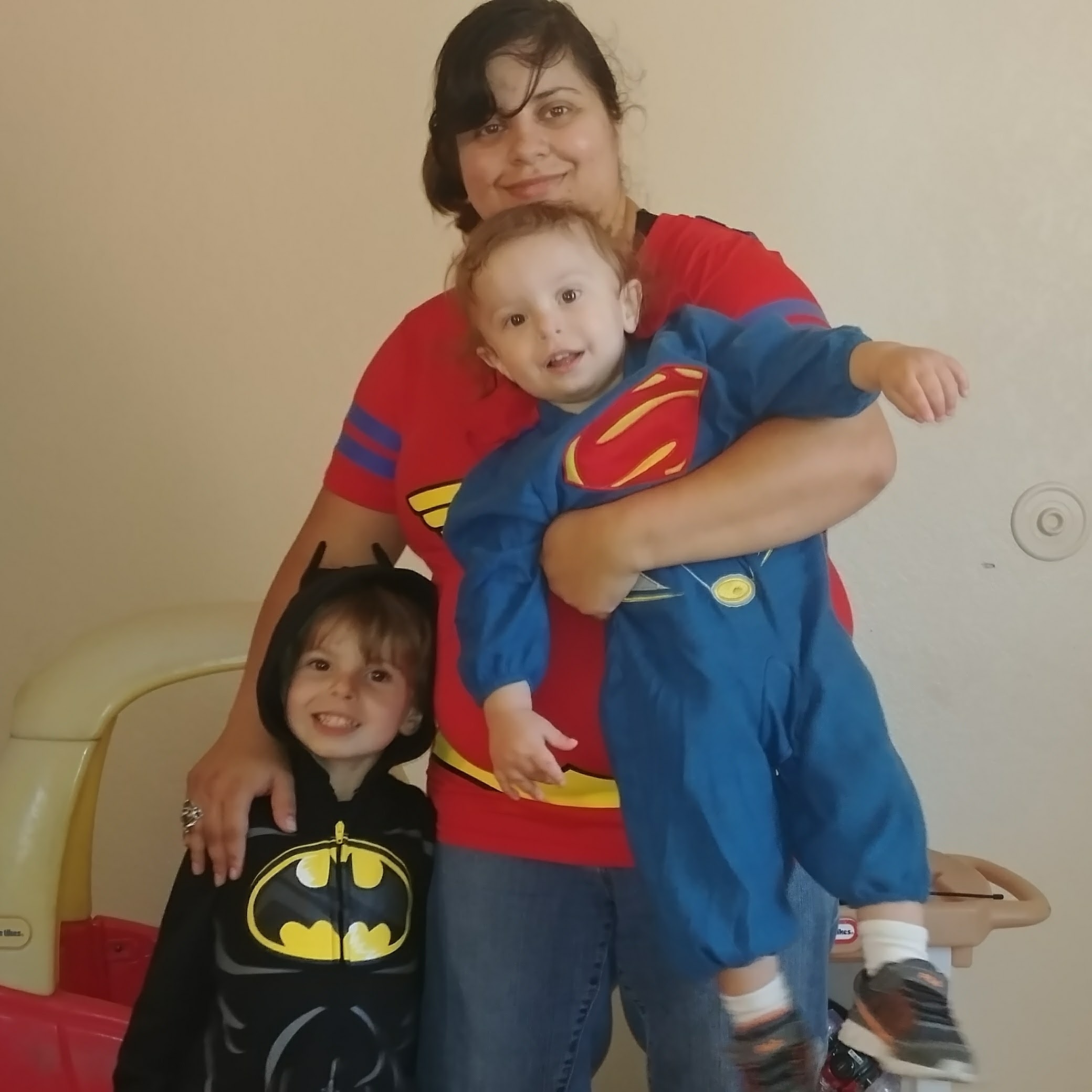
Sticking to the super hero theme my boys and I as super heros 2018-2019

Is it Authentic Leadership or an Excuse?

By: Stephanie Diana Wilson- Eubank

There is a movement in trends of leadership called authentic leadership and in both on site and in remote workplaces authentic leadership as a skill is being perverted as an excuse for poor people skills and aggressive management behavior.  First let us define what authentic leadership is.  In layman’s terms it is a leader who is honest to all and is just genuinely themselves.  Not seeking approval from others so that the goals are the focus.

First off how is authentic leadership defined in professional capacity versus layman terms?  Forbes has a great article titled “What is Authentic Leadership” that you can check out for further clarification.  The link for that is, https://www.forbes.com/sites/kevinkruse/2013/05/12/what-is-authentic-leadership/amp/  However, to sum up the article an authentic leader is someone who is able to be themselves and are results driven with a brand of personal honesty.  If interested there is also a great Harvard Business Review article, https://hbr.org/amp/2005/12/managing-authenticity-the-paradox-of-great-leadership for more info on authentic leadership. 

Now this article is not to disparage different learning or performance types.  Everyone has a type of manager they work best with, but this article is specifically for those in leadership roles who act badly to their employees and argue they are using authentic leadership tactics.  This article is to bring the topic of abusive managers.  Where my focus topic of my research is regarding remote employees these sorts of bad players also do more emotional harm for remote employees.  Forbes also has a great article on what is detailed as professional isolation which is a normative pitfall for remote employees as they don’t get to interact with management face to face as often.  Which can put remote people at a disadvantage at the start.  Which means managers must do a little more collaboration to help ease that issue so that it does not create a constant revolving door of hiring.  You can check out the Forbes article at https://www.forbes.com/sites/laurelfarrer/2019/02/15/beware-professional-isolation-is-more-than-loneliness/?sh=17a736712723

First off how is authentic leadership defined?  Forbes has a great article titled “What is Authentic Leadership” that you can check out for further clarification.  The link for that is, https://www.forbes.com/sites/kevinkruse/2013/05/12/what-is-authentic-leadership/amp/  However, to sum up the article an authentic leader is someone who is able to be themselves and are results driven with a brand of personal honesty.  If interested there is also a great Harvard Business Review article, https://hbr.org/amp/2005/12/managing-authenticity-the-paradox-of-great-leadership for more info on authentic leadership. 

Many of us have had the boss like the meme from the office with the power object watch and the coffee mug saying, “Yeaaaaaa, I am going to need to you do this project in less time than we agreed”.  Or the manager that when you ask a legitimate question says, “you got to be f***ing kidding me” and starts to berate an employee for a simple question.   Or the manager who always says exactly what they are thinking with no filters.  My personal favorite has been a manager who throws items off desks and screams at people to get his way and HR explains away his behavior because he is a high producer and is, “passionate about his work”.  Yeah… someone’s “passion” should not require me to play dodgeball at work because he cannot accept federal agency guidelines for compliance.

However, Doctor Ramani who has been featured on several Youtube psychology channels, her own channel, and has lead Ted Talks on Narcissists and the abuses in all its forms.  This includes cases of narcissistic abuse within employment.  Here is a link to her interview at MedCircle titled, “Is Your Boss A Narcissist?” at https://www.youtube.com/watch?v=2P-5q0C31m4&feature=youtu.be .  In this the doctor analyzes she talks about how some managers have work place enablers who allow for managers to have all around bad or inappropriate behavior because they explain away the behavior as, “hey they get results” and/ or “hey they are mean but, you always can trust them to tell the truth”.  The truth is this is a perverted form of enabling narcissistic abuse and using the concept of authentic leadership as the excuse.    

In summary authentic leadership is not about who can be more of a jerk boss and call it honesty and result driven management.  That just perverts the concept of authentic leadership which is being one’s self enough to focus on tasks while still being a human.  When it comes to authentic leadership especially where remote employment is concerned.  Remembering in these COVID lockdowns as it reshapes our economy, we as leaders need to remember a little humanity and caring goes a long way.  And that humanity is the true sign of authentic leadership. 

Women Toning Down Academic Success in All Areas of Life

By: Stephanie Diana Eubank (AKA Dr. Bear)

This is my first article since getting married to my wonderful husband David last August.  So, I am excited to write this article.

While celebrating our first Married Christmas together my husband and I were discussing the things we are grateful for in our relationship especially during this pandemic.  One thing that was brought up is the fact that my husband values that I am working on my doctorate.  I am thankful he loves me but; respects and supports my research.  When I was dating prior to meeting my now husband many of the men I met would comment to me about how my work towards earning a doctorate is a minus against me.  When I asked why I was told, “Dating a doctoral candidate is not the bragging right that it is for women”.  Which is interesting to me because, my husband always tells me how proud he is of my hard work for my educational goals and brags to everyone about how I am a doctoral candidate.

This got me thinking about how women throughout history or at least in my family’s history tone down their accomplishments for the sake of not overshadowing their husbands.  An example being my father’s mother gave up her pursuit to become an attorney to be a house wife.  My mother had to put her academic career on hold when she had me and my siblings to work part time as a one on one aid in special education.  She had to put off her goals of earning her four year degree till she was in her fifties. 

The list of woman I know who have put off their education or other work goals for family.  Which got me thinking about how often are women suppressing or toning down our achievements in the workplace?

There are a number of articles on the fact women are having to down play achievements to move forward.  Here is a list of some good articles to read on this topic.  You can find citations on these articles in

The lists of articles on this topic go on and on.  Showing this is a systemic issue of women having to tone down our achievements and suffering a bit of imposter syndrome.  Which, is where the research into remote employment comes in as a solution to many of the issues listed as reasons women are held back or are holding back.  Remote teams’ pre pandemic often are designed as what are called. “Dream teams”.  Which is where management designs the teams as the best of the best forgoing team dynamics concepts.  So, how people interact is less important than working with the best of the best.  Which leaves room for those who are high achieving to stand out rather than being named, “Over Qualified”.

I can speak from experience having companies turn me down for being too qualified.  During the recovery from the last recession I had a manager tell me the reason I was let go versus lower performing co-workers was that I was starting my path towards my doctorate and they knew about it.  As he had said to me, “I am laying you off because you are smart and will land on your feet the others don’t have the education you have to do the same”.  It was a hard lesson to learn to keep my academic goals to myself until I have staying power and let management know from there.  Now being experienced working from home while working on a doctorate is a more desirable trait.  For a man or woman.

As observed by my friends both men and women and my own experience during this pandemic I have had to be caring for my children while working and balancing other goals and life in general.   Productivity has been maintained, work has been stressful, but all the while surviving.  Remote employment has made more opportunities we just need to learn to adapt.  As we are isolating to protect each other from this pandemic we learn to show ourselves in the truest ways and go for what we want in this world. 

Work Cited

Ali, H. (2019, March 08). Four Universal Career Challenges Holding Women Back. Retrieved December 27, 2020, from https://www.forbes.com/sites/ellevate/2019/03/08/four-universal-career-challenges-holding-women-back/?sh=5a5110464396

Jaschik, S. (2018, March 21). Study finds female college graduates newly on the job market are punished for having good grades. Retrieved December 27, 2020, from https://www.insidehighered.com/news/2018/03/21/study-finds-female-college-graduates-newly-job-market-are-punished-having-good

King, M., & Bell, G. (2020, March 24). One invisible barrier holding back women at work: The conformity bind. Retrieved December 27, 2020, from https://ideas.ted.com/one-invisible-barrier-holding-back-women-at-work-the-conformity-bind/

Padavic, I., & Ely, R. J. (2020, February 19). What’s Really Holding Women Back? Retrieved December 27, 2020, from https://hbr.org/2020/03/whats-really-holding-women-back

Vila-Concejo, A. (2018, September 4). 7 steps to success and what’s holding women back: Study. Retrieved December 27, 2020, from https://www.sydney.edu.au/news-opinion/news/2018/09/04/7-steps-to-success-and-what-s-holding-women-back–study.html

Remote Teams and How Communication is Key to Preventing Burn Out.

By: Stephanie Diana Wilson-Eubank

As a quick side note to this article this is the first article I get to write with my new married name of Eubank.  So, a small excitement as I attempt to balance life, work, and my educational pursuits into my DBA research.

Now onto the blog post.  With so many working remotely often for the first time there is a desperate feeling of a need to push for higher and higher performance productivity.  However, for many employees this is coming at the price of work life balance because remote workers are working more hours and there is a relative expectation or at least a feeling that one might be expected to work 24 hours a day. 

This is an interesting concept that is normally worked out to make a 24 hour remote team by having a global team.  Which team design allows for this sort of planning in the organizational leadership side of business and team development.  However, it is becoming a big down side for those working an eight hour day on the same time zone.  The reason it is a down side is the fact that this over working attitude and encroachment on live/ work balance can quickly spark burn out. 

Burn Out can be a kiss of death to any team even in a saturated labor pool created by a recession.  Unfortunately it is up to employees to set the boundaries based on their own comfort level and for management to respect it.  Sometimes wiggle room needs to be created as an effort to save the team rather than create a mass exodus of employees.  It also creates more than the extra spending in HR to find and recruit more employees but; it can also hurt a company reputation by hurting organizational good will.

However, many managers I have spoken with have been dealing with push back from either management or teams to go back to the office.  And in an effort to force remote to work the pressure is on to show high and higher productivity.  There is also the profit losses some managers have attributed the pressure to over perform and over deliver.  This pressure tends to trickle down to employees and the brunt of the work falls to them even if unfairly encroaching on personal time.  Setting boundaries between managers and employees will also help to develop realistic quotas and turn times along with showing a mutual respect to team members.  Management can also learn how to reallocate resources by implementing tactics like cross training to help close gaps and meet goals.  Remember employees are any manager or project manager’s most vital resource. 

On that note stay safe, and take care of each other.  If this article was helpful for you please like and share. 

Remote Hostile Work Environments.

By: Stephanie Diana Gast- Wilson

While working on my dissertation in Business Administration on the topic of Remote Teams there are specific pit falls that happen in both research of pre COVID and during COVID.  Those pitfalls are:

  • Professional isolation,
  • Social Isolation,
  • Communication, and
  • Moral.

However, all four pitfalls are inter-related and if managed well can create an open communication.  But; sometimes organizational cultures or management becomes toxic and hostile work environments.  Which makes a lot of people rather than stay and fight the issues with toxic management to leave which hurts moral even more.  And this is the case in both face to face and remote environments. 

It is thought that remote teams can’t have a hostile work environment because there no environment physically to speak of.  However, COVID has forced many of us to work from home and proven that you can have a hostile work environment.  Although many of us are working from home and dealing with a new normal there is a tolerance level for the dysfunction that happens with working from home, teaching from home and the other craziness that happens with lockdown. 

Yet, this is no excuse to tolerate a toxic work environment.  Hostile work environments go beyond the stress that is are part of the COVID new normal. And each scenario should be examined individually and compared for perspective which is outside the topic of this post. 

 Although hostile work environments stem from ineffective communication and don’t just hinder effectiveness for those in the mix of the environment but; can kill moral for the whole team.  In remote teams it is easier for teams to spread displeasure more quickly and effectively.  Which can quickly create an exodus of employees.  When too many employees leave and are disgruntled this can hurt company good will and recruiting.  All the pitfalls in remote teams can be made or enhanced by bad communication.  And nothing exasperates communication than sarcastic remarks to team mates and passive aggressive tones.  Neither translate well in writing or remote environments.   Also, small breathing and tones can be misconstrued.  Such as sighs when picking up the phone.  Another thing for managers to remember is to always make employees feel important.  When they call or reach out make sure that pleasantries are polite for a reason.  But, overall mindfulness on the part of management is key to keep employees calm and happy while defusing hostile work environments.  It is always important to remember management makes and breaks teams