Author: Dr. Stephanie Eubank (AKA Dr. Bear)
Hi there! My name is Stephanie Diana Eubank and I am a doctoral student at Concordia University Chicago in their online program for Doctorate of Business Administration. My Masters' degree was completed also online at Southern New Hampshire University in Operations Management with an emphasis in Project Management. Prior to my dissertation completion, I will be getting married and once completing my DBA program I will become Dr. Mrs. Stephanie Diana Eubank (Dr. Bear). All the while working full time as one of the country’s experts in Condo Mortgage Underwriting Compliance.
The focus broad topic of my dissertation is remote employment which has never been timelier with the recent lockdowns of quarantine during the COVID-19 crisis.
Emergency Planning and Remote Work
By: Stephanie Diana Eubank
Many have probably seen the national news about the massive flooding, mudslides, high winds, power outages, and the like causing a state of emergency for the entire state of California. If you haven’t, the CNN news article https://www.cnn.com/2023/01/10/weather/california-flooding-atmospheric-river-tuesday/index.html . Other storms throughout the US are a result of the significant storms that hit California first. Such as the article, https://www.usatoday.com/story/news/weather/2023/01/12/southern-storms-deaths-alabama-tornado-damage/11041594002/ . And based on a News report I saw on local news (And I don’t know why in a post-Katrina world, this needs to be said) but per the CDC https://www.cdc.gov/disasters/foodwater/safe-water.html don’t drink flood water. With all the fires, earthquakes, and now flooding seen across the country in just the past week, we really need to think about emergency planning and rethink the concept based on a post-COVID world.

(Photograph taken by David Eubank 1/14/23)
This brings up a profound benefit to remote work and remote leadership that many businesses, big and small are not really capitalizing on. And unfortunately, it is a lesson that major finance organization learned during 9/11. What many might not know is that when 9/11 occurred, the financial institutions had servers in separate states and alternate main offices on the other side of the country, and secondary ones in non-vacation destinations. This resulted in a lack of damage to the financial industry due to 9/11, and instead, additional planning was put in place to continue to thwart issues caused by terrorism or acts of God. Since then, many financial organizations allow for more remote work and hybrid work well before COVID.
The financial industry has been capitalizing on remote work for decades now. Other industries have been growing remote workplaces, such as the distance learning industry at Southern New Hampshire University. So, when COVID hit, and everyone had a dry run of the freedom of remote work, companies saw this as a big shake-up, and many missed the potential for remote work to have some profound long-term business benefits. Specifically within the Emergency Planning arena in relation to business risk planning.
There is an IT Business Operations adage about how data makes and breaks companies. As such, having emergency planning that involves remote workers must be a staple. Having remote workers makes it so that when areas of Major California cities like San Francisco are dealing with significant flooding, fires, earthquakes, etc., care keeping the work going so those in the main office can get to safety. This also protects the data.

It is part of the essential Emergency Operations Planning or EOP to plan for data security during natural disasters. This must include wireless hardware that can be incorporated for escape. Such as laptops, backing up data regularly, and ensuring those who work onsite and remotely are armed with the right gear to protect their proprietary data.
While companies and their leadership work on their issues regarding remote work and miss out on their opportunity to benefit from remote work in emergencies, remote workers can take basic steps. As reported by CNBC (Ioannou, 2021), one in four people, per a survey done by UpWork, work remotely in the US. Further, according to the Forbes article (Segal, 2021); noted another UpWork Survey found that about a third of Americans became freelancers. Many have done this for flexibility and to allow for remote work. The same article also noted a growth in those doing long-term freelance work since 2020.
So, for those freelancers and small business entrepreneurs like myself, here are some items to invest in to help protect data while companies start to come onto the remote bandwagon.
- USB Data Blocker
- External Hard Drive that is portable (backing up data regularly, not just in a cloud, is critical to data safety).
- Waterproof laptop sleeve. (Flooding or just spilling coffee on the road for work or digital nomad life. These are great).
- A durable laptop is also great too. I personally love the tough book. I had one for years, and it survived two toddlers and my undergrad and masters program with all my traveling. I basically typed the keys of that thing.
- A good safety for your home is to ensure it is installed so it is not easily found or removed from your property. But an excellent waterproof safe is fantastic if you are evacuated and can only take a few items and no tech equipment.
To close out this article the advice I have for those dealing with evacuations is to follow your local emergency management planners and stay safe. For Businesses I recommend looking into ways to use remote work to your advantage cause it kind of sells itself and is obviously here to stay. Remember sharing is caring. For more information and content of mine see below. Also, like and subscribe.
- Youtube: https://www.youtube.com/@Wickedbofthewest
- Website: wickedbofthewestremoteconsulting.com
- Facebook: https://www.facebook.com/WickedBoftheWestBusinessConsulting
- Instagram: https://www.instagram.com/wickedbofthewestconsulting/
- Twitter: @SDEubank
- Blog: drstephaniebeardbaremoteresearch.org
- LinkedIn: https://www.linkedin.com/in/stephanie-diana-eubank-590b3757/
Work Cited
Salahieh, N., Hanna, J., Sutton, J., & Maxouris, C. (2023, January 11). Thousands of Californians under evacuation orders as flood threats continue and death toll of recent storms climbs to 17. CNN. Retrieved January 13, 2023, from https://www.cnn.com/2023/01/10/weather/california-flooding-atmospheric-river-tuesday/index.html
Santucci, J. (2023, January 13). 7 dead in Alabama, Georgia after tornadoes, severe storms ravage southeast: Updates. USA Today. Retrieved January 14, 2023, from https://www.usatoday.com/story/news/weather/2023/01/12/southern-storms-deaths-alabama-tornado-damage/11041594002/
Ioannou, L. (2021, February 6). 1 in 4 Americans will be working remotely in 2021, Upwork Survey reveals. CNBC. Retrieved January 14, 2023, from https://www.cnbc.com/2020/12/15/one-in-four-americans-will-be-working-remotely-in-2021-survey.html
Segal, E. (2021, December 10). U.S. freelance workforce continues to grow, with no signs of easing: New report. Forbes. Retrieved January 14, 2023, from https://www.forbes.com/sites/edwardsegal/2021/12/08/us-freelance-workforce-continues-to-grow-with-no-signs-of-easing-new-report/?sh=5c3d7c2b4f91
What’s your Astronaut Story?
My husband and I are big fans of “The Big Bang Theory,” and we joke around that my astronaut story is me finishing my dissertation this term. I am super excited about it, and I do understand with my ADHD, my hard work in academia has been all I want to talk about lately. However, I invite everyone to share what they are excited about and passionate about. So, what’s your Astronaut story?
Remember sharing is caring, especially since Remote is here to stay.
•Youtube: https://www.youtube.com/@Wickedbofthewest
•Website: wickedbofthewestremoteconsulting.com
•Facebook: https://www.facebook.com/WickedBoftheWestBusinessConsulting
•Instagram: https://www.instagram.com/wickedbofthewestconsulting/
•Twitter: @SDEubank
•LinkedIn: https://www.linkedin.com/in/stephanie-diana-eubank-590b3757/
•Research Blog: drstephaniebeardbaremoteresearch.org
Bossware misuse is eroding business culture.
Instead Of Holiday Gift Ideas, How About Post Holiday Sales Ideas for Remote Workers?
By Stephanie Diana Eubank
Usually, this time of year, we are all bombarded with gift idea lists for Christmas. I am a working mom that primarily works remotely, so a lot of those gift ideas that people publish just sound like something to crack a polite smile. Instead, I focus on what items an average work-from-home mom like me would want or need as we come to the post-Christmas sales.
- Wireless ergonomic mouse and keyboard.
- https://amzn.to/3vySzoV
- I personally love this cause fewer cords are great, and I can hold up my phone or tablet. Also, yes, I love most of my stuff being pink.
- https://amzn.to/3vySzoV
- Speaking of tablets… the Amazon fire HD 10-inch tablet is awesome.
- https://amzn.to/3BZGc8U
- I love this tablet. I teach at a college campus, don’t have the luxury of keeping my materials in the class, and don’t always have enough time to run to my office and back. So, keeping items lightweight is the key to being ready to teach. I order all the textbooks for myself to teach, and as a Doctoral student on kindle, I can read digitally and have one light tablet instead of multiple heavy textbooks.
- https://amzn.to/3BZGc8U
- As a working mom with small kids, these kindle kids’ tablets were a lifesaver.
- https://amzn.to/3YQpqCI
- My kids had a durable tablet to mimic mommy and her work. My boys loved to sit and work on my old laptops while I was working so they could work too. It was like bringing your kids to work every day. But they needed something more durable, so these tablets were a great way to help them start to use technology safely.
- https://amzn.to/3YQpqCI
- This keyboard adapter worked great with their kids’ tablets to give them a keyboard.
- https://amzn.to/3PQS7eK
- Now that my boys are older, the keyboard allows them to do homework on their tablets and learn software that is helpful in the real world, like excel and word. We have started on the basics.
- https://amzn.to/3PQS7eK
- In remote work, no one likes people snooping.
- https://amzn.to/3hP81tw
- This is a handy tool to put behind you to ensure your zoom and teams backgrounds work well. Also, this helps keep managers and co-workers from judging your home. With so much in the media about bosses becoming alarmed because you travel and still work, a portable green screen helps reduce issues and keeps your business your own.
- https://amzn.to/3hP81tw
- I love the new stick-on wallpaper if you prefer a staged background in your home office. I have put links for a few options.
- I personally love my brick wall design wallpaper. It looks so good. It gives the chic New York loft look out in the California Central Valley.
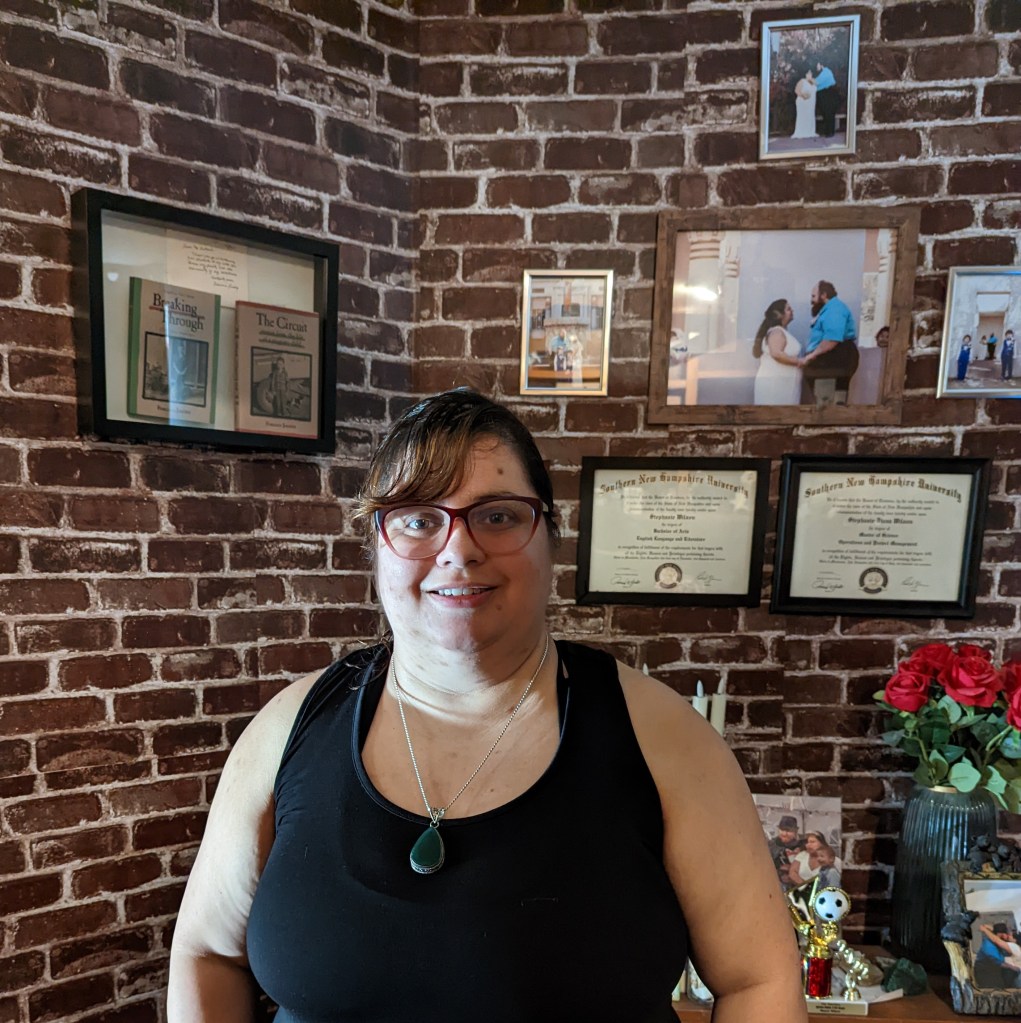
- I have learned that picking a green one is good if you use a filter on YouTube or backgrounds on Zoom or Teams.
- https://amzn.to/3WKr471https://amzn.to/3YKJsyChttps://amzn.to/3juqNquhttps://amzn.to/3jrLt2G
- https://amzn.to/3VirWPb
- Speaking of keeping your business your own…
- https://amzn.to/3hWoeNz
- This mouse jiggler helps address the flaw in most brassware that tracks if you are working by how many times your mouse moves to show if you are at your computer. I think there needs to be a qualitative method to teach leaders about productivity and that breaks are productive until these attitudes change. We need to arm ourselves.
- https://amzn.to/3hWoeNz
- This brings us to a phone recording logger.
- https://amzn.to/3vyXS7P
- This phone logger protects against toxic bosses not on board with remote work because they say horrible things and choose to call because they think that’s not documentable. Unfortunately, as employees, we need to protect ourselves.
- https://amzn.to/3vyXS7P
- I am a walk-and-talk kind of person.
- https://amzn.to/3BZBFDq
- I don’t know about you when people use Teams as a phone. I love to walk and talk. Even if it is to walk to the kitchen for coffee, get my door dash from the door, or whatever. So remote headsets with wireless capabilities are lovely.
- https://amzn.to/3BZBFDq
- Blue light is horrible
- https://amzn.to/3WGS6w9
- I have migraines, and being on the computer with no blue light filter can make me sick. I get the blokz lenses for my glasses, but for those who don’t like to wear glasses, the blue light monitor filters are a great trick to protect your eyes and migraines.
- https://amzn.to/3WGS6w9
Hopefully these finds help you make your remote workplace more functional and help you set proper workplace boundaries. Supporting your physical and mental health in the new year is a key aspect to a happy new year in the remote workplace.
If you liked this article and found it informative, remember sharing is caring. Also, please like, subscribe, and check out some of my other media outlets. My consulting firm also offers training for companies to help develop more effective remote leadership.
Youtube: https://www.youtube.com/@Wickedbofthewest
Website: wickedbofthewestremoteconsulting.com
Facebook: https://www.facebook.com/WickedBoftheWestBusinessConsulting
Instagram: https://www.instagram.com/wickedbofthewestconsulting/
Twitter: @SDEubank
Blog: drstephaniebeardbaremoteresearch.org
LinkedIn: https://www.linkedin.com/in/stephanie-diana-eubank-590b3757/
Happy Holidays!
We should be working year-round to help our fellows during this time of the year. So, to help, I am talking in this youtube post about how women still struggle to rise in the business world and in family planning and are becoming the breadwinners regardless. So, to keep this resource of strong women, let’s help businesses get on board with offering more remote work. Christmas is about a mother bringing life into the world. Let’s help support women’s ability to keep doing that. Happy Holidays.
Remember Sharing is Caring.

Youtube: https://www.youtube.com/@Wickedbofthewest
Website: wickedbofthewestremoteconsulting.com
Facebook: https://www.facebook.com/WickedBoftheWestBusinessConsulting
Instagram: https://www.instagram.com/wickedbofthewestconsulting/
Twitter: @SDEubank
Blog: drstephaniebeardbaremoteresearch.org
LinkedIn: https://www.linkedin.com/in/stephanie-diana-eubank-590b3757/
It’s The Holiday Season… So, Let’s Talk About Women and Family Planning in Remote Work
By Stephanie Diana Eubank
As we come into the Holiday Season where one of the holidays is Christmas. Christmas is a celebration of birth, and now is an excellent time to talk about how women are not supported in the onsite workplace based on their ability to bring life into the world. However, to avoid getting too political about it, I will focus on how remote work can be a band-aid to help companies support women in the workplace.
First, let’s acknowledge that women tend to be significantly affected career and money-wise by having a child. According to the 2019 data Knop (2021); shows growth in the labor force based on the number of women entering the workforce. The US Census data details that women gain more education and stay in the workforce even after having children. Further, the US Census data shows that 4 out of 5 moms with higher education degrees who gave birth in 2019 demographics 71.2% were still working in the labor force. Within that demographic, only 9.2% took leave, and 1.5% were unemployed. The findings from the US Census data also showed those of women with just a bachelor’s degree that gave birth the same year, over 60.9% remained employed. Although interestingly, of those in the workforce with only a bachelor’s degree, 26.6% were not in the labor force.
COVID created chaos in many respects but according to the Bureau of Labor and Statistics Scopelliti (2021); showed women left the workforce due to childcare issues during COVID. This is further discussed by the US Census Bureau article by Heggeness et al. (2021), which notes the data showed at the height of the lockdowns, over one-third of the working mothers in the US were not able to work due to COVID lockdowns and the effects it had on childcare and health care. However, according to the US Census Bureau, by January 2021, over 18.5 million working moms were actively part of the labor force as the pandemic raged. It should be noted that this number is still short, with over 1.6 million moms in the workforce at the same time the year before.
The exciting thing is that by 2021 the hit to workplace gender demographics leveled out for working mothers and fathers. The pandemic hurt most people’s income and careers. Although the stats show that the pandemic has continued to break working mothers more than working fathers. It should be factored in that many women hold jobs in career paths that have been heavily affected by COVID, and many are considered essential workers.
All these stats being said, we cannot ignore that paid family leave, and other maternity benefits are still subpar for women in the US. Worse yet, as detailed in the Stanford University News article (De Witte, 2022), even if a company or state has a good maternity leave program, women’s jobs and career paths are still challenging to maintain because of our roles as mothers. Not having well-formed Paid Family Leave programs for men and women and lack of childcare have added to the slow return of women to the workplace. This fuels the untrue adage held by business professionals that once women have kids, they no longer focus on work. Thus, making it harder for women to move up in organizations and statistically making it harder for women to take leadership roles.
With all this being said, remote work leaves an exciting opportunity for working parents and women about to be mothers. I speak from experience when I say remote position afforded me the luxury of being with my children, which was great for my and their physical and emotional health. All while allowing me the room to grow and thrive in a Subject Matter Expert or SME type of leadership role in the remote workplace. Due to health complications, I had to transition to a remote workplace while pregnant with my oldest son. After giving birth, I was asked to return to the workplace rather than work primarily from home. I had my son in daycare for about four months when he was just a few weeks old. Although our local childcare giver was excellent and well-practiced (shout out to Gina), I was miserable. She had also commented on how my son was so clingy and cuddly, which in her experience, wasn’t typical for a young infant. Also, childcare was near my home, making it easy to pick up and drop off, but I was an hour away from where I worked (a relatively average commute for the San Francisco Bay Area). So, I constantly worried if there was an accident, I couldn’t get there quickly to my baby. I cried in the bathroom at work, continually missing my baby.
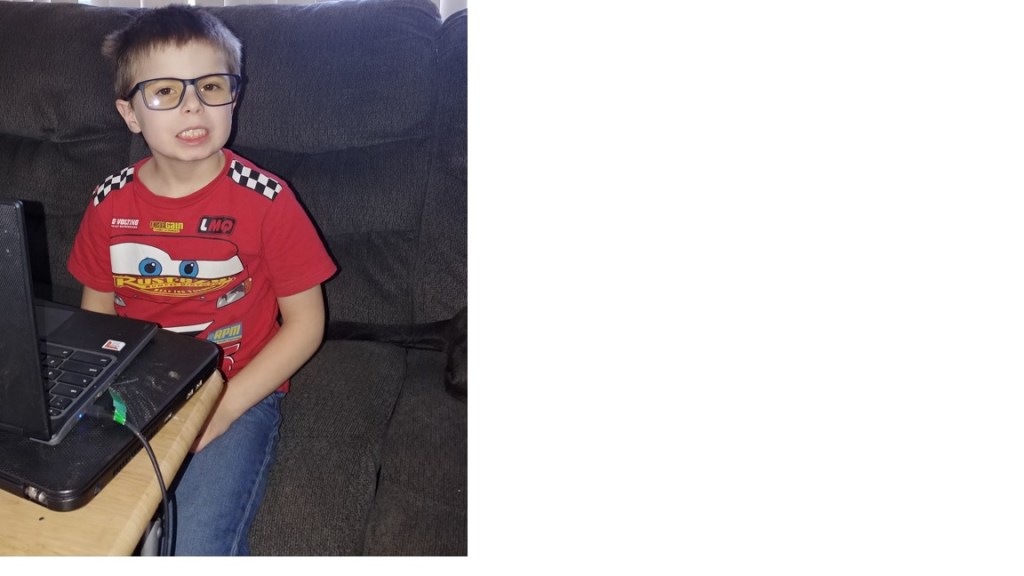

I was lucky when one of my mentors called me up and told me about a department she was developing and helped me get hired to work remotely full-time. I was able to spend more time with my son and really bond with him in a way that I couldn’t during maternity leave. Especially with all my complications, maternity leave was chaotic and didn’t leave much room to bond. Also, like many women, I was the primary breadwinner, so maternity leave pay was minuscule. Working remotely gave me the flexibility to get the job done and done right while having time to help care for my son and take breaks to mentally unwind and spend time with him.
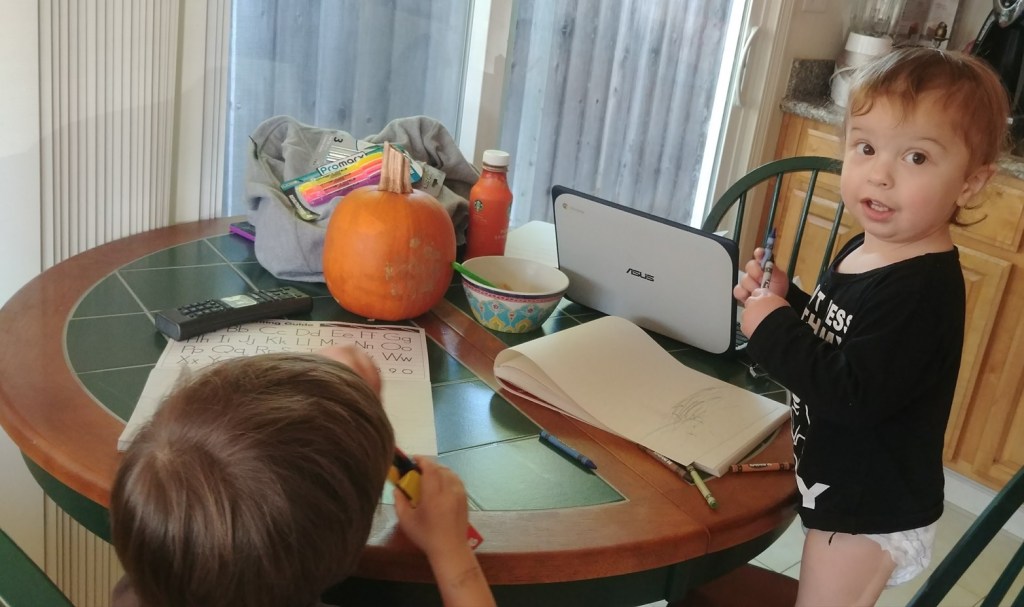
When I had my second son, my oldest and I could all bond together and balance my work and academic work while working full time, all because of the ability to work from home. Remote work has fueled my research and has helped give me the bandwidth to support my children, spend time with them, and invest in myself and my earning potential for my boys’ long-term care. After finishing my Doctorate program at Concordia University Chicago, my family and I have the bandwidth for long-term family planning with remote and hybrid work for both my husband and me.
I am by no means saying remote work is a way to fix the disparage between how women are affected in the workplace and laws that don’t support their ability to bring life into the world while providing for that life. I am saying that while society and business laws work to fix the issues and learn to support fellow women and people who care give for children, remote work has room for flexibility. The flexibility of remote work allows people to develop a work-life balance. With all everyone has seen and dealt with during and post-COVID, expanding remote work to give people the room to balance life and family will remind workers why they do it all. Family is important. Especially at this time of the year, let us all honor the caregivers of the world and workforce and remember to work to support them. Even if the best support is remote work.
If you liked this article and found it informative, remember sharing is caring. Also, please like, subscribe, and check out some of my other media outlets. My consulting firm also offers training for companies to help develop more effective remote leadership.

Youtube: https://www.youtube.com/@Wickedbofthewest
Website: wickedbofthewestremoteconsulting.com
Facebook: https://www.facebook.com/WickedBoftheWestBusinessConsulting
Instagram: https://www.instagram.com/wickedbofthewestconsulting/
Twitter: @SDEubank
Blog: drstephaniebeardbaremoteresearch.org
LinkedIn: https://www.linkedin.com/in/stephanie-diana-eubank-590b3757/
Work Cited
De Witte, M. (2022, March 9). The real benefits of paid Family leave. Stanford News. Retrieved December 19, 2022, from https://news.stanford.edu/2022/03/09/real-benefits-paid-family-leave/
Heggeness, M. L., Fields, J., García Trejo, Y. A., & Schulzetenberg, A. (2021, October 8). Tracking job losses for mothers of school-age children during a health crisis. Census.gov. Retrieved December 19, 2022, from https://www.census.gov/library/stories/2021/03/moms-work-and-the-pandemic.html
Knop, B. (2021, October 28). Among recent moms, more educated most likely to work. Census.gov. Retrieved December 19, 2022, from https://www.census.gov/library/stories/2019/08/are-women-really-opting-out-of-work-after-they-have-babies.html
Scopelliti, D. (2021, April). Has covid-19 affected mothers’ labor market outcomes? : Monthly Labor Review. U.S. Bureau of Labor Statistics. Retrieved December 19, 2022, from https://www.bls.gov/opub/mlr/2021/beyond-bls/has-covid-19-affected-mothers-labor-market-outcomes.htm
Where Have All the Workers Gone?
By Stephanie Diana Eubank
So, there are a lot of articles on companies pushing for remote workers to come back to the office. Inversely we see a rise in demand for Remote Work positions. This rise in remote work has made the concept of constant turnover a norm in business as companies and management within companies push employees to come back to the office when they don’t want to. As it was pre-pandemic, the office is a thing of the past. While companies cling to the past, one concept must be asked. Where have all the workers gone?
The common narrative among leadership is that “People just don’t want to work anymore.” Extensive research on this is extremely untrue. According to the Bureau of Labor Statistics (BLS), the jobs report shows the US unemployment rate is at 3.7%. The BLS details how remote work jobs are growing and companies that embrace it value flexibility in scheduling. Remote work post-pandemic has also come with rises in pay on average by 8% across the US, per the BLS findings. This kind of sweetens the deal for employees. Based on the math, employees work smarter, not harder, and remotely. Which is great news for the economy and for diversity in the workplace. Along with family dynamics, that’s a different post.
Then why are companies pulling back remote workers, you ask? Before COVID, companies used to do away with remote workers and teams up front as a cost-cutting method. They disguised it as a maneuver to increase (yuck) “synergy,” creativity, and productivity. Although all the stats since 2020 squash that idea. But in truth, this was done so that companies didn’t have to lay these people off as if it were a financial issue. Basically, having a layoff without having a layoff. The most notable person to do this was the CEO of Yahoo back in 2013. She was ridiculed because this adversely affected the company’s women the most. Considering Yahoo’s hardships since then, it is probably wise to tread with caution on companies that ban remote work, as that is not usually a good historical sign of healthy growth.
Another similar tactic companies have used in the past is to relocate the main office and require everyone to move to that new location and come into the office. This was for the same reasons, but with remote work, if this is done and remote work is not welcomed, I would also tread lightly like a cute fluffy animal that doesn’t look so good.
The next straw man argument given to support the idea that employees don’t want to work is always, “Well, what about Quiet Quitting?” or “Acting Your Wage”? What about it? Quiet Quitting and Acting Your Wage are both moves by employees to set healthy boundaries in the workplace. For decades we have had toxic workplaces having toxic philosophies that increase burnout and workplace PTSD that we have all had a hand in normalizing. Such as “We’re a workplace family,” which manipulates employees to work longer and harder hours, often without additional pay. Cause the things we do for family. All the while losing out on rest and time with our actual families. Which is not good for building a stable workplace. Or demanding meetings during off time and not paying for those times and the work done in those meetings. Another I dislike in a remote workplace is when leaders call at 3am your time and can’t figure out why you aren’t working on the email question they sent one minute ago. This is fine when it is legitimately an “Oops, I forgot you are in another time zone; sorry to wake you.” But, when it is followed by, “No excuse if I email you should respond immediately, I don’t care what time or time zone,” that’s not acceptable.
Also, in remote work, everything is more transparent and documented. So, toxic leaders or toxic culture gets spotted sooner in remote work. This does more work for Human Resources because no one trains leaders how to lead unless they went to college and got experience from good leaders and remote leaders are different. Remote workers need a different type of leader. You can’t be that unfeeling distant leader in a remote workplace because it is harder to bond.
We need leadership that is like a teacher. And what I mean by this is having the grace to command your classroom like a teacher. Put up with no BS and yet still be caring and sensitive. Empathetic to things remote workers miss from the onsite concept. Like bonding with coworkers and open communication. Simple acts of caring. Like calling to say “Hi.” Just to make sure everything on their end is OK. Once we remember we, as leaders, are people just like our team members, we can all spare some kindness. That doesn’t mean we need to be pushovers. It just means that leadership’s ruthless, scarcity attitudes don’t work in a remote workplace. We have all survived and seen too much during COVID.
So, Acting Your Wage and Quiet Quitting is setting boundaries to prevent burnout and workplace PTSD while demanding better from leadership.
Ultimately, employees go remotely or in-person to companies with better leadership skills. Remember, people don’t quit companies. They quit leaders.
If you found this article interesting, follow me on my social media outlets. My consulting firm also offers training for companies to help develop more effective remote leadership.
Youtube: https://www.youtube.com/@Wickedbofthewest
Website: wickedbofthewestremoteconsulting.com
Facebook: https://www.facebook.com/WickedBoftheWestBusinessConsulting
Instagram: https://www.instagram.com/wickedbofthewestconsulting/
Twitter: @SDEubank
Blog: drstephaniebeardbaremoteresearch.org
LinkedIn: https://www.linkedin.com/in/stephanie-diana-eubank-590b3757/
Work Cited
Arthur, C. (2013, February 25). Yahoo chief bans working from home. The Guardian. Retrieved December 13, 2022, from https://www.theguardian.com/technology/2013/feb/25/yahoo-chief-bans-working-home
Liu, J. (2022, October 7). Remote work could keep fueling high turnover: ‘the map is open for job seekers’. CNBC. Retrieved December 13, 2022, from https://www.cnbc.com/2022/10/07/remote-work-could-keep-fueling-high-turnover.html
KISLIUK, B. I. L. L. (2010, July 23). Staff changes for Bank of America. Los Angeles Times. Retrieved December 13, 2022, from https://www.latimes.com/socal/glendale-news-press/news/tn-gnp-xpm-2010-07-23-tn-gnp-bank-20100723-story.html
Bureau of Labor and Statistics. (2022, March 1). Telework during the COVID-19 Pandemic: Estimates Using the 2021 Business Response Survey. Retrieved December 13, 2022, from https://www.bls.gov/opub/mlr/2022/article/telework-during-the-covid-19-pandemic.htm#:~:text=At%20the%20time%20of%20the,involving%20teleworking%20rarely%20or%20never.
Eckstein, J. (2022, December 7). How yahoo makes money. Investopedia. Retrieved December 13, 2022, from https://www.investopedia.com/articles/markets/121015/how-yahoo-makes-money-yhoo.asp#:~:text=Today%2C%20Yahoo%20exists%20as%20a,for%20Yahoo’s%20real%20clients%2C%20advertisers.
Women Raise Both Families and Economies
By Stephanie Diana Eubank
So, I have written about the fact that I am a working mom of two here in California, and I have been blessed to work remotely as a Subject Matter Expert or SME in the financial industry for over ten years. And no, I don’t mean I have worked remotely during COVID, and it felt like 10 years. I have worked remotely as a Subject Matter Expert in the financial sector for over 10 years. Remote work gave me the luxury of having a work/ life balance that many women have not been granted.
It struck me today when I was reading an article from The Verge.com, and they were talking about the best gifts for work-from-home employees. And the first few lines of the work read something to the effect that when Dolly Parton wrote the song “9-5,” she did not contemplate remote work. The author isn’t wrong, but I think Dolly would have liked the freedom of remote work. And to be fair remote work has been a concept that we have had the tools to do on a large scale without suffering productivity since the 80s, so maybe she did. I know I need my cup of ambition to work from home.
I am ADHD and Dyslexic, so what my husband and I call Squirrel moments…I love Dolly Parton she wrote one of my favorite Whitney Huston sons, “I Will Always Love You.” I also love her movies. Ha-ha, I joke with my hairdresser that I have never done my hair because it just isn’t natural, as a paraphrase from one of my favorite lines from “Steel Magnolias.”
Back to the topic, remote work is a crucial tool for women to get back into and stay in the workforce. Part of the inspiration for my research and advocacy of remote work is that it brings more diversity into the workplace. One group is a particular woman.
According to the MIT Sloan School of Management article published in April of 2022 (and I will paste it in the comments.), women are less likely, statistically speaking, to be promoted. According to the research of Prof Danielle Li, women in the workplace receive consistently higher performance ratings than men but are 14% less likely to be promoted.
Unfortunately, a big part of the problem is that there is still the old belief that if women get pregnant, they will leave their job. Or that women are less reliable in the workplace because they have kids or are traditionally otherwise primary caregivers. Now where women are, according to Caregiver.org, 75% of the US are caregivers to children, the elderly, or disabled persons. However, the PEWs report of October 2022 reads that women are more likely than men to adjust their careers for their family it is not because they are less devoted to their job or less capable but because there is no infrastructure to help them balance work and family. In 2012 PEWs published a report that showed 79% of Americans said women should return to a “more traditional role,” but when the same people were surveyed about what to do about kids with working moms, only 16% said that having a mom that works full time is good for kids?
This is stressed even more when we think about how over 1.1 million women had to leave the workforce during COVID to address the loss of childcare. And don’t get me started on the topic of maternity leave.
As a working mom, I have worked remotely for over 10 years. And no, I don’t mean I have worked remotely during COVID, and it felt like 10 years. I have worked remotely as a Subject Matter Expert in the financial sector for over 10 years. Remote work gave me the luxury of having a work/ life balance that many women have not been granted.
Remote work is not a fix for all the infrastructure issues to support women in the labor force. Still, it creates opportunities for women to balance and provide those tools and leadership perspectives that the economy needs while supporting their families. It also lowers stress for remote workers. As leaders, we must remember a basic economic concept that women raise families and economies.
But if you want real items that are good gift ideas this Holiday season for the Remote Working Mom or Woman in your life, I suggest the following:
- https://amzn.to/3ujd9cf, especially if they have a micro-managing boss or their company doesn’t use Boss Ware ethically.
- https://amzn.to/3HanBu3
- https://amzn.to/3iAXG4n
- https://amzn.to/3OUOgNs
- https://www.amazon.com/dp/B0798LJDV3/ref=cm_sw_r_as_gl_apa_gl_i_PYS1YWJDZFCY7DPD8N39?linkCode=ml2&tag=drbear2023-20
- https://amzn.to/3EZEAwm
- https://amzn.to/3Vr0pMD
- https://amzn.to/3UmyThO
- https://amzn.to/3FkzWui
- https://amzn.to/3H30OjS
- This is my personal favorite is the pink one https://amzn.to/3H30OjS
That’s it for this post. If you want more info on the research behind this post, check out the links below and my Consulting firm’s website. And remember sharing is caring, so like and subscribe. Also, references are below on the research cited in this article.
I made a post on my Youtube Channel @wickedbofthewest on this topic check me out at the links below.
Youtube: https://www.youtube.com/@Wickedbofthewest
Website: wickedbofthewestremoteconsulting.com
Facebook: https://www.facebook.com/WickedBoftheWestBusinessConsulting
Instagram: https://www.instagram.com/wickedbofthewestconsulting/
Twitter: @SDEubank
Work Cited
Johnson, S. K., Hekman, D. R., & Chan, E. T. (2019, February 7). If there’s only one woman in your candidate pool, there’s statistically no chance she’ll be hired. Harvard Business Review. Retrieved December 2, 2022, from https://hbr.org/2016/04/if-theres-only-one-woman-in-your-candidate-pool-theres-statistically-no-chance-shell-be-hired
Somers, M. (2022, April 12). Women are less likely than men to be promoted. here’s one reason why. MIT Sloan. Retrieved December 2, 2022, from https://mitsloan.mit.edu/ideas-made-to-matter/women-are-less-likely-men-to-be-promoted-heres-one-reason-why
Parker, K. (2020, August 14). Women more than men adjust their careers for family life. Pew Research Center. Retrieved December 2, 2022, from https://www.pewresearch.org/fact-tank/2015/10/01/women-more-than-men-adjust-their-careers-for-family-life/
Gonzales, M. (2022, July 7). Nearly 2 million fewer women in Labor Force. SHRM. Retrieved December 2, 2022, from https://www.shrm.org/resourcesandtools/hr-topics/behavioral-competencies/global-and-cultural-effectiveness/pages/over-1-million-fewer-women-in-labor-force.aspx#:~:text=However%2C%201.1%20million%20women%20left,jobs%20lost%20since%20February%202020.
Fry, R. (2022, February 1). Some gender disparities widened in the U.S. workforce during the pandemic. Pew Research Center. Retrieved December 2, 2022, from https://www.pewresearch.org/fact-tank/2022/01/14/some-gender-disparities-widened-in-the-u-s-workforce-during-the-pandemic/
I am Finally Starting My Own Consulting Firm!
I finally made my first video for my Youtube channel to promote my Business Consulting firm. Check out my company website at https://wickedbofthewestremoteconsulting.com/. You can also check me out on the following social media links.
Facebook: https://www.facebook.com/WickedBoftheWestBusinessConsulting
Instagram: wickedbofthewestconsulting
Youtube: Wickedbofthewest
Twitter: @SDEubank
 Dr. Stephanie Diana Eubank DBA Remote Team Research (AKA Dr. Bear)