Tag: #communication
It’s The Holiday Season… So, Let’s Talk About Women and Family Planning in Remote Work
By Stephanie Diana Eubank
As we come into the Holiday Season where one of the holidays is Christmas. Christmas is a celebration of birth, and now is an excellent time to talk about how women are not supported in the onsite workplace based on their ability to bring life into the world. However, to avoid getting too political about it, I will focus on how remote work can be a band-aid to help companies support women in the workplace.
First, let’s acknowledge that women tend to be significantly affected career and money-wise by having a child. According to the 2019 data Knop (2021); shows growth in the labor force based on the number of women entering the workforce. The US Census data details that women gain more education and stay in the workforce even after having children. Further, the US Census data shows that 4 out of 5 moms with higher education degrees who gave birth in 2019 demographics 71.2% were still working in the labor force. Within that demographic, only 9.2% took leave, and 1.5% were unemployed. The findings from the US Census data also showed those of women with just a bachelor’s degree that gave birth the same year, over 60.9% remained employed. Although interestingly, of those in the workforce with only a bachelor’s degree, 26.6% were not in the labor force.
COVID created chaos in many respects but according to the Bureau of Labor and Statistics Scopelliti (2021); showed women left the workforce due to childcare issues during COVID. This is further discussed by the US Census Bureau article by Heggeness et al. (2021), which notes the data showed at the height of the lockdowns, over one-third of the working mothers in the US were not able to work due to COVID lockdowns and the effects it had on childcare and health care. However, according to the US Census Bureau, by January 2021, over 18.5 million working moms were actively part of the labor force as the pandemic raged. It should be noted that this number is still short, with over 1.6 million moms in the workforce at the same time the year before.
The exciting thing is that by 2021 the hit to workplace gender demographics leveled out for working mothers and fathers. The pandemic hurt most people’s income and careers. Although the stats show that the pandemic has continued to break working mothers more than working fathers. It should be factored in that many women hold jobs in career paths that have been heavily affected by COVID, and many are considered essential workers.
All these stats being said, we cannot ignore that paid family leave, and other maternity benefits are still subpar for women in the US. Worse yet, as detailed in the Stanford University News article (De Witte, 2022), even if a company or state has a good maternity leave program, women’s jobs and career paths are still challenging to maintain because of our roles as mothers. Not having well-formed Paid Family Leave programs for men and women and lack of childcare have added to the slow return of women to the workplace. This fuels the untrue adage held by business professionals that once women have kids, they no longer focus on work. Thus, making it harder for women to move up in organizations and statistically making it harder for women to take leadership roles.
With all this being said, remote work leaves an exciting opportunity for working parents and women about to be mothers. I speak from experience when I say remote position afforded me the luxury of being with my children, which was great for my and their physical and emotional health. All while allowing me the room to grow and thrive in a Subject Matter Expert or SME type of leadership role in the remote workplace. Due to health complications, I had to transition to a remote workplace while pregnant with my oldest son. After giving birth, I was asked to return to the workplace rather than work primarily from home. I had my son in daycare for about four months when he was just a few weeks old. Although our local childcare giver was excellent and well-practiced (shout out to Gina), I was miserable. She had also commented on how my son was so clingy and cuddly, which in her experience, wasn’t typical for a young infant. Also, childcare was near my home, making it easy to pick up and drop off, but I was an hour away from where I worked (a relatively average commute for the San Francisco Bay Area). So, I constantly worried if there was an accident, I couldn’t get there quickly to my baby. I cried in the bathroom at work, continually missing my baby.
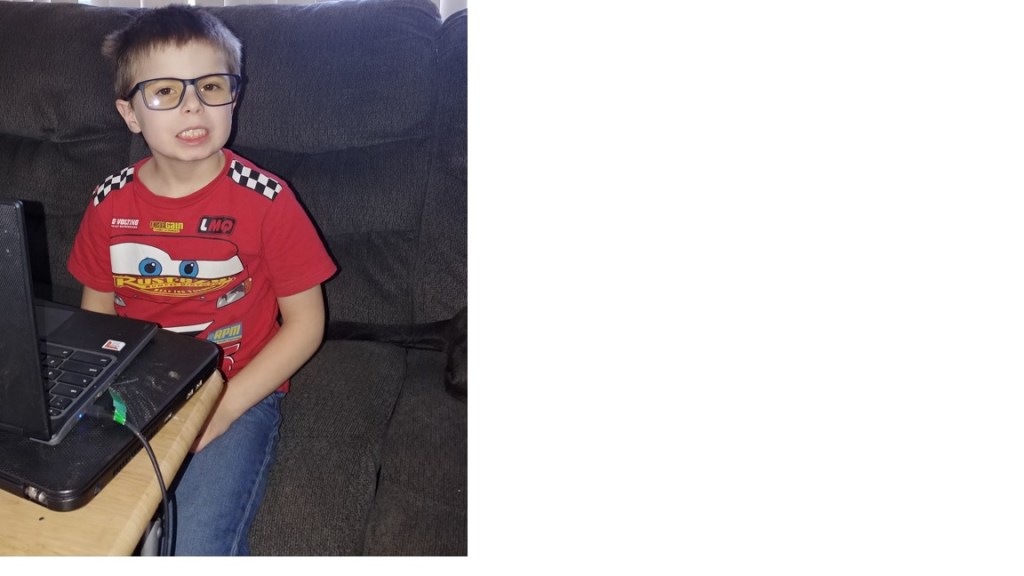

I was lucky when one of my mentors called me up and told me about a department she was developing and helped me get hired to work remotely full-time. I was able to spend more time with my son and really bond with him in a way that I couldn’t during maternity leave. Especially with all my complications, maternity leave was chaotic and didn’t leave much room to bond. Also, like many women, I was the primary breadwinner, so maternity leave pay was minuscule. Working remotely gave me the flexibility to get the job done and done right while having time to help care for my son and take breaks to mentally unwind and spend time with him.
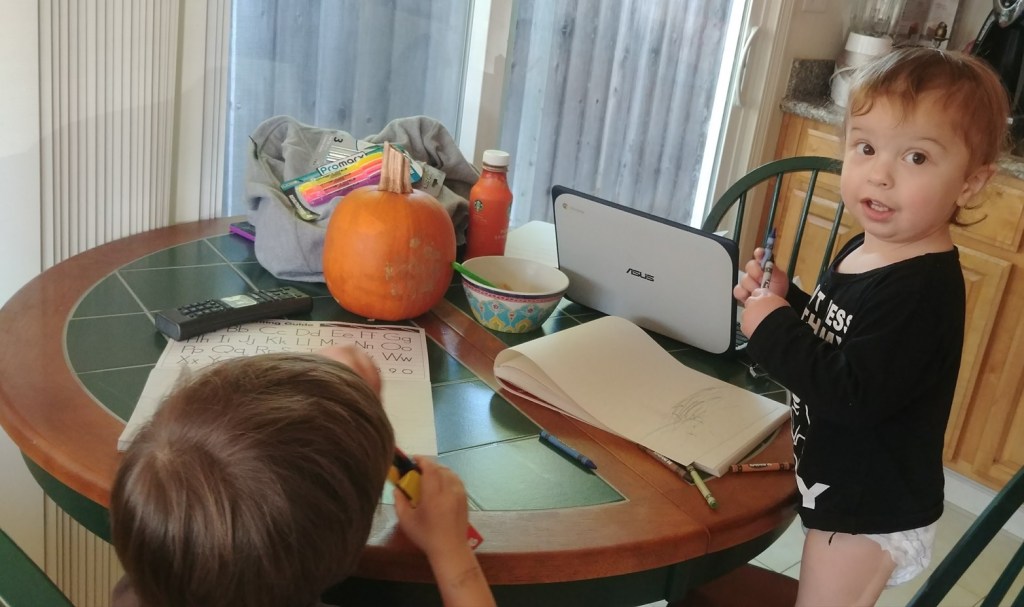
When I had my second son, my oldest and I could all bond together and balance my work and academic work while working full time, all because of the ability to work from home. Remote work has fueled my research and has helped give me the bandwidth to support my children, spend time with them, and invest in myself and my earning potential for my boys’ long-term care. After finishing my Doctorate program at Concordia University Chicago, my family and I have the bandwidth for long-term family planning with remote and hybrid work for both my husband and me.
I am by no means saying remote work is a way to fix the disparage between how women are affected in the workplace and laws that don’t support their ability to bring life into the world while providing for that life. I am saying that while society and business laws work to fix the issues and learn to support fellow women and people who care give for children, remote work has room for flexibility. The flexibility of remote work allows people to develop a work-life balance. With all everyone has seen and dealt with during and post-COVID, expanding remote work to give people the room to balance life and family will remind workers why they do it all. Family is important. Especially at this time of the year, let us all honor the caregivers of the world and workforce and remember to work to support them. Even if the best support is remote work.
If you liked this article and found it informative, remember sharing is caring. Also, please like, subscribe, and check out some of my other media outlets. My consulting firm also offers training for companies to help develop more effective remote leadership.

Youtube: https://www.youtube.com/@Wickedbofthewest
Website: wickedbofthewestremoteconsulting.com
Facebook: https://www.facebook.com/WickedBoftheWestBusinessConsulting
Instagram: https://www.instagram.com/wickedbofthewestconsulting/
Twitter: @SDEubank
Blog: drstephaniebeardbaremoteresearch.org
LinkedIn: https://www.linkedin.com/in/stephanie-diana-eubank-590b3757/
Work Cited
De Witte, M. (2022, March 9). The real benefits of paid Family leave. Stanford News. Retrieved December 19, 2022, from https://news.stanford.edu/2022/03/09/real-benefits-paid-family-leave/
Heggeness, M. L., Fields, J., García Trejo, Y. A., & Schulzetenberg, A. (2021, October 8). Tracking job losses for mothers of school-age children during a health crisis. Census.gov. Retrieved December 19, 2022, from https://www.census.gov/library/stories/2021/03/moms-work-and-the-pandemic.html
Knop, B. (2021, October 28). Among recent moms, more educated most likely to work. Census.gov. Retrieved December 19, 2022, from https://www.census.gov/library/stories/2019/08/are-women-really-opting-out-of-work-after-they-have-babies.html
Scopelliti, D. (2021, April). Has covid-19 affected mothers’ labor market outcomes? : Monthly Labor Review. U.S. Bureau of Labor Statistics. Retrieved December 19, 2022, from https://www.bls.gov/opub/mlr/2021/beyond-bls/has-covid-19-affected-mothers-labor-market-outcomes.htm
I am Finally Starting My Own Consulting Firm!
I finally made my first video for my Youtube channel to promote my Business Consulting firm. Check out my company website at https://wickedbofthewestremoteconsulting.com/. You can also check me out on the following social media links.
Facebook: https://www.facebook.com/WickedBoftheWestBusinessConsulting
Instagram: wickedbofthewestconsulting
Youtube: Wickedbofthewest
Twitter: @SDEubank
TACTICAL JOB HOPPING IN REMOTE WORK
By Stephanie Diana Eubank
I don’t know about you, but when I was making my first resume in high school, the constant adage was that you shouldn’t look like you are job hopping. You need to stay at a company for as long as you can. It looks good on a resume. However, this has not been the case for many decades now. Especially not in the remote work community pre and post-COVID.
According to the Bureau of Labor and Statistics, as of 2022, the average employee stays in the same role for 4.1 years but only stays at the same employer for an average of 3 years. So far, the data matches the average onsite worker as well.
As remote work is only 2020 becomes more of a norm than the 5.7% before COVID, remote workers jumped to 17.9% of all US workers in the US labor market per the Bureau of Labor and statistics as of 2020. However, as of May 2022, 35.4% work remotely.
For clarification, let’s define what tactical job-hopping means. Tactical job hopping refers to leaving one job or company to go to another within a 1–4-year time frame. This is done to either shift careers because of changes to the industry or personal changes or to gain a higher title or higher pay. When discussing tactical job hopping, the concepts that are outside of an employee’s control, like industry-wide layoffs (like that constantly happens in the financial industry to the point it is almost suspicious if you have been at the same company more than four years) or jobs that have outsourced industry-wide or have faded out due to automation.
Now those semantics are out of the way, let’s address another reason people use tactical job hopping that they won’t say in an interview. Tactical Job Hopping to escape a toxic work environment. This reason is especially true for remote workers. There is an adage that people don’t quit jobs. They quit managers. Well, this can also be the case for tactical job hopping.
Also, it is possible to create a toxic work environment in a remote workplace. Unfortunately, it is an easier task in a remote workplace than one might want to think about. The ease of developing a toxic remote workplace environment is often due to managers not being taught to manage and not being instructed on how to manage a remote workplace. Remote work takes a different kind of management style. As I have researched and published before, remote leadership must lead with empathy and true authenticity and communicate more inclusively and creatively. Where remote work has room to build healthy leadership boundaries, it takes more effort to show respect and openness to employees as a leader in remote work.
When leadership is toxic tactical job hopping allows onsite and remote workers to find an organizational culture that addresses these issues. Being able to leave a toxic work situation is liberating and allows employees to prioritize their mental health and prevent burnout. When employees prevent burnout through things like quiet quitting (establishing healthy boundaries) and acting on their wage (prioritizing work and life balance for better mental health without hurting the chain of command or leaving themselves open to being pigeonholed into one job or career field) burn out is prevented and helps to not just better productivity in an organization but also helps keep a stable economy moving by having a stable workforce.
This helps break the toxic work culture concept of staying for the sake of a resume duration to show a new company. When tactical job hopping is considered by an employer, we prevent burnout and embrace new hires that are talented and emotionally mature. Tactical job hopping to not stay at a toxic workplace by not following the old construct of staying in the same company until they are done with you helps break the toxic work culture by breaking the cycle and not staying at a company longer than one should. Staying in a toxic workplace too long can cause workplace PTSD and this can take years of working in a nontoxic work environment and therapy to lessen the stress of workplace PTSD.
Which begs the question of Organizational Leadership, what can be done to prevent this in an onsite and remote workplace?
- Have Human Resources (HR) learn to spot signs of poor leadership and not just regard it as people leaving for better pay or benefits. Investigate high turnover.
- Invest in training managers on how to manage. Don’t just assume if they are good at their job, they can lead your team.
- Train your managers on how to manage a remote workplace. Remote leadership is a different ball game altogether.
- If you are having trouble knowing where to start developing remote leadership training check out my new consulting firm wickedbofthewestremoteconsulting.com
- Also, hiring leaders who are not typically those you think about for leadership in remote workplaces is another good idea. People who are better with interpersonal communication. To learn more about what types of leadership work best in a remote workplace, check out my consulting firm’s website and social media. wickedbofthewestremoteconsulting.com
There are also some good books on these topics to help spot tactical job hopping from a toxic employee or those hurt by the economy.
- https://amzn.to/3FbvNc0
- https://amzn.to/3XK25SI
- https://amzn.to/3GW6xIb
- https://amzn.to/3F8Qc1w
- https://amzn.to/3VECPM3
Remember that sharing is caring, and if you enjoyed this article, please see my social media links and share.
Youtube: https://www.youtube.com/@Wickedbofthewest
Website: wickedbofthewestremoteconsulting.com
Facebook: https://www.facebook.com/WickedBoftheWestBusinessConsulting
Instagram: https://www.instagram.com/wickedbofthewestconsulting/
Twitter: @SDEubank
References
Bureau of Labor and Statistics. (2022, September 22). Employee Tenure Summary. Bureau of Labor and Statistics. Retrieved November 29, 2022, from https://www.bls.gov/news.release/tenure.nr0.htm.
Bureau of Labor and Statistics. (2022, May 11). 7.7 percent of workers teleworked due to COVID-19 in April 2022. Bureau of Labor and Statistics. Retrieved November 29, 2022, from https://www.bls.gov/opub/ted/2022/7-7-percent-of-workers-teleworked-due-to-covid-19-in-april-2022.htm.
Liu, J. (2022, January 18). 4 shows a company is invested in remote work long-term. CNBC. Retrieved November 29, 2022, from https://www.cnbc.com/2022/01/18/how-to-know-if-a-company-is-really-committed-to-remote-work-long-term.html
McMenamin, L. (2021, April 19). Why long-term workplace trauma is a real phenomenon. BBC Worklife. Retrieved October 20, 2022, from https://www.bbc.com/worklife/article/20210415-why-long-term-workplace-trauma-is-a-real-phenomenon
Robinson, B. (2022, October 12). Experts say that remote work is here to stay and will increase into 2023. Forbes. Retrieved November 29, 2022, from https://www.forbes.com/sites/bryanrobinson/2022/02/01/remote-work-is-here-to-stay-and-will-increase-into-2023-experts-say/
How Is This Not Being Researched in Business: The Growing Issue of Workplace Violence.
By: Stephanie Diana Eubank
For those who are not familiar with my work, while I start the process of defending and finishing my dissertation on remote work, I teach at California State University Stanislaus and East Bay. Specifically, I teach Operations Management. I add a component on Remote Leadership and Remote Work from my research to help prepare future Business Leaders for the growing change to a virtual and hybrid workplace. I touched on the topic of Workplace PTSD and its relationship between what is referred to by business practitioners as Toxic Leadership and what is academically called X Type Leadership. Many of us have examples of bad leaders we have dealt with in our careers, especially at the earlier stages. There are also managers whose leadership style doesn’t translate properly in a remote workplace and can come off as toxic. Further remote work makes it so that toxic leaders are exposed and documented.
Unfortunately, the work culture tends to back these leaders because they produce a lot although they have a revolving door of employees and a bad reputation. Rather than calculating all the exit interviews and other Human Resources data to analyze how this is not a sustainable leadership model. Much like micromanagement, these sort of leadership tactics is only meant to be used in short bursts as needed, not a consistent method of leadership. In these cases, those managers don’t know how to lead and instead mix up fear with respect. This mixes up can have devastating implications past how it can hurt a business.
After pointing out these facts to my students, I shifted to the topic of workplace PTSD. Which is a topic that has been studied mostly in psychology for decades now. The news has been reporting workplace PTSD, which it goes horribly wrong and results in workplace violence. The news and academic research have even found an uptick in workplace violence, especially since the COVID Pandemic.
A recent and heart-breaking example (and personally, I cried talking about this to my classes and cried again while writing this article) was the family in Merced that was kidnaped and killed. Per the referenced news articles, an employee who stole from the family’s business and was convicted and imprisoned was released this month. He went to their business and kidnapped the owners (a wife, husband, and brother-in-law) and their eight-month-old baby girl. After, the local police were on a massive manhunt and found a burnt van that they were abducted into and later found their bodies in the middle of a field in a neighboring county. Per the news reports, the suspect, a past employee, believed they still owed him money. His cohorts were found dead, and the suspect was found attempting suicide.
Another major example is found in a news article referencing a Valley Transit Authority Worker during the pandemic that shot up a transit station and killed many people. The news and research have been sounding the alarm that the excuse for it is that businesses don’t work, and there is a growing concern about workplace violence. In fact, a referenced Reuters article from 2009 notes how these sorts of workplace violence tend to uptick during recessions. As we look down the barrel of another recession, we must ask ourselves as leaders what we can do to help calm the waters?
Here are some suggestions for calming the waters and preventing workplace violence:
- Understand as leaders, we are human. Also, understanding that our teams and employees are also human. Once we all agree that we are flawed, then focus on managing the work, not the people. Specifically by being empathetic and kind rather than just being nice/ superficial.
- Encourage employee development. Point out to your teams that nothing is certain right now, and investing in developing new skills helps you at the company you are at and adds to your ability to take those skills with you on your career path. It shows that you and the company care about them and want to help them invest in themselves.
- Train Leaders to communicate and lead in less stressful ways and work on toxic habits as a part of employee development.
- Promote Remote Work. Remote work lowers the stresses of commuting and gives workers and leaders the ability to have space from ay toxic communication to relax in calmer ways. It also allows more flexibility and the ability to prioritize sleep.
- Leaders prioritize making the work culture include information on self-care and mental health resources.
- Stop pushing employees to work unpaid overtime and longer and harder hours than paid for. It just adds to burnout and increases the possibility of workplace violence.
Also, here are some additional reading resources on workplace violence:
- https://amzn.to/3fqWjUJ
- https://amzn.to/3sLT25I
- https://amzn.to/3TOyMfq
- https://amzn.to/3SVw06J
- https://amzn.to/3gXEDAs
- https://amzn.to/3WkBiM3
- https://amzn.to/3DMe8qT
- https://amzn.to/3zreIry
There is a growing risk of workplace violence to stress, burnout, and workplace PTSD, and with a growing recession, post-COVID issues have made a perfect storm. To prevent unwanted outcomes in business, we do risk assessments, and these mindful business practices suggested may help protect us all. Stay safe and remember the fundamental principle of business your employees and teams are your greatest resource, so treat them well.
References
Serrin, G. (2022, October 7). Here’s what we know about the Merced family kidnapping deaths. KCRA. Retrieved October 30, 2022, from https://www.kcra.com/article/merced-kidnapping-deaths-abducted-sikh-family-suspect-information/41548620#
Romo, V. (2021, May 27). We’re seeing a spike in workplace shootings. here’s why. NPR. Retrieved October 30, 2022, from https://www.npr.org/2021/05/27/1000745927/why-were-seeing-a-spike-in-workplace-shootings
Eubank, S. D. (2022, October 21). Workplace risks shouldn’t mirror risks of service members: an article on the rise of PTSD caused by bad leadership even in a remote workplace. Dr. Stephanie Diana Eubank DBA Remote Team Research (AKA Dr. Bear). Retrieved October 30, 2022, from https://drstephaniebeardbaremoteresearch.org/2022/10/20/workplace-risks-shouldnt-mirror-risks-of-service-members-an-article-on-the-rise-of-ptsd-caused-by-bad-leadership-even-in-a-remote-workplace/
Bunch, K. (2021). When employees turn deadly at work. WebMD. Retrieved October 30, 2022, from https://www.webmd.com/men/features/when-employees-turn-deadly-at-work
Doucette, M. L., Bulzacchelli, M. T., Frattaroli, S., & Crifasi, C. K. (2019). Workplace homicides committed by firearm: Recent trends and narrative text analysis. Injury Epidemiology, 6(1). https://doi.org/10.1186/s40621-019-0184-0
Tiesman, H., Marsh, S., Konda, S., Tomasi, S., Wiegand, D., Hales, T., & Webb, S. (2022). Workplace violence during the covid-19 pandemic: March–October, 2020, United States. Journal of Safety Research, 82, 376–384. https://doi.org/10.1016/j.jsr.2022.07.004
Pihl-Thingvad, J., Andersen, L. L., Brandt, L. P., & Elklit, A. (2019). Are frequency and severity of workplace violence etiologic factors of posttraumatic stress disorder? A 1-year prospective study of 1,763 social educators. Journal of Occupational Health Psychology, 24(5), 543–555. https://doi.org/10.1037/ocp0000148
Wizner, K., Cunningham, K., Gaspar, F. W., Dewa, C. S., & Grunert, B. (2022). Occupational posttraumatic stress disorder and workplace violence in workers’ compensation claims. Journal of Traumatic Stress, 35(5), 1368–1380. https://doi.org/10.1002/jts.22836
Hampton, T. (2022, January 5). Study holds warning on pandemic drinking. Harvard Gazette. Retrieved October 30, 2022, from https://news.harvard.edu/gazette/story/2022/01/covid-related-drinking-linked-to-rise-in-liver-disease/
Grossman, E. R., Benjamin-Neelon, S. E., & Sonnenschein, S. (2020). Alcohol consumption during the covid-19 pandemic: A cross-sectional survey of US adults. International Journal of Environmental Research and Public Health, 17(24), 9189. https://doi.org/10.3390/ijerph17249189
Wulfhorst, E. (2009, April 22). Recession fuels worries of workplace violence. Reuters. Retrieved October 30, 2022, from https://www.reuters.com/article/us-workplace-violence/recession-fuels-worries-of-workplace-violence-idUSTRE53L0SV20090422
Workplace Risks Shouldn’t Mirror Risks of Service Members: An Article on The Rise of PTSD Caused By Bad leadership Even In A Remote Workplace.
By: Stephanie Diana Eubank
When the phrase Post Traumatic Stress Disorder (PTSD) or Complex Post Traumatic Stress Disorder (CPTSD) is uttered most of us think of the term shell shock and think of our brave service members and how this disorder affects them. However, as detailed in the article, McMenamin (2021); published on the BBC PTSD is a growing issue in the workplace both in person and remotely. The issue detailed in, McMenamin (2021); are not that people are coming into the workplace having PTSD but, rather people are developing in the workplace. Welcome to the growing term and phenomenon of Workplace PTSD and Workplace CPTSD.
The issue is both employees being abused in the workplace and developing workplace PTSD and those who have been suffering from what is called Complex Post Traumatic Stress Disorder (CPTSD) where employees are being abused from one company to another. There are also employees trying to recover from workplace PTSD from previous abuse because they cannot afford to take time off to recover. The worst part about this phenomenon is that it isn’t new.
The article, Staglin (2022); which was published in Forbes comments on the fact that this has been a long-term issue with no name in the business industry. There is something to say about the trauma that can be found in emotionally labor focused jobs like customer service and sales jobs. Also, there is something to discuss in remote work and essential onsite workers during the pandemic seeing some truly disturbing things and dealing with stress on unparallel levels.
Whereby some trauma is uncontrollable. However, there are a lot of examples as detailed in, Petereit-Haack et al., (2020); of this being a more pervasive issue due to management being toxic and not knowing how to lead. Which from my personal experience has been a significant factor in leadership also becoming traumatized by stress at work, promoting toxic people by other toxic leaders, and a general lack of understanding from leadership the difference between fear and respect.
Toxic workplaces where things like racism, agism, disability shaming, bullying, gaslighting, screaming among other Human Resource No, no’s also can contribute to PTSD and CPTSD in the workplaces. Some, of these behaviors can become pervasive and embedded into organizational culture. However, attitudes are an overall reflection of leadership. Although remote work allows for more diversity in the workplace and allows room to document and stop these behaviors it is not impossible to make a toxic workplace in a remote workplace. It is hard to imagine however, I have experienced it firsthand even in a remote workplace. Worst of all many companies rather cover up the abuse and gaslight workers by saying that they cannot handle the wonderful leaders they have and their methods of authentic leadership. (Which is a perverted interpretation of authentic leadership. See, my article on authentic leadership.)
PTSD and having a toxic workplace that can contribute to PTSD in the workplace is a serious issue for business. Not just for the obvious reasons of potential lawsuits for hostile work environments. According to, Bass (2019); employees who are suffering from PTSD in the workplace are less productive and have a lower morale. When depression from PTSD gets bad enough employees can become a danger to themselves and others.
So, the question becomes how should a business work towards fixing this problem?
- When a manager has multiple people reporting a hostile work environment or a revolving door of employees, Human Resources should take notice and do some training for that leader.
- Develop some communications training for all staff. It will help keep everyone on the same page and address these issues.
- Teach leaders how to lead or prefer to promote and hire leaders with recommendations from past employees, not just employers. How your team or past employees speak about working with you speaks miles about you more than anything else in a background check.
- Companies should work to give room for employees to speak out on bad behavior to address where all parties might need training. This specific type should be room to speak out without reprisals.
- Remote work, which gives room for employees to set healthy boundaries and room to heal from past workplace trauma, is also a helpful tool. In-person makes it, so those who suffer from any disability or different abilities feel a need to mask their needs to blend in. This can be stressful and slow healing as employees regain confidence in their jobs. This remote is a great tool.
For additional information about workplace PTSD and CPTSD, here are some great books to check out:
- https://amzn.to/3TBUKBS
- Harder, H. G., Wagner, S., & Rash, J. (2016). Mental illness in the workplace: Psychological disability management. Taylor and Francis.
- https://amzn.to/3eK95O1
- Tehrani, N. (2011). Managing trauma in the workplace: Supporting workers and Organizations. Routledge.
- https://amzn.to/3TCKRnx
- Nadeau, K. G. (1997). “Add in the workplace: Choices, changes, and challenges” (1st ed.). Routledge; 1st edition.
- https://amzn.to/3TmLphI
- Manning, K. (2021). The empathetic workplace. HarperCollins Leadership, an imprint of HarperCollins.
Remember, sharing is caring, and please feel free to share workplace incidents that felt traumatic. It is good for helping with the healing process.
Work Cited
McMenamin, L. (2021, April 19). Why long-term workplace trauma is a real phenomenon. BBC Worklife. Retrieved October 20, 2022, from https://www.bbc.com/worklife/article/20210415-why-long-term-workplace-trauma-is-a-real-phenomenon
Manion, L. (2022, February 4). When trauma is triggered at work. NAMI. Retrieved October 20, 2022, from https://www.nami.org/Blogs/NAMI-Blog/February-2022/When-Trauma-Is-Triggered-at-Work
Staglin, G. (2022, October 12). Trauma at the workplace, what to do about it. Forbes. Retrieved October 20, 2022, from https://www.forbes.com/sites/onemind/2021/11/10/trauma-at-the-workplace–and-what-to-do-about-it/?sh=6c3953b439e1
Petereit-Haack, G., Bolm-Audorff, U., Romero Starke, K., & Seidler, A. (2020). Occupational risk for post-traumatic stress disorder and trauma-related depression: A systematic review with meta-analysis. International Journal of Environmental Research and Public Health, 17(24), 9369. https://doi.org/10.3390/ijerph17249369
https://www.ncbi.nlm.nih.gov/pmc/articles/PMC7765156/
Bass, B. (2019, August 8). Increasing awareness of the impact of PTSD in the Workplace. Sedgwick. Retrieved October 20, 2022, from https://www.sedgwick.com/blog/2019/08/08/increasing-awareness-of-the-impact-of-ptsd-in-the-workplace
Companies Are Losing Out on An Untapped Resource of Business by Not Promoting Remote Work: The Resource Being Differently Abled Employee Inclusivity.
By Stephanie Diana Eubank
So, I comment a lot on my research blog and on my personal social media about the fact that I am finishing my dissertation towards completing my doctorate degree in Business Administration. I also note how I have taught Operations Compliance in the financial sector and Operations Management in the California State University System to help share my earned skills with future leadership. I don’t discuss much while I practice more authentic leadership because I am a disabled student, instructor, and Business Subject Matter Expert.
I am both dyslexic and have ADHD. The Yale Center for Dyslexia, Shaywitz & Shaywitz (2020); notes that 20% of the American population has dyslexia. Further, Shaywitz & Shaywitz (2020); notes that dyslexia is an uncurable disability that can cause issues with reading, spelling, and learning additional languages. However, Shaywitz & Shaywitz (2020); goes on to note that those with dyslexia are slower readers but are intelligent, mentally fast, and creative problem solvers. (You can find more information on Dyslexia from the text, https://amzn.to/3KNsKrC, which is the book cited for this information Shaywitz & Shaywitz (2020).)
The CDC, on their link https://www.cdc.gov/ncbddd/adhd/facts.html defines ADHD as one of the most common neurodevelopment disabilities/ different abilities. However, when those who support and care for those with ADHD and those with different abilities learn how to manage ADHD symptoms, people learn how to capitalize on it. Such as, I use my hyper-focus on my educational goals and writing. However, it can make me seem scattered to others even though I can get multiple things done at once and need sound to balance myself. I even used musical playlists to memorize cross-country running trails in High School and College. It helped me focus and remember landmarks so I didn’t get lost. I even still, to this day, have songs I hum when I run on a track or on my home treadmill to keep and set my running pace. Also, what I thought was insomnia and waking up super early in my high school and undergrad program was, in fact, ADHD-induced insomnia.
This fact about my life and my different abilities is part of what inspires my research in leadership because studies have found that remote work helps increase diversity. However, when we think of diversity, we often consider race, gender, family status, and sexual orientation. Disabilities or more Different Abilities are often not considered in business regarding developing more inclusive workplaces.
Remote work allows for a more inclusive workplace and creates more diversity. I speak from my experience of working remotely for over ten years. Work from home (WFH) workplaces gives me room to be more productive and use the tools to focus I need without bothering others. It also gives me room to mask my different abilities to not be outed. (And yes, I understand I am outing myself by disclosing my disabilities. However, this is an important conversation that needs to be had, and those of us in the community need to bring awareness to the ongoing issues). In both the academic sector as a student and in the business arena, when I disclose my different abilities, I am told it is a disability, and I often receive negative or retaliatory treatment.
My personal experience is supported by the research found in Ameri & Kurtzberg (2022) and Howard (2022); about the difficulty the differently abled community finds in working onsite and obtaining work. Further, the research of Farrer (2022), Kanter (2022), and Willingham (2021); supports my findings that remote work tends to make it easier for differently-abled community members to find and retain work.
So, as a business Subject Matter Expert (SME), I can’t resist pointing out the brass tax. Otherwise known as why business leaders should care about the differently-abled community. The biggest reason, besides discrimination, is illegal since the community is a protected class. That reason is that research shows that diversity in a workplace develops a staff of employees that are more creative and have more out-of-the-box methods for solving problems. With our economy hitched on the development of creative ideas, tangible and intangible goods, out-of-the-box thinking, and creative problem solving are just what every company wants to give them a competitive advantage. Thus, promoting remote work helps attract more dynamic workers, including those in the differently-abled community.
Conclusion: Companies and managers need to learn to embrace remote work. Remote work is a good concept for the goose and the gander. It allows differently-abled workers to have a supportive workplace without really having to create a need to be othered in the workplace. In return, companies get creative problem solvers who help increase out-of-the-box thinking in the workplace. I keep quoting one of my mentors when she constantly repeats, “Learn to manage the work and not the people.” The ability of leadership to do this is more easily found in a remote work environment. All while contributing to more diversity and inclusion in the workplace.
If you are interested in reading up more on this topic, here are some books you may be interested in.
- https://amzn.to/3Bc9IrO
- https://amzn.to/3wUrfm3
- https://amzn.to/3Q9W9h3
- https://amzn.to/3TJycjF
- https://amzn.to/3THnni4
Work Cited
Ameri, M., & Kurtzberg , T. R. (2022, February 15). Leveling the playing field through remote work. MIT Sloan Management Review. Retrieved September 3, 2022, from https://sloanreview.mit.edu/article/leveling-the-playing-field-through-remote-work/
Baines, A. M. D. (2014). (Un)learning disability: Recognizing and changing restrictive views of student ability. Teachers College Press, Teachers College, Columbia University.
Chin, J. L., & Trimble, J. E. (2015). Diversity and leadership. Sage.
Farrer, L. (2022, April 14). Accommodating disabilities in remote and hybrid work. Forbes. Retrieved September 3, 2022, from https://www.forbes.com/sites/laurelfarrer/2022/03/30/accommodating-disabilities-in-remote–hybrid-work/?sh=54434a1c2c17
Howard, J. (2022, March 22). The benefits of remote work for people with disabilities. InclusionHub Digital Inclusion Resources. Retrieved September 3, 2022, from https://www.inclusionhub.com/articles/benefits-of-remote-work
Kanter, A. S. (2022, March 10). Our new remote workplace culture creates opportunities for disabled employees. Bill of Health. Retrieved September 3, 2022, from https://blog.petrieflom.law.harvard.edu/2022/03/10/remote-work-disability-ada/
KEMP, J. O. H. N. D. (2022). Disability-friendly workplace. JOHN WILEY & SONS.
Patel, A. B. (2020). Humanity at work: Diversity, inclusion and wellbeing in an increasingly distributed workforce. New Degree Press.
Reisman, F. K., & Severino, L. (2021). Using creativity to address dyslexia, dysgraphia, and dyscalculia: Assessments and techniques. Routledge.
Shaywitz, S. E., & Shaywitz, J. (2020). Overcoming dyslexia: A major update and revision of the Essential Program for reading problems at any level, incorporating the latest breakthroughs in science, educational methods, technology, and legal accommodations (2nd ed., Ser. pp.143-24.). Alfred A. Knopf.
https://dyslexia.yale.edu/dyslexia/what-is-dyslexia/
Willingham, A. J. (2021, August 10). Remote work made life easier for many people with disabilities. they want the option to stay. CNN. Retrieved September 3, 2022, from https://www.cnn.com/2021/08/10/health/remote-work-disabilities-pandemic-wellness-trnd/index.html
The Real Enemy of Remote Work… Middle Management
By Stephanie Diana Eubank
Several articles on companies speaking out about wanting to force workers to come back to the office regardless of current COVID and Monkey Pox surges. In one most recent article from JP Morgan CEO Jamie Dimon, Tsipursky (2022); commented on not wanting to allow for remote work anymore. The arguments used are the same that have been made since the 1980s, which are still moot as COVID taught us that remote workers are just as productive at home as in the office. While some organizations have leadership that is set in their ways, there is a real enemy of remote work, and it isn’t the corporations as one would think.
The real enemy of remote work is middle management. And there are five reasons why middle management is so against remote workers.
- Remote work means middle managers must do additional work to help the team bond.
In remote workplaces, team bonding can be strained by geographical location and the strain of COVID. The bonding in a team, be it remote or in-person, requires managers to facilitate and allow for some conversation and socializing among employees. Business, after all, is a social science. However, in a remote workplace, managers at all levels need to help facilitate collaboration and social interactions with team members.
The remote workplace makes that a harder job for managers because, in onsite workplaces, people bump into each other or participate in office functions which lower the work managers must do directly. Low socialization among remote workers can hinder morale and employee loyalty. This is detailed in the Harvard Business article; Heskett (2021) notes all the ways remote work changes the work style for middle managers. Thus, contributing to employees feeling the need to look for greener pastures in this Great Resignation world that the business arena is in.
- Middle managers must use qualitative and quantitative analysis to properly measure productivity in remote work.
With onsite workplaces, employers and middle managers can use physical observations with whatever method they use to measure Key Performance Indicators, otherwise known as KPIs. However, in a remote workplace, the physical observation is gone, and middle managers. As detailed in Jordan (2022), remote leaders rely on communications tools like Microsoft Teams and Slack. As seen in the book Teams for Dummies, Rosemarie (2021); (and found on this link https://amzn.to/3KoSSZZ), the system was not designed to monitor productivity. It was designed to aid in remote communications. As a person who has used Teams in the workplace, the system has flaws, such as unless the app is open on one’s computer and the mouse constantly moves over it, then it only reads someone as available if they are using teams actively. No one is using Teams or any communication system that much. It would mean the person being available isn’t using any other program on the computer. Also, several users complain that when using the app on their phone, even showing availability on the app, the computer version reads away. Even when someone is using both apps simultaneously at one’s desk.
This makes it so employees either are marked against them for lack of attendance or get anti-boss ware devices like these:
Management being unaware or choosing not to recognize how these systems are not designed to monitor productivity is hurting morale and encouraging what is called “Slow Quitting,” contributing to the Great Resignation. To keep employee retention up, middle management managers must find quantitative and qualitative methods to display remote employees’ work. This means managers must look at the quality of work and the macro and micro view of managing productivity in a remote workplace. There are methods for that, but there is math involved. I recommend reading Pullan (2022), which can be found on Amazon at https://amzn.to/3pOgPQL .
- Remote work makes it so that middle managers cannot just be managers anymore they must be producing.
In the past, within remote workplaces, middle management has been able to just work on the operational duties of management. As detailed in Kelly (2021), managers do not enjoy remote workplaces because now they are forced to be producing managers instead of just focusing on leadership. Requiring all managers to lead by example and creating a need to change leadership tactics known as X Theory Leadership style. X Theory Leadership often takes the form of an aggressive, results-driven method using fear in what is called Y theory leadership. Y Theory Leadership is leading authentically as oneself with humility and empathy. Being in the trenches and working shoulder to shoulder digitally with one’s team based on research data often also creates the dynamic of shared leadership. And for many X theory leaders, that’s the only arrow in their quiver as they are often taught to lead by promotion for being, say, the best sales rep in the region, which is not a leadership qualification. Knowing how to manage the work and understand people is. This is a concept learned in business coursework. Which is a big reason why business schools and business instructors like me exist.
- Remote work makes middle managers obsolete.
Shared Leadership, as defined in Han & Hazard (2022), is where teams develop autonomy and thus create a leadership dynamic within the group that all members contribute. This often happens in remote teams and within remote workplaces.
Shared leadership is often mixed up with a term called group thinks. Groupthink is where no original ideas happen because the group starts to develop the same opinion on the same topics. Basically, the embodiment of the commercial from the 90s with beloved comedian Robin Williams as the Genie stating, “Great minds think alike. Wrong! Great minds think for themselves”. Everyone thinks alike within the group and cannot think for themselves. Often this phenomenon is created when leaders lead with fear or hire only toxic positivity or Yes people to their teams.
Shared Leadership makes it so that each person is responsible for their contribution. The team joins forces without a designated leader, takes responsibility, and reaches out to one another for assistance. In a nutshell, they collaborate fully and don’t have an assigned leader. This is bad news for middle management cause then they aren’t necessarily needed. If everyone is sharing leadership, a manager producing or not is required.
- Remote workers endanger their higher income, which is unneeded.
Lastly, the biggest reason middle management doesn’t push for more remote work comes from the brass tax. Money. See, if shared leadership develops in remote work and corporations move away from the upward management ladder model, then there is no reason to pay managers more than the pay of those doing the work. According to the Washington Post article by McGregor (2021), in the United States, firms pay between 5%-20% more to managers than employees to middle management. Senior management has a bigger gap of 7.9 times what a middle manager makes. Leaders could use that money to further compensate teams if there were no middle managers or need for them. Which would drastically lower their potential income.
Conclusion: Remote work has already shaken up the world as we know it. However, remote work is not done, changing how we do everything. It will change how we design leadership dynamics and planning in the business arena and how we bond with each other. So, many leaders scream to the mountains that they want everything to return to normal. But business is meant to evolve and change, just like any concept in nature. Business as a function will shift. How many middle managers will be left in the dust for want of rising to the occasion?
Work Cited
Han, S. J., & Hazard, N. (2022). Shared leadership in virtual teams at work: Practical strategies and research suggestions for human resource development. Human Resource Development Review, 153448432210933. https://doi.org/10.1177/15344843221093376
Website https://journals.sagepub.com/doi/abs/10.1177/15344843221093376
Heskett, J. (2021, March 1). What does remote work mean for middle managers? HBS Working Knowledge. Retrieved August 27, 2022, from https://hbswk.hbs.edu/item/what-does-remote-work-mean-for-middle-managers
Jordan, R. (2022, April 20). Mastering digital leadership in the remote work environment. Smarter Business Review. Retrieved August 27, 2022, from https://www.ibm.com/blogs/services/2022/03/08/mastering-digital-leadership-in-the-remote-work-environment/
Kelly, J. (2021, March 19). How CEOS and workers feel about working remotely or returning to the Office. Forbes. Retrieved August 27, 2022, from https://www.forbes.com/sites/jackkelly/2021/03/19/how-ceos-and-workers-feel-about-working-remotely-or-returning-to-the-office/?sh=51bbd9a29d99
McGregor, J. (2021, December 5). The income gap between bosses and workers is getting even bigger. The Washington Post. Retrieved August 27, 2022, from https://www.washingtonpost.com/news/on-leadership/wp/2015/03/13/the-income-gap-between-bosses-and-workers-is-getting-even-bigger-worldwide/
Pullan, P. (2022). Virtual leadership practical strategies for success with remote or hybrid work and teams. Kogan Page.
Rosemarie, W. (2021). Microsoft Teams for dummies. John Wiley Sons Inc.
Tsipursky, G. (2022, August 23). Commentary: Here’s what JP Morgan CEO Jamie Dimon got wrong–and Meta got right–about remote work. Fortune. Retrieved August 27, 2022, from https://fortune.com/2022/08/23/what-jp-morgan-ceo-jamie-dimon-got-wronga-meta-remote-work-diversity-careers-gleb-tsipursky/
Four Concepts in Mentorship That Are Still Important, Especially in a Post-COVID World
By Stephanie Diana Eubank
I have worked in the financial industry for over twelve years now. While working in the financial industry, I have been blessed to have three mentors throughout my career. Two of them are women, and one identified as a man and happened to be a member of the LBGTQ community. The diversity of my mentors has helped me as a leader and a college-level business instructor and given me a more global perspective. I have truly been blessed to have such wonderful mentors. Although one of my mentors Dean Marks, passed away this week after a long hard battle with cancer. He is missed by not just me but all those in our field which he inspired.
With COVID dividing leaders and aspiring leaders of all walks of life, there are four concepts to consider in mentorship that are often swept under the rug. These four concepts are true for onsite and remote workplaces. However, with remote work becoming more normative, the focus needs to be on how mentorship can be addressed in a remote work environment.
The concept in Mentorship #1 is Ambiguousness of what mentorship is.
Mentors play a vital role in business employee development and leadership training. Since COVID and the lockdowns connecting with mentors and networking has become a more vital skill than ever. Not just for mentees but for those who are mentoring. This fact has never been truer than now as we try to adjust to the new normal that is COVID. In the book, Rolfe (2021), which can be found on Amazon at https://amzn.to/3PIp63H talks about the fact that mentoring often is an ambiguous term and can be confusing for both mentors and mentees. In this book, Rolfe (2021); also takes a practical approach versus a theoretical approach. The book Rolfe (2021) also details the importance of communication, boundaries, and how to structure mentorship so proper implementation can be used.
The concept in Mentorship #2 is Encouraging Diversity in Leadership.
As a woman, there can be stigmas about being mentored regardless of the gender of one’s mentor. As detailed in the book, Sandberg (2013); can be found at https://amzn.to/3IUyL4Z. Many are familiar with the book “Lean In” by Sandberg (2013); the research noted within both practical and observational findings by Sandberg and data researched to support the findings. The book Sandberg (2013); touches on the fact that there are few women of any race or creed in places of leadership. With COVID hurting women’s careers as they fight to get into and stay in places of leadership in a growing remote workplace, mentorship has never been more important towards growing diversity in leadership and business. Although may criticize Sandberg for her privileged vantage point that not all women can enjoy. However, she raises interesting points on how women being in places of leadership paves the way for positive change and creative problem-solving through diversity. With COVID rates surging and women either having to leave the workforce or work remotely while balancing childcare and child education while the pandemic rage on mentorship is important and can make it difficult for mentors and mentees to ask for the help needed to progress.
The concept in Mentorship #3 Asking for Help Is a Strength.
Asking for help is a soft skill that is often ignored in leadership. Mentors are a great resource in learning how to effectively ask for help and for mentees to learn what resources they truly have. Moreover, in a remote workplace, often leaders see asking for help as a weakness. Which is a toxic leadership trait for any leader. Teams asking for help and leaders asking for help keep turn times under control and support workers regardless of onsite or remote workplaces. An interesting book that tackles this topic of asking for and receiving help in a leadership role is Brand (2019), which is found at https://amzn.to/3PmPT60. It seems unconventional to read mentoring advice from Russel Brand, but his book highlights the concept of toxic leadership, where often, employees are not regarded as an organization’s strongest asset. Also, in the book Brand (2019); it is noted that asking for help even before COVID has always been regarded as a weakness when the need for help is poor planning on leadership, and employees asking for help really allows leaders to know when the house is on fire in time to save it.
The concept in Mentorship #4 To Thy Own Self Be True.
Another concept discussed in the book Maxwell (2021), found at https://amzn.to/3v5r06x is the concept of authentic leadership and knowing oneself. Everyone has blind spots regarding our own personal flaws. As leaders, we need to be introspective, not just with how we lead but how we pick mentees. The book Maxwell (2021) discusses how knowing we and what works to lead authentically is important as leaders. However, some concepts of knowing oneself include knowing what leadership styles don’t work in the remote world.
Conclusion: I have been blessed to have many mentors who are diverse leaders in their rights. Remote work has made mentorship even more important to furthering the training of future leaders. In researching mentor books, four concepts emerged in mentoring. The four concepts are as follows:
- The rules of mentoring are ambiguous and, as detailed in Rolfe (2021), note how establishing boundaries and give some more structure to mentorship. The book, Rolfe (2021) also notes the importance of communication which has never been more important than in a remote workplace.
- Mentorship needs to encourage diversity. As detailed in the book, Sandberg (2013); shows how women in leadership help develop a more inclusive leadership plan and creative problem-solving. As many of us have learned, COVID women have had to leave the workplace or convert to remote as a permanent need to address child or family care. It doesn’t matter if you are a male or female leader. If you find someone who wants you to mentor them, especially women and minorities, pay it forward as your mentors did. High tides raise all boat mentorship making a leader more versatile. It doesn’t phase you out.
- It is almost always a cliché comment that communication is key to… well, everything. Asking for help is communicating! As detailed in Brand (2019), asking for help, regardless of being a leader or a would-be leader, is not a weakness. It is a sign of understanding limitations and can save an organization. We all need help from time to time, and teams needing help are a sign that there needs to be a pivot in implementing the process. Teams and employees are a company’s most valuable resources, and leaders must treat them as such.
- Lastly, authentic leadership and understanding our strengths and flaws as people and leaders. The book Maxwell (2021), the adage to know thy self is true. Failures teach us more than our successes; those are some of the things that should be shared so that mentees learn from their mistakes. Another concept is some of these flaws can also be considered toxic in a remote work environment as some leadership methods just don’t translate pleasantly in remote workplaces.
These four concepts are important to remember when mentoring remotely because having the bravery to reach out and ask for help and mentoring is half the battle of working in a remote workplace. Reaching out to mentors with remote employees’ professional isolation is healthy for all involved. I don’t know where I would be today without my mentors, and the fact that one of them has passed is a great loss to the community. I only hope I positively impact my mentees as he has on me.
If you enjoyed this article, remember that sharing is caring. Also, if you have a mentor you want to discuss, leave a comment.
Work Cited
Brand, R. (2019). Mentors: How to help and be helped. Henry Holt.
Maxwell, J. C. (2021). The self-aware leader: Play to your strengths, unleash your team: Play to your strengths, unleash your team. HarperCollins Leadership.
Rolfe, A. (2021). Mentoring: Mindset, skills and tools. Mentoring Works.
Sandberg, S. (2013). Lean in: Women, work, and the will to lead. Deckle Edge.
Remote Work is the Key to Increasing Creativity in the Workplace by Encouraging Diversity.
By: Stephanie Diana Eubank
The topic of diversity in the workplace is a stimulant for creative problem solving and has been well researched and embraced in business. In the Forbes article, Agona (2021); explains in layman’s terms why diversity creates more creative problem-solving. In a nutshell, as detailed in, Agona (2021), workplaces with people with the same culture and similar backgrounds can create group thinking and, yes, people. The article, Agona (2021); goes on to note that workplaces with diverse workforces have more dissenting ideas. It may seem counterintuitive to have “no” people on one’s team, but as detailed in, Agona (2021); the diversity and difference of opinions and views leave room for developing creative problem-solving.
Companies that want to expand diversity to increase collaboration and creative problem-solving have a unique opportunity to do so in remote workplaces. Sadly, many companies are missing out by pushing back against remote work. As detailed in, Hunt (2021); remote workplaces allow for people from diverse, social, ethnic, and geographic locations. Additionally, in the Forbes article, Hunt (2021); notes that single parents and women benefit from remote work as it allows more balance between life and work.
In the past companies often had to address geographic issues by transplanting or having to relocate workers from one area to a mecca of the industry like Silicon Valley. Other issues when companies relocated to areas such as Texas to cut costs of running a business and paying to relocate employees or losing a large proportion of the staff because relocation would cause professional isolation. As detailed in Cascio (2000), professional and geographical isolation has been long documented issues in remote work. The pandemic has since made this into an opportunity.
In a LinkedIn article, McLaren (2021); details how the pandemic made many companies convert to remote, allowing expanded use of telecommunications tools like Zoom and Teams to be used more frequently and normalized. Further detailed in the article, McLaren (2021); the wide utilization of remote work has helped dwindle the need for relocation and the costs for companies. Further remote work has helped expand the use of telecommunication systems to dispel the age-old argument that remote work in business dulls collaboration and productivity.
The facts about remote work and diversity and how remote work aids inclusivity shifts the conversation to ask how does a company battling the Great Resignation deal with attracting and retaining a diverse workforce? As detailed in the article by White (2021), there are three ways to accomplish this.
- Encourage remote work and be willing to negotiate remote or hybrid work.
- Develop more comprehensive PTO plans and make proper accommodations regarding COVID and family leave.
- Hiring managers who understand that employees are humans and respect the boundaries of their personal time.
To quote one of my industry mentors, leaders need to remember to “Focus on managing the work not managing the people”. Developing that concept in a nutshell as part of remote organizational culture will encourage employee retention and curb the stress on leaders and followers.
In conclusion, companies need to encourage remote work as a tool to increase diversity in the workplace. The recession and the great resignation are teaching all sectors of business the value of creative problem solving and how diversity helps encourage collaborative thoughts. Remote work is an underused tool to help give organizations the competitive advantage needed to survive the trials ahead.
If you would like to read more on remote work and diversity, please see the citations below. Also, if you like this post, be sure to leave a comment, like, and subscribe. Sharing is caring, so please share far and wide.
Work Cited
Agona, L. (2021, October 13). Council post: Is remote work a diversity and inclusion issue? Forbes. Retrieved July 11, 2022, from https://www.forbes.com/sites/forbescommunicationscouncil/2021/10/13/is-remote-work-a-diversity-and-inclusion-issue/?sh=3f16d771626c
Cascio, W. F. (2000). Managing a virtual workplace. Academy of Management Perspectives, 14(3), 81–90. https://doi.org/10.5465/ame.2000.4468068
Hunt, S. T. (2021, May 12). SAP brandvoice: How hybrid remote work improves diversity and inclusion. Forbes. Retrieved July 8, 2022, from https://www.forbes.com/sites/sap/2021/05/12/how-hybrid-remote-work-improves-diversity-and-inclusion/?sh=8965f01321fe
McLaren, S. (2021, February 3). Why the rise of remote work may help companies become more diverse – and more inclusive. LinkedIn. Retrieved July 11, 2022, from https://www.linkedin.com/business/talent/blog/talent-acquisition/why-remote-work-may-help-companies-become-more-diverse
White, N. (2021, May 27). Here’s how to foster diversity, equity and inclusion in a remote-work world. Entrepreneur. Retrieved July 11, 2022, from https://www.entrepreneur.com/article/372149
 Dr. Stephanie Diana Eubank DBA Remote Team Research (AKA Dr. Bear)