Even in remote work and remote leadership, mentorship is still needed to advance in business. Networking can be more difficult post-COVID. Soft communication skills are sorely needed in today’s marketplace, and mentors do more than help open doors.
But are you picking the right people? There is the concept of finding your tribe, and the same idea is the case for mentorship. It would be best to have mentors with goals aligned with yours who want to see you succeed. Also, most of us are good at giving criticism but forget to provide actionable, constructive comments. Mentors blaming others are not helpful and can lower your vibe as you work towards bigger and better things, especially in business. This is true in person and in work-from-home modalities. Please watch the attached video for tips on picking the right mentors that work well for you and are the type of council you want and need.
If you want more information on #leadershipdevelopment & #remoteleadership, like and subscribe. Also, check out my consulting firm and other social media at
I speak from my Doctorate level research and personal experience when I say #remotework is a helpful tool for upward mobility, especially for #workingmom. The research shows women are progressively starting to make more money & economically, we can’t afford to live in one-provider households anymore. We live in a society where having a dual income is critical to afford to have a family in the first place.
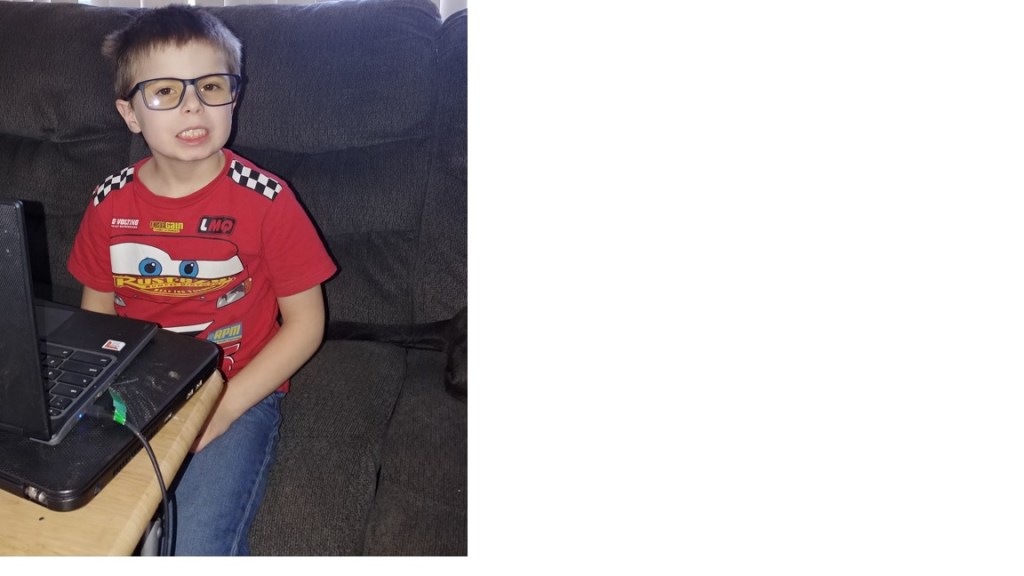
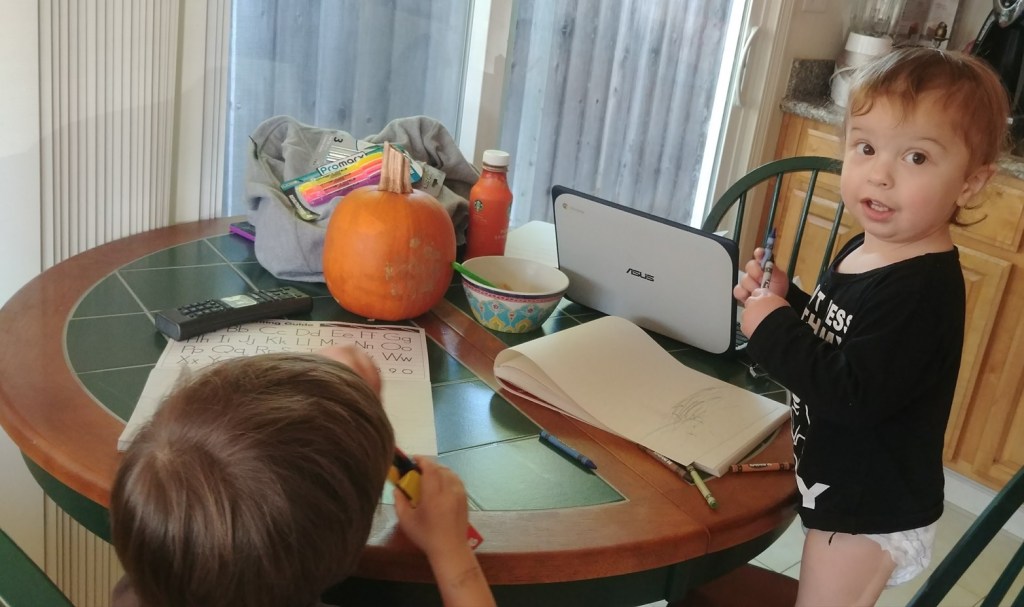
Where I was lucky when I had my boys, I could convert to #workfromhome I still had to suffer backlash for it. I had men & women I worked with accuse that taking my vacation was to look for a new job. When I told them it was to have my baby because maternity leave would hurt my family’s finances too much (yeah, no one tells you maternity leave when you are the breadwinner is next to nothing), I was met with more backlash. I had those in upper management, and those at the same level called me a bad mom for not quitting my career and being a stay-at-home mom. Working from home allowed me to develop #worklifebalance & invest in myself through remote education or #distancelearning while being there for my sons and providing for them. Someday I hope mom shaming goes out of style. So, as my family and I celebrate my youngest son’s birthday, I reflect on how my research can help other moms be able to be supported while we wait for more policies to be put in place to help support us.
There is a consistent leadership-focused narrative being repeated falsely in the media. The false narrative is that “People don’t want to work anymore”. To those who keep repeating this narrative and truly believe it the answer is, “no they just don’t want to work for you”.
In the past concepts like quiet quitting would have been viewed in a leadership paradigm as what is called disengagement. However, post-COVID that’s not what is truly happening. There is a quote in the Disney movie, “Remember the Titans”, that always comes to mind when talking about leadership in business. “Attitudes Reflect Leadership”. So, when employees rage quit or quiet quit these are reflections of a hostile work environment as COVID has taught the workforce that works should not become a person’s whole life.
Unfortunately, the media narrative has been that management is tightening the ropes and trying to force everyone back to the office to keep the abusive behavior going. This has caused a lot of companies to feel like there is a talent shortage. Which is just not true. The issue is that companies need to work on their goodwill or their reputation within the workforce. No one wants to work for companies that are continuing to do the following remotely or in person. So, let’s stop doing the following four things.
Stop promoting abusive people into leadership!
Unfortunately, there is a type that is consistently promoted in leadership as people who can push employees to do more. This recruiting method gives upfront success with long-term failure. We need to develop leaders who lead with empathy and have more of the teacher personality, not a bulldozer. This is even more the case in remote workplaces.
Stop hiring leadership that thinks their job is just to lead.
Especially in remote work the phenomenon of shared leadership develops. So, if companies want to keep to a traditional ladder method of design having managers that just manage is not doable anymore. We need leaders that are willing to roll up their sleeves and be in the trenches.
Stop hiring Leadership that doesn’t understand business and leadership is a science.
I have had my fill of colleagues, students, and managers who don’t understand developing quotes involves math and project management methodologies. Also, leadership that does not understand leadership science people are only statistically productive for 3-4 hours in an 8-hour business workday. The rest of the time is administrative and collaborative. So, when people take breaks that are part of work. People in the workforce cannot reasonably be expected to do the productive side of labor all day long. Having this attitude stifles creative problem-solving and increases burnout in the workforce.
Stop perpetuating the attitude of overtime being a good thing.
Wanting employees to want and do overtime work all the time is a bad thing. Let’s ignore the glaring fact that overtime consistently or as if it is expected is a big contributor to burnout. Baring that constant over time needed says two things to employees. One the company doesn’t value you enough to hire enough people to get the job done during normal hours. Two it tells employees that you see them as cheap labor and do not respect their time. Three it tells them that the company expects that the employee has got to give up having a life for the company. The days when the concept of workplace families and overall hustle culture is gone past COVID. They have been proven through research and experience to foster toxic work environments and kill company culture both in-person and remotely.
Now that we have talked about what businesses need to stop doing. Let’s talk about what they need to start doing. Aside from my usual advice on issuing a remote first workplace methodology to help promote a work-life balance the following 4 things we need to be started by companies to repair their brand with the workforce.
Start developing more comprehensive leadership and followership training programs.
This will help make the whole workforce feel supported and when there is layoffs or redistribution of talent companies and hire more from within. This also allows companies to not make it so only leadership gets salary bumps and feels appreciated.
Start hiring leadership with a teacher/coordinator personality instead of bulldozers.
Again subject matter experts and those who are more of coordinators or prefer support roles are the new type of leaders that the post-COVID world is demanding. Leaders let their team shine rather than use their team to reflect how they are as leaders. Teams are not power objects.
Start developing a positive corporate culture of work/ life balance.
Investing in an organizational culture that supports work/ life balance helps cultivate a happy workforce that doesn’t make a revolving door for new hires. It helps keep your organization together and have a more complex team. It also helps prevent burnout, workplace PTSD, and workplace violence.
Star is upfront and honest with employees and helps cultivate the workforce.
Often in businesses if someone complains about leadership companies try to find ways to get that person out of the company. Rather than asking why this person is complaining and looking at the behavior companies try to protect leadership. Instead, companies need to work to cultivate both leadership and workforce and investigate additional training needed. Otherwise bad work culture keeps being spread and the trust the workforce has for companies will continue to erode.
As business leaders, we need to remember that our teams are our greatest resource. And if we don’t work to strengthen the trust employees have in the companies they work at we will have no workforce. Trust needs to be earned and focusing on rebuilding workforce trust will help re-energize the workforce in this post-COVID world.
There is a lot in the media about companies pushing for remote workers to return to the office. Companies demanding remote workers who were remote initially in their contract and those who are applying for remote work come in person, even in a hybrid capacity. When employees push back the toxic leadership narrative is, “People don’t want to work anymore”. This is only partly true. The truth is workers especially after COVID have learned about this method of toxic leadership and are just not willing to work for companies like that. This constant pushing is going to give leaders the business management equivalent of a hemorrhoid.
There are three main reasons why companies are trying to force people back into the office:
Real Estate. The real estate side was a big issue at the start of the Pandemic. However, now in 2023, there are numerous articles of companies making moves in physical locations and scaling back office space. Yes, this can create a growing pain for big cities but once things level out it will be an opportunity for change to have a more socio-economic diverse community and housing affordability neighborhoods in bigger cities and encourage similar changes in smaller ones.
Companies either need a change in talent focus (hiring more IT specialists versus physical laborers or salespeople), a reorganization (reorg), or need a layoff. So, to avoid not paying unemployment many companies choose to force people back into the office. This way people who don’t want to work in person have to quit and thus won’t get unemployment benefits. This also allows companies to not look as bad in the media and to board members. An early example of this behavior was in 2013 when Yahoo did the same thing in an effort to, “Improve collaboration”. Which has been statistically disproven then and since COVID. But, it later showed evidence of the above-noted reason and the company dwindled from there.
The last reason is just insidious. Since most companies promote people who are good at their job but may not have specific leadership training and the company doesn’t provide said training these leaders scare away talent. The reason these leaders scare away talent is that they don’t know how to lead and mix up fear with respect. Because of this many of these leaders develop toxic leadership skills that are in many cases downright illegal and cultivate a hostile work environment. Yes, you can have a hostile work environment in a remote workplace. And because remote workplaces provide more transparency and the ability to document bad behavior HR and Companies want to protect themselves and exploit workers and toxic leaders by dragging everyone back into the office where the narrative can be controlled. And where legal proof can be dispelled.
These reasons are not reasonable and limiting remote work hurts companies more than it hurts anyone else. Companies lose out on savings on overhead, commercial space, energy costs, among other expenses. Also, many cities like San Francisco have additional fees and taxes so remote workplaces allow for a lot of business savings.
The issue isn’t if people want to work or not.The issue is that companies are being narrow minded and doing things they shouldn’t. And rather than change positively, many companies are trying to turn back the clock.This insistence on pushing for Return to Office or RTO is the equivalent of pushing too hard, and you won’t like the after-effects.
Work Cited
Han, S. J., & Hazard, N. (2022). Shared leadership in virtual teams at work: Practical strategies and research suggestions for human resource development. Human Resource Development Review, 153448432210933. https://doi.org/10.1177/15344843221093376
We have heard many terms like Quiet Quitting, Acting Our Wage, and major pushes for Return To Office, otherwise referred to as RTO. However, what hasn’t really been discussed is why companies are pushing RTO. Well, as discussed in this video, there are several reasons, but the top three reasons for this push and the reasons are pretty cringy.
I will have a more detailed article posted up on this topic later in the week. Remember sharing is caring and to like and subscribe. As always remember Remote Is Here To Stay.
My husband and I are big fans of “The Big Bang Theory,” and we joke around that my astronaut story is me finishing my dissertation this term. I am super excited about it, and I do understand with my ADHD, my hard work in academia has been all I want to talk about lately. However, I invite everyone to share what they are excited about and passionate about. So, what’s your Astronaut story?
Remember sharing is caring, especially since Remote is here to stay.
We should be working year-round to help our fellows during this time of the year. So, to help, I am talking in this youtube post about how women still struggle to rise in the business world and in family planning and are becoming the breadwinners regardless. So, to keep this resource of strong women, let’s help businesses get on board with offering more remote work. Christmas is about a mother bringing life into the world. Let’s help support women’s ability to keep doing that. Happy Holidays.
As we come into the Holiday Season where one of the holidays is Christmas. Christmas is a celebration of birth, and now is an excellent time to talk about how women are not supported in the onsite workplace based on their ability to bring life into the world. However, to avoid getting too political about it, I will focus on how remote work can be a band-aid to help companies support women in the workplace.
First, let’s acknowledge that women tend to be significantly affected career and money-wise by having a child. According to the 2019 data Knop (2021); shows growth in the labor force based on the number of women entering the workforce. The US Census data details that women gain more education and stay in the workforce even after having children. Further, the US Census data shows that 4 out of 5 moms with higher education degrees who gave birth in 2019 demographics 71.2% were still working in the labor force. Within that demographic, only 9.2% took leave, and 1.5% were unemployed. The findings from the US Census data also showed those of women with just a bachelor’s degree that gave birth the same year, over 60.9% remained employed. Although interestingly, of those in the workforce with only a bachelor’s degree, 26.6% were not in the labor force.
COVID created chaos in many respects but according to the Bureau of Labor and Statistics Scopelliti (2021); showed women left the workforce due to childcare issues during COVID. This is further discussed by the US Census Bureau article by Heggeness et al. (2021), which notes the data showed at the height of the lockdowns, over one-third of the working mothers in the US were not able to work due to COVID lockdowns and the effects it had on childcare and health care. However, according to the US Census Bureau, by January 2021, over 18.5 million working moms were actively part of the labor force as the pandemic raged. It should be noted that this number is still short, with over 1.6 million moms in the workforce at the same time the year before.
The exciting thing is that by 2021 the hit to workplace gender demographics leveled out for working mothers and fathers. The pandemic hurt most people’s income and careers. Although the stats show that the pandemic has continued to break working mothers more than working fathers. It should be factored in that many women hold jobs in career paths that have been heavily affected by COVID, and many are considered essential workers.
All these stats being said, we cannot ignore that paid family leave, and other maternity benefits are still subpar for women in the US. Worse yet, as detailed in the Stanford University News article (De Witte, 2022), even if a company or state has a good maternity leave program, women’s jobs and career paths are still challenging to maintain because of our roles as mothers. Not having well-formed Paid Family Leave programs for men and women and lack of childcare have added to the slow return of women to the workplace. This fuels the untrue adage held by business professionals that once women have kids, they no longer focus on work. Thus, making it harder for women to move up in organizations and statistically making it harder for women to take leadership roles.
With all this being said, remote work leaves an exciting opportunity for working parents and women about to be mothers. I speak from experience when I say remote position afforded me the luxury of being with my children, which was great for my and their physical and emotional health. All while allowing me the room to grow and thrive in a Subject Matter Expert or SME type of leadership role in the remote workplace. Due to health complications, I had to transition to a remote workplace while pregnant with my oldest son. After giving birth, I was asked to return to the workplace rather than work primarily from home. I had my son in daycare for about four months when he was just a few weeks old. Although our local childcare giver was excellent and well-practiced (shout out to Gina), I was miserable. She had also commented on how my son was so clingy and cuddly, which in her experience, wasn’t typical for a young infant. Also, childcare was near my home, making it easy to pick up and drop off, but I was an hour away from where I worked (a relatively average commute for the San Francisco Bay Area). So, I constantly worried if there was an accident, I couldn’t get there quickly to my baby. I cried in the bathroom at work, continually missing my baby.
I was lucky when one of my mentors called me up and told me about a department she was developing and helped me get hired to work remotely full-time. I was able to spend more time with my son and really bond with him in a way that I couldn’t during maternity leave. Especially with all my complications, maternity leave was chaotic and didn’t leave much room to bond. Also, like many women, I was the primary breadwinner, so maternity leave pay was minuscule. Working remotely gave me the flexibility to get the job done and done right while having time to help care for my son and take breaks to mentally unwind and spend time with him.
When I had my second son, my oldest and I could all bond together and balance my work and academic work while working full time, all because of the ability to work from home. Remote work has fueled my research and has helped give me the bandwidth to support my children, spend time with them, and invest in myself and my earning potential for my boys’ long-term care. After finishing my Doctorate program at Concordia University Chicago, my family and I have the bandwidth for long-term family planning with remote and hybrid work for both my husband and me.
I am by no means saying remote work is a way to fix the disparage between how women are affected in the workplace and laws that don’t support their ability to bring life into the world while providing for that life. I am saying that while society and business laws work to fix the issues and learn to support fellow women and people who care give for children, remote work has room for flexibility. The flexibility of remote work allows people to develop a work-life balance. With all everyone has seen and dealt with during and post-COVID, expanding remote work to give people the room to balance life and family will remind workers why they do it all. Family is important. Especially at this time of the year, let us all honor the caregivers of the world and workforce and remember to work to support them. Even if the best support is remote work.
If you liked this article and found it informative, remember sharing is caring. Also, please like, subscribe, and check out some of my other media outlets. My consulting firm also offers training for companies to help develop more effective remote leadership.



 Dr. Stephanie Diana Eubank DBA Remote Team Research (AKA Dr. Bear)