 Written by
 By: Dr. Stephanie Diana Eubank DBA
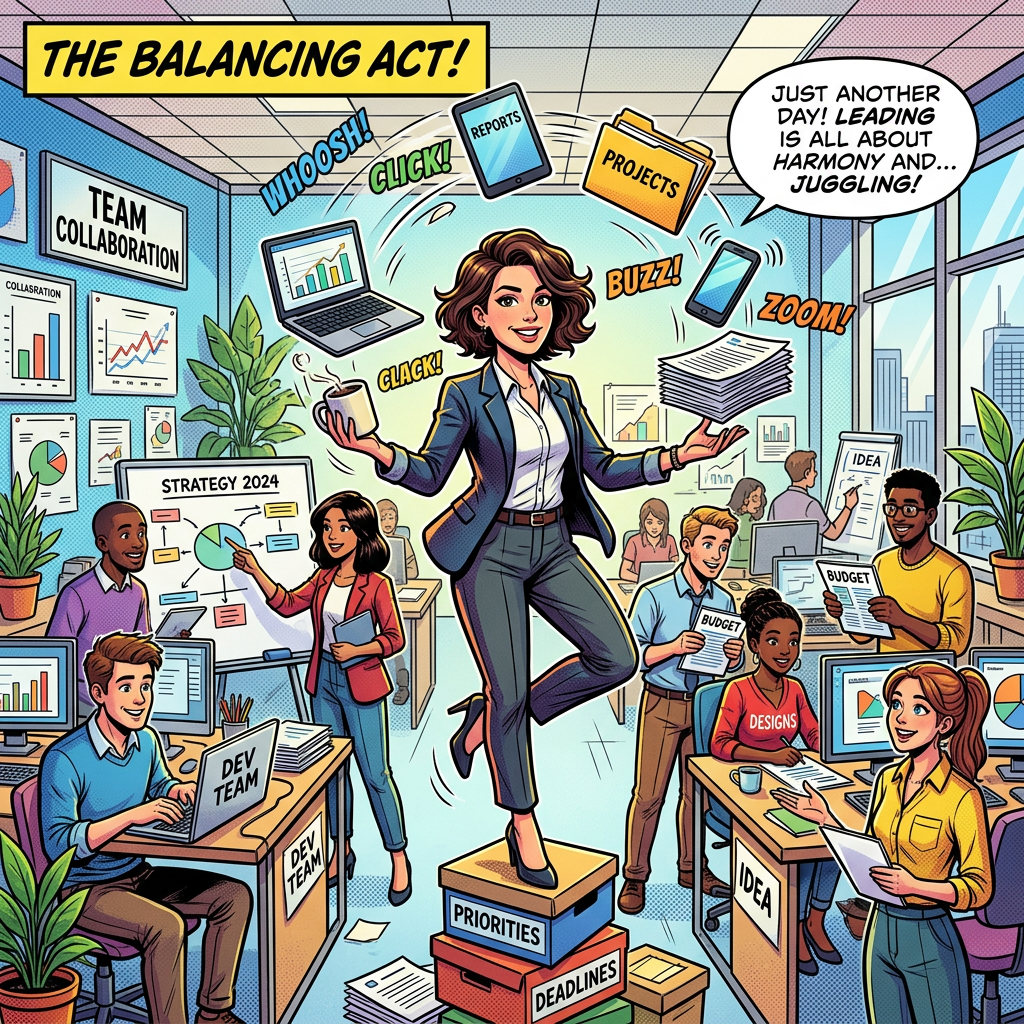
In many organizations, leadership roles are still structured around a dual expectation: leaders are expected to both produce individual output and lead teams. While this “player-coach” model may appear efficient, research increasingly shows it undermines leadership effectiveness and creates measurable operational challenges.
The Problem: When Doing Replaces Leading
A fundamental issue arises when high-performing individual contributors are promoted into leadership roles while still expected to produce. The competencies that drive strong individual performance—technical expertise, task completion, and personal output—are fundamentally different from those required to lead others, such as coaching, vision-setting, and people development (Rizvi, 2024; Carnegie, 2026).
Research shows that organizations frequently blur this distinction. Managers often spend nearly half of their time (46%) doing individual contributor work rather than leading their teams (Ratanjee, 2026). This shift in focus directly reduces the time available for coaching, aligning teams, and setting strategic direction—core leadership functions.
Operational Impact on Organizations
The consequences extend well beyond individual leaders. Poorly supported leadership transitions and overburdened “producing managers” have measurable operational effects:
1. Decline in team performance: Studies show that promoting top performers into management roles can lead to a 7.5% decrease in team performance, along with reduced output and profitability (Wells, 2025).
2. Reduced engagement: Leadership quality is one of the strongest drivers of employee engagement, accounting for up to 70% of variation in engagement levels (eLeaP Editorial Team, 2024). When leaders are distracted by production work, engagement suffers.
3. Ineffective leadership pipelines: Up to 50% of managers are considered ineffective, often due to lack of preparation and support during the transition from individual contributor roles (Gentry et al., 2026).
4. Organizational inefficiency: Leaders who continue producing work often create dependency within their teams, limiting scalability and slowing decision-making (Dunn, 2026).
These factors combine to create systemic inefficiencies—misalignment, slower execution, and inconsistent performance across teams.
The Leadership Identity Trap
One overlooked dimension of this issue is identity. Many newly promoted leaders continue to define success by their individual contributions rather than team outcomes. This creates a behavioral trap where leaders revert to “doing” rather than delegating, because it reinforces their sense of competence (Ratanjee, 2026).
Over time, this pattern leads to burnout, disengagement, and stalled team development. Teams become overly reliant on the leader, while the leader becomes overwhelmed and less effective.
Why More Training Alone Isn’t Enough
Organizations often attempt to address these challenges through leadership training programs. While training is important, it is insufficient when structural expectations remain unchanged.
Even as organizations increase investment in leadership development, many leaders are still expected to balance production responsibilities with people leadership (Harvard Business Impact, 2025). This creates a misalignment between what leaders are taught and what they are actually able to practice.
Training without role redesign results in limited impact because leaders lack the time and cognitive capacity to apply new leadership behaviors.
A Better Approach: Designing Leaders Who Leadership
To truly improve leadership effectiveness, organizations must move beyond training and redesign the role itself. This involves:
1. Removing primary production responsibilities: Leaders should be accountable for team performance rather than individual output, allowing them to focus on coaching, alignment, and strategy.
2. Separating career tracks: Not all high performers should be promoted into management. Creating parallel tracks for individual contributors and leaders ensures both roles are valued appropriately.
3. Building leadership capability early: Leadership development should begin before promotion, preparing individuals for the transition rather than reacting afterward.
4. Measuring leaders differently: Success metrics should shift from personal achievement to team effectiveness, engagement, and long-term performance outcomes.
When leaders are freed from producing work, they can focus on the activities that drive organizational performance: developing talent, creating alignment, and enabling teams to succeed.
Conclusion
The practice of expecting leaders to both produce and lead represents a structural flaw in how organizations design leadership roles. While it may provide short-term efficiency, it undermines long-term performance by limiting leadership effectiveness, reducing engagement, and weakening organizational outcomes.
Organizations that want to build sustainable success must rethink leadership design. By moving away from the “player-coach” model and intentionally developing leaders who are not required to produce, companies can unlock higher performance, stronger teams, and more resilient operations.
References
Carnegie, D. (2026). The promotion trap: When top performers become ineffective leaders.
Dunn, A. (2026). New manager transition: From individual contributor to leader.
Gentry, W. A., Logan, P., & Tonidandel, S. (2026). Understanding the leadership challenges of first-time managers. Center for Creative Leadership.
Harvard Business Impact. (2025). 2025 Global leadership development study.
Ratanjee, V. (2026). 46% of manager time goes to individual contributor work. Forbes.
Rizvi, H. (2024). Individual contributor vs manager vs leader roles in modern organizations.
Wells, R. (2025). Why promoting top performers can backfire. Forbes.
If you enjoy this content like and subscribe. Additionally, if you are interested in consulting services, please feel free to reach out to me through my social media channels. Remember remote is here to stay.
YouTube: https://www.youtube.com/@Wickedbofthewest
Website: wickedbofthewestremoteconsulting.com
Facebook: https://www.facebook.com/WickedBoftheWestBusinessConsulting
Instagram: https://www.instagram.com/wickedbofthewestconsulting/
Blog: drstephaniebeardbaremoteresearch.org
LinkedIn: https://www.linkedin.com/in/stephanie-diana-eubank-dba/
TikTok: https://www.tiktok.com/@stephanie.eubank6
New Website: wickedbofthewestconsulting.com
Email: Drstephaniedeubank@wickedbofthewestconsulting.com or stephaniedeubank@gmail.com
TikTok: @stephaniedianaeubank
New Website: wickedbofthewestconsulting.comtconsulting.com

