 Written by
 By Dr. Stephanie Diana Eubank DBA
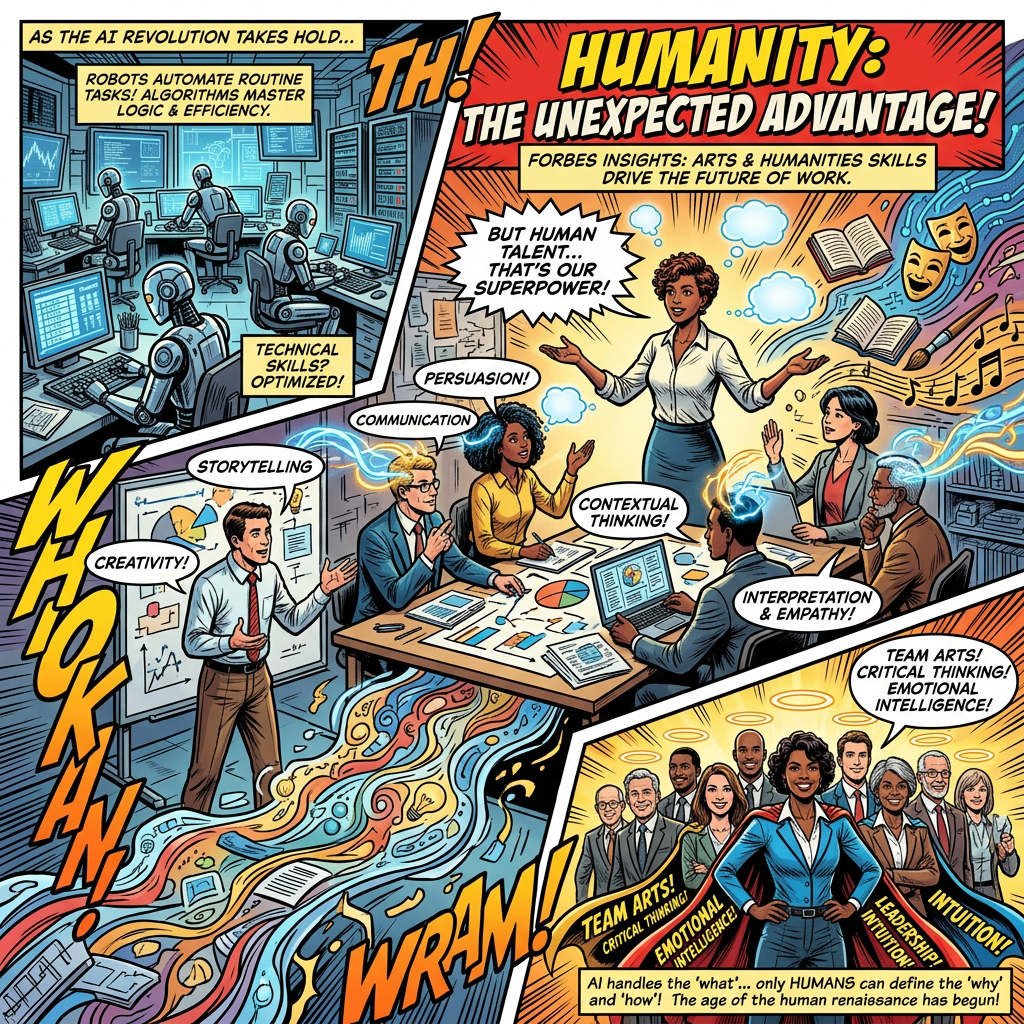
As artificial intelligence transforms the workplace, a surprising trend is emerging: organizations are increasingly valuing the uniquely human capabilities often cultivated through arts and humanities education. Recent commentary highlighted in Forbes suggests that as AI automates technical and routine tasks, skills such as storytelling, communication, creativity, persuasion, contextual thinking, and interpretation may become even more valuable in the workforce.
As someone who earned a bachelor’s degree in British and American Literature, I find this shift encouraging. Over the past twenty years in finance, six years in higher education, and more than a decade in nonprofit, for-profit, and consulting leadership roles, I have repeatedly witnessed the business value of strong writing, critical thinking, and creative problem solving.
One of the most memorable examples occurred during my finance career in condominium underwriting. Because of my literature background and experience reading complex historical texts, I was able to review and interpret centuries-old ground leases and legal documents from the East Coast dating back to the earliest days of the United States. Few people have the opportunity to interact with living pieces of history during their daily work. My humanities education helped me understand context, language evolution, and nuanced communication in ways that directly benefited business decision-making.
Today, AI can generate reports, summarize data, and draft content. However, AI still depends upon human creativity, judgment, ethics, and innovation. The individuals who excel in the next generation of work will not simply know how to use AI. They will know how to ask better questions, think critically about outputs, connect ideas from multiple disciplines, and communicate compelling visions for the future.
Literature, art, music, philosophy, and history teach us how people think, create, and solve problems. These disciplines help develop empathy, adaptability, and creativity. In an AI-driven economy, these human-centered skills become increasingly important because they complement rather than compete with technology.
For this reason, I believe colleges and universities should reconsider how they evaluate academic programs. Instead of focusing exclusively on immediate salary outcomes, educators should examine the long-term value of creativity, communication, and interdisciplinary thinking. I strongly encourage students to consider double majors or complementary studies combining technology, analytics, business, or computer science with literature, art, music, communications, or other creative fields.
The future workforce will need professionals who can bridge technology and humanity. Organizations need employees who can understand data while also understanding people. They need leaders who can leverage AI while remaining innovative and emotionally intelligent.
Beyond workforce preparation, the arts provide something equally important: joy, meaning, and resilience. Creative pursuits help reduce burnout, improve well-being, and foster lifelong learning. They remind us that success is not solely measured by productivity but also by the ability to create, imagine, and contribute to society.
As the founder of Wicked B of the West Business Consulting, I help organizations develop remote work strategies, remote leadership capabilities, business process design, accessibility accommodations, workforce development initiatives, and AI-informed business practices. My career experiences continually reinforce the value of combining business expertise with strong communication and creative thinking skills.
Book Spotlight
Remote Work Is Here to Stay: Rethinking Operations Management in the Modern Work Era
Available on Amazon: https://www.amazon.com/dp/B0H5BPJCHJ
As businesses continue adapting to changing work environments, operational excellence and effective remote leadership remain critical skills for success.
Thank you for reading. If you enjoy this content, like and subscribe. If you are interested in consulting services, please feel free to connect with me through my social media channels.
Remember: Remote is here to stay.
Website: wickedbofthewestconsulting.com
YouTube: https://www.youtube.com/@Wickedbofthewest
Facebook: https://www.facebook.com/WickedBoftheWestBusinessConsulting
Instagram: https://www.instagram.com/wickedbofthewestconsulting/
LinkedIn: https://www.linkedin.com/in/stephanie-diana-eubank-dba/
Company LinkedIn: https://www.linkedin.com/company/wicked-b-of-the-west-business-consulting
TikTok: @drstephanieeubank
Blog: drstephaniebeardbaremoteresearch.org
Email: wickedbofthewestconsulting@gmail.com
References
Dewan, S. (2026, July 26). Why humanities majors are 2026’s stealth power players in tech. Forbes. https://www.forbes.com/sites/shodewan/2026/07/26/why-humanities-majors-are-2026s-stealth-power-players-in-tech/
Legatt, A. (2025, May 30). Top AI degrees that will future-proof your career. Forbes. https://www.forbes.com/sites/avivalegatt/2025/05/30/ai-degrees-for-future-career-success/

