 Written by
By: Dr. Stephanie Diana Eubank DBA
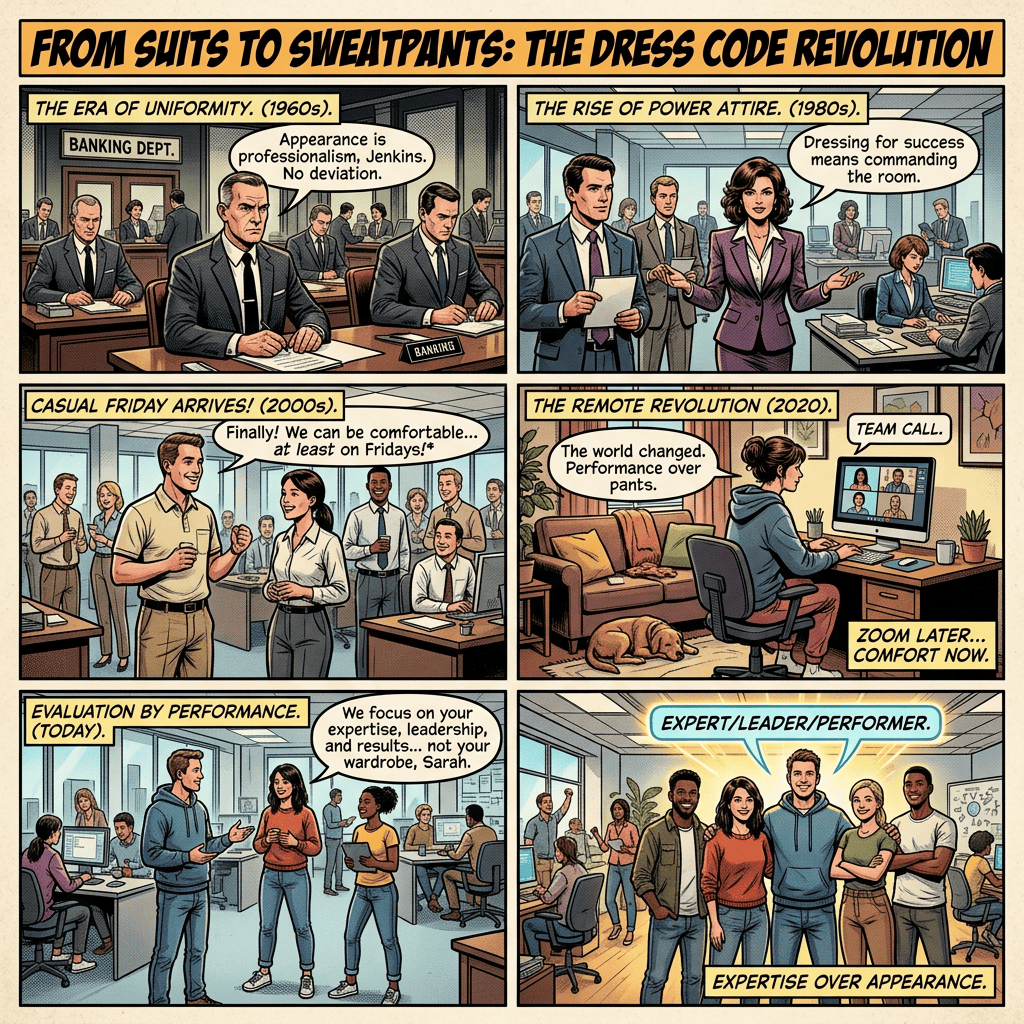
Workplace dress codes have changed dramatically over the past several decades. This blog examines the evolution from highly structured professional attire toward more flexible, functional, and comfort-centered workplace expectations. Drawing on historical experiences in banking, the rise of remote work, and research on changing workplace norms, this article argues that organizations are increasingly evaluating employees on performance, expertise, and leadership effectiveness rather than adherence to rigid appearance standards.
When I first entered the banking industry, conversations with senior women leaders often centered on how hard they had fought for workplace dress-code reforms. Many recalled a time during the 1970s and 1980s when female professionals were expected to wear dresses, stockings, and high heels every day. Even in the early 2000s, some bank tellers and managers reported expectations that women wear heels and hosiery regardless of weather or comfort. In California, where temperatures and climates vary significantly, such requirements often prioritized appearance over practicality.
The banking industry spent decades moving from strict dress requirements toward business casual environments. Casual Fridays, once viewed as revolutionary, represented a symbolic shift toward giving employees greater comfort and autonomy. What was once considered unprofessional gradually became acceptable as organizations recognized that performance was not determined by a suit, pair of heels, or expensive wardrobe.
Remote and hybrid work accelerated these changes. Many professionals adopted what became known as ‘Zoom-ready’ attire: professional on camera while emphasizing comfort elsewhere. Leaders routinely appeared in sweaters, polos, blazers, jeans, and athletic shoes. Research continues to demonstrate growing preferences for casual and business-casual workwear, particularly among employees working remotely or in hybrid environments. FlexJobs reported that 81% of surveyed professionals preferred casual or business-casual attire, highlighting the increasing prioritization of comfort and practicality in modern workplaces (FlexJobs, 2025).
One criticism frequently voiced by hiring managers, career development professionals, and organizational leaders is that Gen Z employees sometimes arrive dressed more casually than previous generations expected. Stories of sweatpants, athleisure wear, and relaxed clothing choices have become common. However, these observations should be viewed within a broader historical context. Every generation has challenged workplace norms. Gen Z entered the workforce during and after the COVID-19 pandemic, often beginning their careers remotely. Research suggests younger employees frequently seek guidance regarding workplace attire because expectations have become less clear, not because professionalism has disappeared (International Workplace Group, 2025).
The technology sector offers perhaps the clearest example of this cultural shift. Many successful leaders and innovators intentionally adopt relaxed or alternative styles. Their influence is driven by expertise, innovation, and organizational results rather than adherence to traditional symbols of authority. Research indicates that perceptions of professionalism continue to be influenced by attire, but those perceptions increasingly depend on context and appropriateness rather than strict formal dress standards (Sotak et al., 2023).
Workplace dress codes are unlikely to disappear entirely. Certain professions, client-facing roles, and safety-sensitive positions will continue to require specific attire. However, the broader trend is clear: organizations are moving away from rigid rules focused on form and toward policies emphasizing function, inclusivity, comfort, and practicality. The future of professional appearance may be less about conformity and more about context, respect, and effectiveness.
Resources for Leaders
If you are navigating workplace culture, remote leadership, employee engagement, or organizational effectiveness, explore Stephanie Eubank’s consulting services through Wicked B of the West Business Consulting. Organizations seeking support in remote leadership, workplace accommodations, process design, and organizational health can benefit from evidence-based consulting solutions.
Readers are also encouraged to complete the Workplace Leadership Health Check survey: https://csustan.co1.qualtrics.com/jfe/form/SV_bvd9FFz2MyRUUyW
Follow Stephanie Eubank and Neurospice Everything Nice on social media for research-based insights on leadership, neurodiversity, remote work, and workplace well-being.
Additionally, explore Stephanie Eubank’s published book and watch for the upcoming companion workbook and future publications exploring remote leadership and organizational health.
References
FlexJobs. (2025, April 21). For remote work, casual outfits or business attire? FlexJobs.
International Workplace Group. (2025, July 30). Workwear reimagined: How flexibility has transformed what we wear to work.
Sotak, K. L., Serban, A., Friedman, B. A., & Palanski, M. (2023). Perceptions of ethicality: The role of attire style, attire appropriateness, and context. Journal of Business Ethics.
Ready to see how your workplace scores? Take the Workplace Leadership Health Check™ today:
Survey Link: https://csustan.co1.qualtrics.com/jfe/form/SV_bvd9FFz2MyRUUyW
Whether you’re an employee, leader, HR professional, or business owner, this assessment can provide valuable insights into the health of your workplace. We look forward to sharing resources that help organizations build stronger teams, healthier cultures, and more effective leadership practices.
Book Spotlight
Remote Work Is Here to Stay: Rethinking Operations Management in the Modern Work Era
Available on Amazon: https://www.amazon.com/dp/B0H5BPJCHJ
As businesses continue adapting to changing work environments, operational excellence and effective remote leadership remain critical skills for success.
Thank you for reading. If you enjoy this content, like and subscribe. If you are interested in consulting services, please feel free to connect with me through my social media channels.
Remember: Remote is here to stay.
Website: wickedbofthewestconsulting.com
YouTube: https://www.youtube.com/@Wickedbofthewest
Facebook: https://www.facebook.com/WickedBoftheWestBusinessConsulting
Instagram: https://www.instagram.com/wickedbofthewestconsulting/
LinkedIn: https://www.linkedin.com/in/stephanie-diana-eubank-dba/
Company LinkedIn: https://www.linkedin.com/company/wicked-b-of-the-west-business-consulting
TikTok: @drstephanieeubank
Blog: drstephaniebeardbaremoteresearch.org
Email: wickedbofthewestconsulting@gmail.com

