My First AI-Powered Marketing Experiment: Testing Zeely for the Future of Work

https://youtube.com/shorts/RFvYSV-q6yM?feature=share

If you’ve been following my work for any amount of time, you already know that I’m passionate about the future of work, remote leadership, operations management, and helping people prepare for a rapidly changing workplace.

This week, I took another step into that future.

I created my first AI-powered marketing video using Zeely AI, and honestly, it was both exciting and eye-opening.

The video itself may seem like a small project, but the experience represents something much bigger. As business leaders, educators, entrepreneurs, and professionals, we can no longer afford to view artificial intelligence as something that belongs only to technology specialists. AI is quickly becoming a workplace skill, much like email, spreadsheets, project management software, and social media were in previous generations.

The future of work is here, and AI literacy is becoming part of that future.

Why I Decided to Experiment with AI

One of the things I often teach in my consulting work is that leaders need to be willing to experiment with emerging technologies before they can effectively implement them.

It’s one thing to read about AI. It’s another thing entirely to sit down, open a tool, and start creating.

That’s exactly what I did with Zeely.

As someone who spends a significant amount of time discussing remote work, operations management, leadership, and entrepreneurship, I wanted to better understand how AI can help businesses communicate their message, reach new audiences, and improve operational efficiency.

AI and Operations Management

Many people view AI solely as a marketing tool. I see it differently.

From an operations management perspective, AI is becoming a productivity tool. Organizations are increasingly using AI to create marketing content, analyze data, improve workflow efficiency, support project management, streamline communication, enhance customer service, and assist with training and development.

The real value of AI isn’t replacing people. The real value is allowing people to spend more time on strategic thinking, creativity, innovation, and relationship building while technology handles repetitive tasks.

Why This Matters for My Book

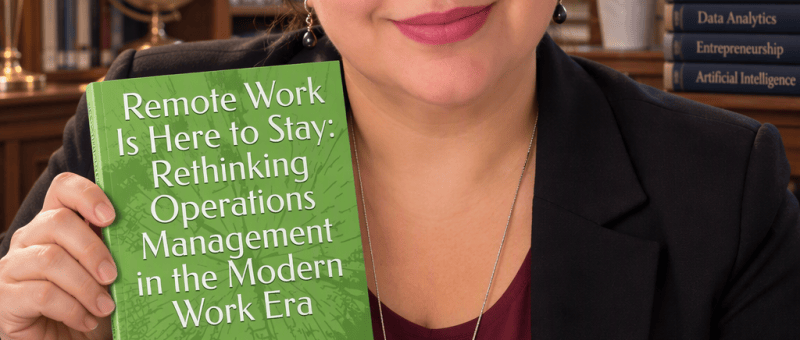
One of the reasons I wanted to experiment with Zeely was to help promote my book, Remote Work Is Here to Stay: Rethinking Operations Management in the Modern Work Era.

The book discusses how organizations can adapt to changing workplace expectations, develop effective remote leadership practices, improve operations management, and prepare for the future of work.

Helping Businesses Adapt

Through Wicked B of the West Business Consulting, I work with organizations that are looking to navigate workforce transformation, improve operational effectiveness, and prepare for emerging workplace trends.

Our services include remote and hybrid work development, remote leadership training, operations management consulting, business process design, systems development, workforce development, accessibility and accommodation consulting, AI integration strategies, strategic planning, and entrepreneurship consulting.

The organizations that thrive in the coming decade will be the ones willing to adapt, experiment, and continuously learn.

Final Thoughts

My first Zeely video wasn’t just a marketing experiment. It was a reminder that learning never stops.

Every new tool presents an opportunity to improve how we communicate, solve problems, and serve our clients and communities.

Remember: Remote is here to stay.

Book Spotlight

Remote Work Is Here to Stay: Rethinking Operations Management in the Modern Work Era
Available on Amazon: https://www.amazon.com/dp/B0H5BPJCHJ

As businesses continue adapting to changing work environments, operational excellence and effective remote leadership remain critical skills for success.

Thank you for reading. If you enjoy this content, like and subscribe. If you are interested in consulting services, please feel free to connect with me through my social media channels.

Remember: Remote is here to stay.

Website: wickedbofthewestconsulting.com
YouTube: https://www.youtube.com/@Wickedbofthewest
Facebook: https://www.facebook.com/WickedBoftheWestBusinessConsulting
Instagram: https://www.instagram.com/wickedbofthewestconsulting/
LinkedIn: https://www.linkedin.com/in/stephanie-diana-eubank-dba/
Company LinkedIn: https://www.linkedin.com/company/wicked-b-of-the-west-business-consulting
TikTok: @drstephanieeubank
Blog: drstephaniebeardbaremoteresearch.org
Email: wickedbofthewestconsulting@gmail.com
Managing Up Is a Leadership Failure, Not an Employee Skill

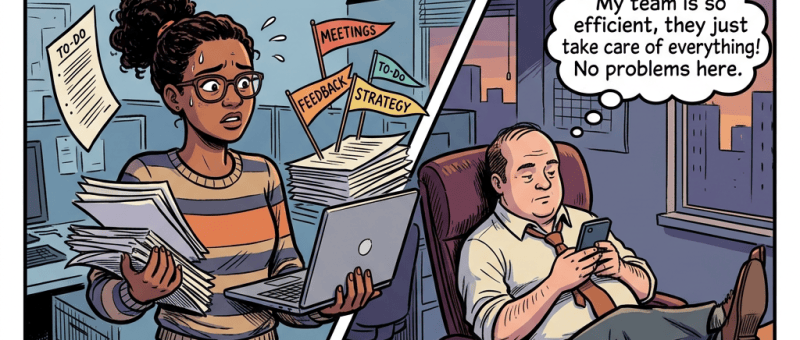
Comic text: “ADAPT OR DROWN”; employee asks whether managing her manager’s workload is managing up; manager says his team handles everything; banner asks whether managing up is a skill or symptom of ineffective leadership.

By: Dr. Stephanie Diana Eubank DBA

In many organizations, employees are encouraged to “manage up.” While this concept is often presented as a professional skill, it may actually be a symptom of a deeper organizational problem.

Managing up is typically defined as the practice of employees adapting their communication, work style, and behavior to help their managers be more effective. While developing strong working relationships is important, managing up becomes problematic when employees are expected to compensate for ineffective leadership.

Too often, organizations use managing up as a substitute for leadership accountability. Rather than addressing management deficiencies directly, companies shift responsibility onto their highest-performing employees. Since managers can be difficult to evaluate, coach, or replace, organizations frequently place the burden on workers who are easier to manage and measure. In effect, high performers are expected to do their jobs and manage their managers at the same time.

This approach creates a hidden productivity tax. Employees spend valuable time anticipating managerial needs, clarifying unclear expectations, following up on forgotten tasks, resolving communication gaps, and navigating unnecessary bureaucracy. Instead of focusing on innovation, customer service, problem-solving, and operational excellence, employees become unofficial management support staff.

The result is declining morale. High-performing employees often become frustrated when they are required to carry leadership responsibilities without having leadership authority, compensation, or recognition. Over time, this can create burnout, disengagement, reduced trust, and increased turnover.

From an operations management perspective, managing up also introduces inefficiencies into organizational systems. Good processes should reduce friction. However, organizations that rely on managing up frequently institutionalize dysfunction by making employees responsible for overcoming leadership obstacles instead of removing those obstacles.

One potential solution is adopting shared leadership principles, which can be easier to implement in remote and hybrid work environments. Contrary to common misconceptions, remote work often encourages organizations to focus on outcomes rather than hierarchy. When work is transparent and documented, leadership becomes more distributed and employees can contribute their expertise without excessive managerial gatekeeping.

Steps to Reduce Managing Up Through Shared Leadership

1. Focus on outcomes rather than visibility.
Measure performance through results instead of managerial impressions and office politics.

2. Document processes and decisions.
Shared documentation reduces dependency on a single manager for information.

3. Clarify roles and accountability.
Managers should be responsible for leadership functions, while employees should be empowered to perform their designated roles.

4. Encourage expertise-based leadership.
The person with the most relevant knowledge should have influence regardless of job title.

5. Increase transparency.
Use collaborative tools that make priorities, deadlines, and decisions visible to the entire team.

6. Create feedback loops.
Employees should be able to provide upward feedback without fear of retaliation.

7. Develop managers continuously.
Leadership training should focus on coaching, communication, trust-building, and accountability.

Organizations that move away from managing up and toward shared leadership often experience higher levels of engagement, productivity, innovation, and trust. Instead of forcing employees to compensate for leadership weaknesses, effective organizations build systems that support both managers and employees in achieving shared goals.

How Wicked B of the West Business Consulting Can Help

At Wicked B of the West Business Consulting, we specialize in helping organizations design sustainable systems for remote and hybrid work. Services include remote work development, remote leadership training, business design and development, process and systems design, workforce development, organizational development consulting, assistive technology accommodations, leadership development, and future-of-work consulting.

Book Spotlight

Remote Work Is Here to Stay: Rethinking Operations Management in the Modern Work Era
Available on Amazon: https://www.amazon.com/dp/B0H5BPJCHJ

As businesses continue adapting to changing work environments, operational excellence and effective remote leadership remain critical skills for success.

Thank you for reading. If you enjoy this content, like and subscribe. If you are interested in consulting services, please feel free to connect with me through my social media channels.

Remember: Remote is here to stay.

Website: wickedbofthewestconsulting.com
YouTube: https://www.youtube.com/@Wickedbofthewest
Facebook: https://www.facebook.com/WickedBoftheWestBusinessConsulting
Instagram: https://www.instagram.com/wickedbofthewestconsulting/
LinkedIn: https://www.linkedin.com/in/stephanie-diana-eubank-dba/
Company LinkedIn: https://www.linkedin.com/company/wicked-b-of-the-west-business-consulting
TikTok: @drstephanieeubank
Blog: drstephaniebeardbaremoteresearch.org
Email: wickedbofthewestconsulting@gmail.com

So You Want to Start a Business? Why Operations Management Is Just the Beginning.

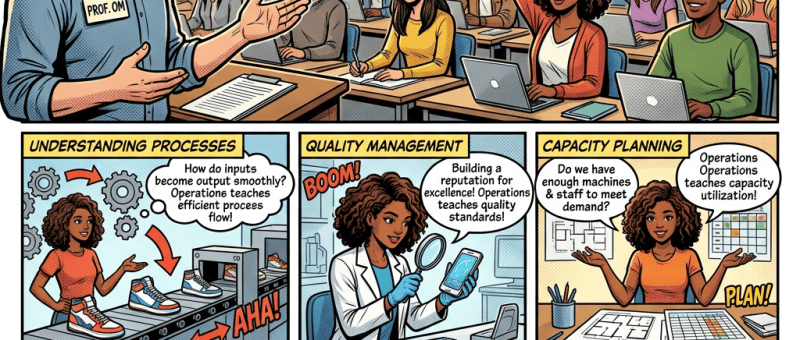
Comic introducing operations management and its key business functions

By: Dr. Stephanie Diana Eubank DBA

Every term that I teach Operations Management, I ask my students why they enrolled in the course. The answer is remarkably consistent: “Because I want to start my own business, and I think this class will help me.”

They are absolutely right. Operations Management provides an excellent foundation for entrepreneurship. Understanding processes, quality management, capacity planning, supply chains, project management, and continuous improvement helps future business owners think strategically about how work gets done.

However, starting a successful business requires much more than understanding operations. It requires knowledge of branding, marketing, finance, leadership, compliance, technology, customer experience, and business strategy. This is one reason I am excited to see so many business schools developing entrepreneurship programs that help students understand where and how to begin.

The reality is that the starting point depends on the type of business you want to create. A consulting company has different startup requirements than a retail store, nonprofit organization, online content business, or technology startup.

That is why I am launching a series on this channel focused on how to start a business. I have personally started and operated three organizations, including two nonprofit organizations and Wicked B of the West Business Consulting. My consulting work is grounded in my doctoral research and focuses on helping organizations and workers future-proof themselves in a rapidly changing workplace.

One of the first areas entrepreneurs should focus on is building the right brand. Your online presence is often the first interaction potential customers, employers, partners, and investors have with you. For many students, social media profiles tell a story that may not align with the professional image they hope to project.

Too often, I see students with public photos, inappropriate posts, controversial comments, or outdated content connected to their LinkedIn profiles and professional identities. Whether you want a job or plan to promote your own company, your digital footprint matters.

Tips for Building an Authentic and Professional Online Brand:
• Audit all social media accounts regularly.
• Remove content that does not support your personal or professional goals.
• Update profile photos with professional, authentic images.
• Ensure LinkedIn reflects your current accomplishments and career goals.
• Create consistent messaging across platforms.
• Share content that reflects your expertise and interests.
• Set clear boundaries between professional and personal accounts when appropriate.
• Avoid posting confidential employer, client, or customer information.
• Think before posting emotionally charged content.
• Build a reputation for professionalism, kindness, and credibility.

Protecting Your Privacy and Peace:
• Review privacy settings on every platform.
• Limit location sharing.
• Avoid posting personally identifiable information.
• Never share banking information, passwords, or security details.
• Use strong passwords and multi-factor authentication.
• Create private groups or accounts for family and close friends.
• Be selective about who can view personal photos and family updates.
• Regularly review tagged photos and posts.
• Remove old accounts that are no longer monitored.

A strong brand is not about creating a fake persona. It is about intentionally communicating who you authentically are while protecting your privacy and maintaining professional credibility.

Services Available Through Wicked B of the West Business Consulting:
• Remote Work Development
• Remote Leadership Training
• Business Design and Development
• Process and Systems Design
• Workforce Development Programs
• Organizational Development Consulting
• Assistive Technology and Workplace Accommodation Consulting
• Personal Brand Development Training
• Leadership Development Courses
• Future of Work and Remote Workplace Consulting

In addition, I am developing my annual brand development project into an online course designed to teach the fundamentals of personal branding. I also offer leadership and workforce development learning opportunities.

Book Spotlight
Remote Work Is Here to Stay: Rethinking Operations Management in the Modern Work Era
Available on Amazon: https://www.amazon.com/dp/B0H5BPJCHJ

As businesses continue adapting to changing work environments, operational excellence and effective remote leadership remain critical skills for success.

Thank you for reading. If you enjoy this content, like and subscribe. If you are interested in consulting services, please feel free to connect with me through my social media channels.

Remember: Remote is here to stay.

Website: wickedbofthewestconsulting.com
YouTube: https://www.youtube.com/@Wickedbofthewest
Facebook: https://www.facebook.com/WickedBoftheWestBusinessConsulting
Instagram: https://www.instagram.com/wickedbofthewestconsulting/
LinkedIn: https://www.linkedin.com/in/stephanie-diana-eubank-dba/

Company LinkedIn: https://www.linkedin.com/company/wicked-b-of-the-west-business-consulting
TikTok: @drstephanieeubank
Blog: drstephaniebeardbaremoteresearch.org
Email: wickedbofthewestconsulting@gmail.com

When Innovators Ask for Oversight: What AI Regulation Teaches Us About Organizational Culture

Comic panel contrasting rapid AI innovation and unchecked growth with the weight of concern, ungoverned AI, and calls for publicly supported strong oversight, independent evaluations, and slower pace. Text reads: “YESTERDAY... THE UNSTOPPABLE DRIVE!”, “RAPID INNOVATION”, “UNCHECKED GROWTH”, “SPEED!”, “TODAY... THE WEIGHT OF CONCERN.”, “FRONTIER RISKS”, “GOVERNANCE”, “GOVERNANCE”, “UNGOVERNED AI”, “PUBLICLY SUPPORTED STRONG OVERSIGHT.”, “INDEPENDENT EVALUATIONS.”, “SLOWER PACE.”, and “WHY DO INNOVATORS WHO CHAMPIONED SPEED NOW ASK FOR CONSTRAINTS? THE ANSWER LIES IN THE GROWTH-GOVERNANCE TENSION: GROWTH WITHOUT GOVERNANCE CREATES RISK.”

By: Dr. Stephanie Diana Eubank DBA

Over the last several years, AI industry leaders often argued for rapid innovation. Recent news has highlighted a notable shift: leaders from companies such as OpenAI, Anthropic, and xAI have publicly supported stronger oversight, independent evaluations, and in some cases a slower pace of frontier AI development. This raises a fascinating organizational question. Why do innovators who once championed speed now appear to be asking for constraints? The answer is familiar to anyone who has worked in highly regulated industries: growth without governance eventually creates risk.

For those of us who have spent decades in financial services, the debate feels remarkably familiar. In my experience in the financial sector, I repeatedly observed a cultural tension between sales-driven functions and compliance departments. Sales teams were often measured by revenue, pipeline growth, and market expansion. Compliance teams were measured by risk reduction, regulatory adherence, and long-term sustainability. As a result, compliance was frequently viewed as a roadblock rather than what it truly represents: the armor and shield of the organization.

The current AI conversation reflects this same dynamic on a global scale. Leaders including Dario Amodei, Sam Altman, and Elon Musk have recently supported discussions around greater oversight, independent model evaluations, and safety guardrails. Their concerns focus on cybersecurity, autonomous decision making, misuse risks, and unintended consequences of increasingly powerful systems. Ironically, the very organizations driving innovation are now emphasizing the importance of controls, accountability, and governance.

This tension exists because organizations naturally reward speed. Sales departments create revenue and drive growth. Product teams create innovation. However, compliance, legal, audit, and risk functions play a different role. They identify vulnerabilities before they become crises. They document failures, investigate root causes, and design systems that protect employees, customers, and shareholders. Although these functions may temporarily slow a process, they often prevent catastrophic setbacks.

Research consistently demonstrates that strong ethics and compliance programs create business value. Ethisphere reported that publicly traded organizations recognized as the World’s Most Ethical Companies outperformed a comparable global index by 7.8 percent over a five-year period. The organization’s benchmarking data, drawn from tens of thousands of program data points and more than one million employee responses, suggests that ethics and compliance are increasingly viewed as strategic business partners rather than merely regulatory necessities.

Across sectors, evidence supports the business case for compliance. Banking institutions operate under extensive regulatory frameworks because financial crises revealed the consequences of uncontrolled risk. Healthcare organizations maintain rigorous compliance programs because patient safety depends upon them. Manufacturing organizations increasingly use compliance systems to identify quality, safety, and environmental risks before they become operational failures. Technology companies are now facing a similar moment with artificial intelligence.

Remote work adds another dimension. Distributed teams rely heavily on documented processes, transparent communication, and accountability systems. In remote organizations, compliance is not just about regulations. It is about creating repeatable systems that ensure consistency regardless of location. As AI tools become embedded into remote workflows, organizations will need governance frameworks addressing data privacy, security, bias, intellectual property, and employee monitoring. The leaders who build these frameworks today will be better positioned for sustainable remote-work success tomorrow.

The future of work will increasingly depend upon balancing innovation and control. Organizations that allow sales, product, or technology functions to operate without meaningful oversight may achieve short-term gains, but they expose themselves to significant long-term risks. Conversely, organizations that empower compliance leaders as strategic partners create stronger foundations for growth. High-performing cultures recognize that compliance is not the enemy of innovation. Compliance makes innovation scalable.

The emerging AI regulation debate may therefore represent more than a policy discussion. It may be a lesson in organizational culture. When even the architects of transformative technologies begin asking for oversight, leaders should pay attention. The request is not necessarily a rejection of progress. It is an acknowledgment that progress without governance can become a liability. Much like the relationship between sales and compliance, the healthiest organizations are not those that choose one side over the other. They are the organizations that learn how to balance both.

References (APA 7th Edition)

Associated Press. (2026, September 15). Tech CEOs call for AI regulation. U.S. News & World Report.

Ethisphere. (2025). 2025 Ethics & Compliance Report: Program trends and employee perceptions.

LRN Corporation. (2025). Ethics & Compliance Program Effectiveness Report.

Reason. (2026, September 14). AI executives want international regulation. They could just slow down themselves.

StateScoop. (2026, September 15). Massachusetts governor urges federal AI oversight after industry concerns.

Book Information  
  Remote Work Is Here to Stay: Rethinking Operations Management in the Modern Work Era  
  Available on Amazon: https://www.amazon.com/dp/B0H5BPJCHJ  

If you enjoy this content like and subscribe.  Additionally, if you are interested in consulting services, please feel free to reach out to me through my social media channels.  Remember remote is here to stay.   

YouTube: https://www.youtube.com/@Wickedbofthewest   

Website: wickedbofthewestremoteconsulting.com   

Facebook: https://www.facebook.com/WickedBoftheWestBusinessConsulting   

Instagram: https://www.instagram.com/wickedbofthewestconsulting/   

Blog: drstephaniebeardbaremoteresearch.org   

LinkedIn: https://www.linkedin.com/in/stephanie-diana-eubank-dba/   

TikTok: https://www.tiktok.com/@ DrStephanieDEubank   

New Website: wickedbofthewestconsulting.com   

Email: stephaniedeubank@gmail.com   

TikTok: @ DrStephanieDEubank 

New Website: wickedbofthewestconsulting.com  

Why Remote Work is Here to Stay

Illustration with text: “RESEARCH: REMOTE WORK & PRODUCTIVITY,” “POSITIVE CORRELATION,” and “STATISTICALLY SIGNIFICANT GROWTH,” showing rising bar charts.

By: Dr. Stephanie Diana Eubank DBA

For years, debates about remote work have focused on whether employees can remain productive outside the traditional office. Increasingly, the evidence suggests that remote work does not reduce productivity and may even contribute to productivity growth. Research published by the U.S. Bureau of Labor Statistics (BLS) found a positive and statistically significant relationship between increases in remote work and total factor productivity growth across industries.

According to BLS productivity research, industries that experienced larger increases in remote work also experienced higher productivity growth. The research found that a one-percentage-point increase in remote work was associated with approximately a 0.08 to 0.09 percentage-point increase in total factor productivity growth. While this does not mean every remote employee is more productive than every in-office employee, it does suggest that remote work can support stronger productivity outcomes when implemented effectively.

The Problem With a 9-to-5 Mindset

Many organizations continue to evaluate work through a traditional time-based framework rather than an outcomes-based framework. In knowledge work environments, employees are often judged by hours logged rather than value created. Remote work creates an opportunity to rethink this model and focus on results, deliverables, customer outcomes, innovation, and project completion.

Current wage and hour structures often assume work must occur within a defined schedule and location. As technology enables greater flexibility, policymakers should explore whether some roles could benefit from alternative compensation structures that reward productivity and outcomes while maintaining worker protections. Organizations and employees alike could benefit from increased flexibility when work is measured by performance rather than physical presence.

A Win for Organizations

Organizations embracing productivity-focused management can potentially reduce commercial real estate costs, utilities, facilities expenses, parking infrastructure, and other overhead costs associated with maintaining large office spaces. Research also suggests remote and hybrid work arrangements can support retention and employee satisfaction when managed effectively.

A Win for Employees

Remote workers often gain greater flexibility, reduced commuting time, improved work-life integration, and more control over their work environment. When organizations focus on outcomes instead of constant visibility, employees have opportunities to complete high-quality work while enjoying greater autonomy and balance.

The future of work should not be centered on where employees sit between 9 a.m. and 5 p.m. Instead, organizations should focus on accountability, measurable results, collaboration, and productivity. By designing systems that reward performance rather than presence, employers may improve efficiency while employees gain flexibility and engagement.

For more insights on the future of work, check out Remote Work Is Here to Stay: Rethinking Operations Management in the Modern Work Era, now available for purchase on Amazon.

References

U.S. Bureau of Labor Statistics. (2025). Productivity and remote work. https://www.bls.gov/productivity/articles-and-research/remote-work/productivity-and-remote-work.htm

Pabilonia, S. W., & Redmond, J. J. (2024). The rise in remote work since the pandemic and its impact on productivity. Beyond the Numbers, U.S. Bureau of Labor Statistics.

Bartik, A., Cullen, Z., Glaeser, E., Luca, M., & Stanton, C. (2023). The rise of remote work: Evidence on productivity and preferences from firm and worker surveys. Harvard Business School Working Paper 20-138.

Bloom, N., Han, R., & Liang, J. (2024). Hybrid working from home improves retention without damaging performance. Nature.

Book Information   
 Remote Work Is Here to Stay: Rethinking Operations Management in the Modern Work Era   
 Available on Amazon: https://www.amazon.com/dp/B0H5BPJCHJ   

If you enjoy this content like and subscribe.  Additionally, if you are interested in consulting services, please feel free to reach out to me through my social media channels.  Remember remote is here to stay.    

YouTube: https://www.youtube.com/@Wickedbofthewest    

Website: wickedbofthewestremoteconsulting.com    

Facebook: https://www.facebook.com/WickedBoftheWestBusinessConsulting    

Instagram: https://www.instagram.com/wickedbofthewestconsulting/    

Blog: drstephaniebeardbaremoteresearch.org    

LinkedIn: https://www.linkedin.com/in/stephanie-diana-eubank-dba/    

TikTok: https://www.tiktok.com/@ DrStephanieDEubank    

New Website: wickedbofthewestconsulting.com    

Email: stephaniedeubank@gmail.com    

TikTok: @ DrStephanieDEubank  

New Website: wickedbofthewestconsulting.com   

Strategies for Career Resilience in Modern Workplaces

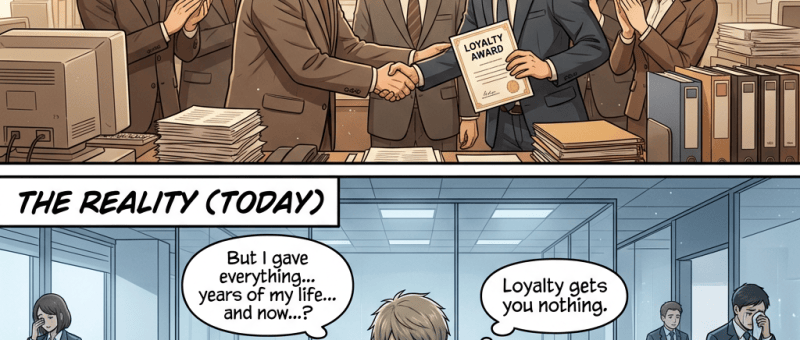
Split comic: “THE PROMISE (PAST),” “Your dedication is recognized!”, “We protect our family!”, “Hard work leads to stability!”, “LOYALTY AWARD”; “THE REALITY (TODAY),” “But I gave everything... years of my life... and now...?”, “Loyalty gets you nothing.”, “ALERT: Company Restructuring,” and “LAYOFF NOTICE.”

By: Dr. Stephanie Diana Eubank DBA

For decades, employees were told that loyalty, reliability, and hard work would be rewarded with job security. Many professionals built entire careers around the belief that if they consistently showed up, volunteered for extra work, and sacrificed personal time for the organization, they would be protected during difficult times.

Unfortunately, today’s workplace tells a different story.

Across industries, layoffs frequently impact employees regardless of tenure, loyalty, or willingness to go above and beyond. While reliability remains a valuable trait, it is not a guarantee of job protection.

The Myth of Loyalty as Job Protection

Many employees overestimate the protective value of loyalty. During restructures, organizations typically evaluate business needs, budgets, strategic priorities, and future workforce requirements rather than rewarding past sacrifices. Loyalty may be appreciated, but it is rarely a formal criterion during layoffs.

Why Doing Everything Doesn’t Always Earn Respect

Many employees become the go-to person who handles every request, fixes every problem, and absorbs responsibilities that should be shared across the team.

While this can create short-term visibility, it does not automatically translate into respect. Coworkers may begin to see the employee as a resource instead of a strategic contributor, while leaders may rely on the employee’s willingness to overextend rather than viewing them as leadership material.

Respect is more often earned through competence, credibility, influence, communication skills, and strategic thinking.

A Better Strategy: Build Skills and Career Resilience

1. Develop specialized skills and certifications.
2. Build and maintain a professional network.
3. Keep your resume and portfolio updated.
4. Strengthen leadership and communication skills.
5. Focus on transferable skills such as problem-solving and adaptability.

How Employees Can Earn Genuine Respect

• Deliver consistent, high-quality work.
• Demonstrate accountability.
• Build expertise.
• Collaborate effectively.
• Communicate professionally.
• Innovate and solve problems.
• Maintain healthy boundaries.
• Mentor and support others.

How Organizations Can Break This Culture

Organizations should reward outcomes instead of overwork, create transparent career development pathways, invest in employee development, recognize strategic contributions, and encourage sustainable performance.

How Wicked B of the West Business Consulting Can Help

Many organizations unintentionally create cultures that reward burnout and unhealthy loyalty patterns. Wicked B of the West Business Consulting helps organizations prepare for the future of work through leadership development, remote and hybrid work strategy, organizational design, process improvement, workplace culture assessments, employee retention initiatives, accessibility consulting, and change management support.

By building sustainable systems rather than relying on employee overextension, organizations can retain top talent and improve performance.

Book Spotlight

Remote Work Is Here to Stay: Rethinking Operations Management in the Modern Work Era is now available for purchase on Amazon. The book explores practical strategies for navigating remote and hybrid work while building sustainable, high-performing organizations.

Conclusion

Loyalty is admirable, but it should not be mistaken for a job security strategy. Employees who invest in skills, relationships, adaptability, and professional growth are better positioned to succeed in an evolving workplace.

References (APA 7th Edition)

Augustine, A. (2026). Loyalty tax: Why loyal employees are being hit hardest by layoffs.
Castrillon, C. (2026). 7 ways workplace loyalty can backfire on long-term employees.
Frone, M. R., & Blais, A.-R. (2020). Organizational downsizing, work conditions, and employee outcomes.
Sucher, S. J. (2023). The hidden costs of layoffs.
Careerminds. (2026). New data shows how companies manage layoffs and employees experience them.

Book Information   
 Remote Work Is Here to Stay: Rethinking Operations Management in the Modern Work Era   
 Available on Amazon: https://www.amazon.com/dp/B0H5BPJCHJ   

If you enjoy this content like and subscribe.  Additionally, if you are interested in consulting services, please feel free to reach out to me through my social media channels.  Remember remote is here to stay.    

YouTube: https://www.youtube.com/@Wickedbofthewest    

Website: wickedbofthewestremoteconsulting.com    

Facebook: https://www.facebook.com/WickedBoftheWestBusinessConsulting    

Instagram: https://www.instagram.com/wickedbofthewestconsulting/    

Blog: drstephaniebeardbaremoteresearch.org    

LinkedIn: https://www.linkedin.com/in/stephanie-diana-eubank-dba/    

TikTok: https://www.tiktok.com/@ DrStephanieDEubank    

New Website: wickedbofthewestconsulting.com    

Email: stephaniedeubank@gmail.com    

TikTok: @ DrStephanieDEubank  

New Website: wickedbofthewestconsulting.com   

Remote Work: The Pet to Threat Bias Exposed

PET TO THREAT; STAGE 1: THE PROTÉGÉ - SUPPORTED & VALUED; STAGE 2: THE THREAT - COMPETENCE & INFLUENCE GROW

By: Dr. Stephanie Diana Eubank DBA

The “pet to threat” phenomenon describes a workplace dynamic in which a highly valued employee is initially supported, mentored, and celebrated, only to become viewed as a threat once their competence, influence, visibility, or independence grows. The concept has been associated with the work of Dr. Kecia Thomas and has been discussed extensively in relation to workplace bias, favoritism, and changing power dynamics.

Remote and hybrid environments can unintentionally amplify favoritism, visibility disparities, and proximity bias. Employees who are physically present may receive more recognition, developmental opportunities, and informal access to decision makers than equally qualified remote workers. When combined with the pet-to-threat dynamic, high-performing employees can find themselves excluded from opportunities, meetings, and sponsorship relationships.

When employees believe advancement depends more on politics, favoritism, or maintaining a leader’s comfort than on performance, trust declines. Employees may engage less, withhold ideas, avoid innovation, and seek opportunities elsewhere. Team cohesion suffers because employees begin competing for visibility instead of collaborating. In remote and hybrid settings, this can occur quietly and remain undetected by leadership for extended periods.

Organizations that fail to address pet-to-threat behaviors risk losing their highest-performing employees. Research on remote work suggests that employee well-being, connection, fairness, and leadership quality are significant drivers of retention. When employees perceive unfair treatment, exclusion, or favoritism, turnover intentions increase regardless of work location.

How Companies Can Address the Problem

  • Use objective performance metrics and promotion criteria.
  • Create transparent career development pathways.
  • Train managers to recognize favoritism and proximity bias.

The pet-to-threat phenomenon is not simply an individual leadership problem. It is an organizational risk that can undermine trust, increase turnover, and damage workplace culture. In remote and hybrid workplaces, leaders must intentionally design fair systems that reduce favoritism, limit proximity bias, and ensure all employees have equal opportunities to contribute and succeed.

References (APA 7th Edition)

Donahue, K., Gilbert, T., Halpert, M., & Robertson Migas, P. (2021, June 29). The infuriating journey from pet to threat: How bias undermines Black women at work. Forbes. https://www.forbes.com/sites/forbeseq/2021/06/29/the-infuriating-journey-from-pet-to-threat-how-bias-undermines-black-women-at-work/

Dutot, V., Lichy, J., Doargajudhur, M., & Orhan, M. A. (2026). Hybrid work and relational dynamics: Leadership, favoritism and employee outcomes. Journal of Organizational Effectiveness: People and Performance. https://doi.org/10.1108/JOEPP-01-2026-0062

Lasisi, T. T., Constanta, E., & Eluwole, K. K. (2022). Workplace favoritism and workforce sustainability: An analysis of employees’ well-being. Sustainability, 14(22), 14991. https://doi.org/10.3390/su142214991

Lezcano, A. M., Zajac, S. A., Johnson, S. K., & Holladay, C. L. (2026). Rethinking return-to-office: The positive impact of remote work on well-being, connection, and employee retention. Frontiers in Psychology, 17. https://doi.org/10.3389/fpsyg.2026.1848857

Lezcano, A. M., Zajac, S. A., Johnson, S. K., & Holladay, C. L. (2026). Rethinking return-to-office: The positive impact of remote work on well-being, connection, and employee retention. Frontiers in Psychology, 17. https://doi.org/10.3389/fpsyg.2026.1848857

Conclusion

The pet-to-threat phenomenon is not simply an individual leadership problem. It is an organizational risk that can undermine trust, increase turnover, and damage workplace culture. In remote and hybrid workplaces, leaders must intentionally design fair systems that reduce favoritism, limit proximity bias, and ensure all employees have equal opportunities to contribute and succeed.

Book Information   
 Remote Work Is Here to Stay: Rethinking Operations Management in the Modern Work Era   
 Available on Amazon: https://www.amazon.com/dp/B0H5BPJCHJ   

If you enjoy this content like and subscribe.  Additionally, if you are interested in consulting services, please feel free to reach out to me through my social media channels.  Remember remote is here to stay.    

YouTube: https://www.youtube.com/@Wickedbofthewest    

Website: wickedbofthewestremoteconsulting.com    

Facebook: https://www.facebook.com/WickedBoftheWestBusinessConsulting    

Instagram: https://www.instagram.com/wickedbofthewestconsulting/    

Blog: drstephaniebeardbaremoteresearch.org    

LinkedIn: https://www.linkedin.com/in/stephanie-diana-eubank-dba/    

TikTok: https://www.tiktok.com/@ DrStephanieDEubank    

New Website: wickedbofthewestconsulting.com    

Email: stephaniedeubank@gmail.com    

TikTok: @ DrStephanieDEubank  

New Website: wickedbofthewestconsulting.com   

Toxic Leadership: The Hidden Costs to Organizations

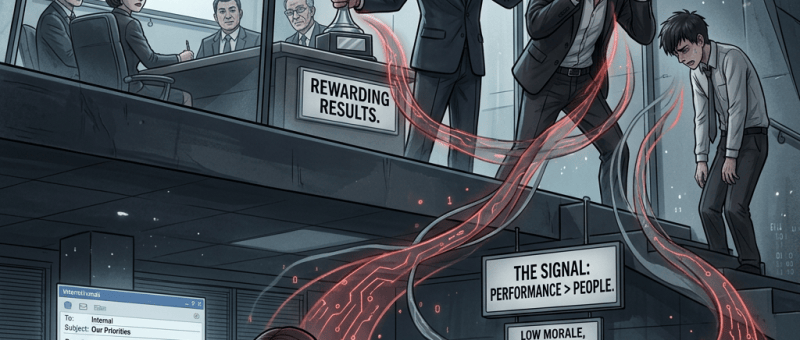
Office illustration contrasting profit rewards with employee abuse, low morale, and falling retention

By: Dr. Stephanie Diana Eubank DBA

Every organization sends signals through the behaviors it rewards, tolerates, and excuses. When companies repeatedly protect abusive leaders because they generate revenue, deliver results, or maintain political influence, they send a powerful message to employees: performance matters more than people. The result is not only damage to trust and engagement, but also long-term costs in productivity, retention, reputation, and legal exposure.

Employees closely observe how leadership responds to complaints about bullying, intimidation, favoritism, retaliation, or other abusive conduct. When credible concerns are ignored, minimized, or explained away, workers often conclude that psychological safety is absent and that reporting problems may harm their careers. Research has linked tyrannical and abusive leadership with workplace bullying, turnover intentions, emotional exhaustion, and job insecurity.

Employees who feel devalued are less likely to demonstrate discretionary effort, innovation, collaboration, and organizational commitment. Toxic leadership environments frequently create distraction, stress, and disengagement. Instead of focusing energy on organizational goals, employees devote time and emotional resources to self-protection, conflict avoidance, or finding a new job. Over time, high-performing employees often leave, while remaining employees may experience reduced engagement and increased cynicism.

Organizations that tolerate abusive leaders often experience elevated turnover. Recruitment, onboarding, training, and lost institutional knowledge create significant replacement costs. Beyond direct expenses, constant turnover disrupts team cohesion, customer relationships, and operational continuity. Research consistently shows connections between abusive supervision, workplace bullying, and turnover intentions.

Employers that fail to address abusive behavior may also increase exposure to complaints, investigations, and litigation when misconduct crosses into unlawful harassment, discrimination, retaliation, or hostile work environment claims. The U.S. Equal Employment Opportunity Commission (EEOC) notes that unlawful harassment can create intimidating, hostile, or abusive work environments and encourages employers to establish effective reporting systems, training, and corrective actions.

How Companies Can Do Better

  • Hold leaders accountable for behavior, not just business results.
  • Include leadership behavior metrics in performance evaluations.
  • Create confidential and trusted reporting channels.
  • Investigate complaints promptly, objectively, and consistently.
  • Protect employees from retaliation.
  • Provide leadership coaching and development focused on emotional intelligence.
  • Conduct regular climate and engagement surveys.
  • Tie promotions and bonuses to demonstrated people leadership skills.
  • Model respect, inclusion, and transparency from the executive level.
  • Act decisively when patterns of abusive behavior are identified.

The true culture of an organization is revealed by what it tolerates. When companies excuse abusive leaders, they communicate that employee well-being is secondary to protecting power. Organizations that prioritize accountability, respect, and psychological safety are more likely to retain talent, strengthen morale, increase productivity, and reduce legal risk.

Author Book Spotlight

Stephanie Eubank is the author of a book currently available on Amazon. This article can include a customized promotional blurb, book title, and Amazon link. Example: “If you enjoy practical insights on leadership, workplace culture, neurodiversity, and organizational effectiveness, be sure to check out Stephanie Eubank’s latest book, now available on Amazon.”

References (APA 7th Edition)

Trepanier, S.-G., Peterson, C., Fernet, C., & Austin, S. (2024). How tyrannical leadership relates to workplace bullying and turnover intention over time: The role of coworker support. Scandinavian Journal of Psychology, 65, 469-478. https://doi.org/10.1111/sjop.12982

Li, M., Ahmed, A., Syed, O. R., Khalid, N., & Munoz, J. E., Jr. (2022). Impact of abusive leader behavior on employee job insecurity: A mediating roles of emotional exhaustion and abusive peer behavior. Frontiers in Psychology, 13, 947258. https://doi.org/10.3389/fpsyg.2022.947258

U.S. Equal Employment Opportunity Commission. (n.d.). Harassment. https://www.eeoc.gov/harassment

Book Information   
 Remote Work Is Here to Stay: Rethinking Operations Management in the Modern Work Era   
 Available on Amazon: https://www.amazon.com/dp/B0H5BPJCHJ   

If you enjoy this content like and subscribe.  Additionally, if you are interested in consulting services, please feel free to reach out to me through my social media channels.  Remember remote is here to stay.    

YouTube: https://www.youtube.com/@Wickedbofthewest    

Website: wickedbofthewestremoteconsulting.com    

Facebook: https://www.facebook.com/WickedBoftheWestBusinessConsulting    

Instagram: https://www.instagram.com/wickedbofthewestconsulting/    

Blog: drstephaniebeardbaremoteresearch.org    

LinkedIn: https://www.linkedin.com/in/stephanie-diana-eubank-dba/    

TikTok: https://www.tiktok.com/@ DrStephanieDEubank    

New Website: wickedbofthewestconsulting.com    

Email: stephaniedeubank@gmail.com    

TikTok: @ DrStephanieDEubank  

New Website: wickedbofthewestconsulting.com   

Building High-Performing Teams in Remote Work

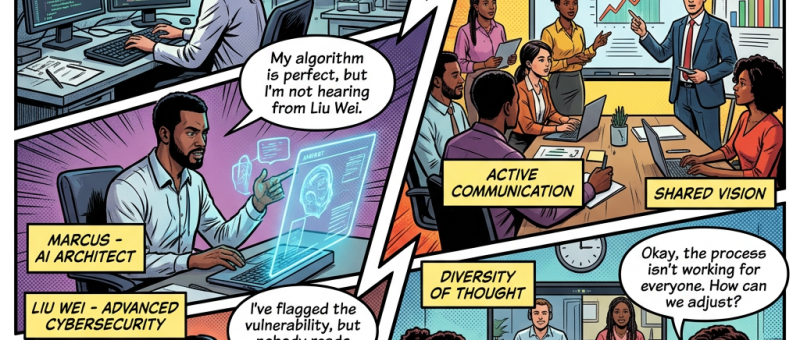
Comic comparing common hiring with intentional team design: quantum physicist, AI architect, and cybersecurity specialist work separately while a diverse team practices clear roles, active communication, shared vision, and diversity of thought; bottom text says organizations must balance deep technical skills with critical team processes and leadership, with caption "A Key Insight from Dissertation Research."

By Dr. Stephanie Diana Eubank, DBA 

One of the most significant findings from my dissertation research was that leaders in both traditional in-person environments and remote work environments frequently fail to utilize intentional team design strategies. Instead, organizations often focus heavily on hiring subject matter experts (SMEs) with deep technical expertise while paying far less attention to team dynamics, communication styles, collaboration capabilities, and leadership structures. 

While technical expertise is important, my research aligned with a growing body of literature suggesting that expertise alone does not create high-performing teams. In many cases, organizations unintentionally create conditions that mirror what Meredith Belbin described as the Apollo Effect, sometimes called Apollo Syndrome. Researchers have found that teams composed primarily of highly capable experts can underperform because individuals become overly focused on their own areas of expertise, priorities, or perspectives rather than collective team objectives. 

The Apollo Effect in Modern Organizations 

Belbin’s research demonstrated that teams filled with highly intelligent and accomplished individuals often struggled with collaboration, shared decision-making, and consensus-building. These teams frequently experienced excessive debate, siloed thinking, competing priorities, and reduced team cohesion. Rather than leveraging the collective strength of the group, members operated independently and unintentionally undermined overall team effectiveness. In some cases, so-called ‘dream teams’ performed worse than teams with fewer technical superstars but stronger collaboration and leadership structures. 

What makes this particularly important today is that the Apollo Effect is not limited to in-person teams. Similar challenges can emerge in remote and hybrid work environments when leaders fail to establish communication systems, accountability structures, knowledge-sharing practices, and role clarity. 

Remote and In-Person Teams Share the Same Design Problem 

One misconception is that remote work creates team dysfunction. My research suggests a different conclusion. The problem is often not the work location itself. The problem is poor team design. 

Organizations frequently invest substantial resources identifying technical experts while neglecting the human systems required for collaboration. When selection decisions prioritize expertise above communication, documentation, adaptability, and teamwork, organizations create conditions where the Apollo Effect can thrive regardless of whether employees work in an office, remotely, or through a hybrid arrangement. 

The Entry-Level Experience Paradox 

Another concerning trend is the growing expectation that applicants possess extensive experience for positions traditionally considered entry level. Organizations increasingly seek candidates with years of experience, advanced credentials, and extensive technical knowledge while offering compensation and advancement opportunities associated with early-career positions. 

The result is an organizational imbalance. Teams become overpopulated with specialists competing for limited advancement opportunities. Highly qualified employees enter roles beneath their experience levels, while organizations simultaneously struggle with retention, engagement, and leadership development. This practice can contribute to weakened organizational culture and reduced team sustainability because employees often feel underutilized, disconnected, or uncertain about long-term growth opportunities. 

Building Sustainable Teams 

Organizations seeking long-term success should expand their hiring and workforce development strategies beyond technical expertise. Effective team design includes role diversity, communication competencies, collaborative problem-solving, psychological safety, documentation practices, accountability systems, and leadership development. 

The most successful teams combine subject matter expertise with relationship-building capabilities. They balance technical knowledge with coordination, knowledge sharing, and a commitment to collective outcomes. 

A Chapter Dedicated to the Apollo Effect 

These themes are explored in greater detail in my book, Remote Work Is Here to Stay: Rethinking Operations Management in the Modern Work Era, now available on Amazon. One chapter specifically examines the Apollo Effect, discusses how it impacts both remote and traditional workplaces, and provides practical leadership strategies for designing resilient, sustainable, and high-performing teams. 

As organizations continue adapting to the future of work, leaders must move beyond the assumption that a collection of experts automatically becomes a high-performing team. Sustainable success requires intentional team design, leadership development, and organizational systems that encourage collaboration rather than competition. 

References (APA 7th ed.) 

Belbin. (n.d.). Belbin Apollo teams. https://www.belbin.com/resources/articles-directory/belbin-apollo-teams 

Gershkov, A., & Schweinzer, P. (2021). Dream teams and the Apollo effect. Journal of Mechanism and Institution Design, 6(1), 113-148. 

Gallup. (2025). A strategic guide for managing hybrid and remote teams. https://www.gallup.com/workplace/316313/understanding-and-managing-remote-workers.aspx 
 

Book Information   
 Remote Work Is Here to Stay: Rethinking Operations Management in the Modern Work Era   
 Available on Amazon: https://www.amazon.com/dp/B0H5BPJCHJ   

If you enjoy this content like and subscribe.  Additionally, if you are interested in consulting services, please feel free to reach out to me through my social media channels.  Remember remote is here to stay.    

YouTube: https://www.youtube.com/@Wickedbofthewest    

Website: wickedbofthewestremoteconsulting.com    

Facebook: https://www.facebook.com/WickedBoftheWestBusinessConsulting    

Instagram: https://www.instagram.com/wickedbofthewestconsulting/    

Blog: drstephaniebeardbaremoteresearch.org    

LinkedIn: https://www.linkedin.com/in/stephanie-diana-eubank-dba/    

TikTok: https://www.tiktok.com/@ DrStephanieDEubank    

New Website: wickedbofthewestconsulting.com    

Email: stephaniedeubank@gmail.com    

TikTok: @ DrStephanieDEubank  

New Website: wickedbofthewestconsulting.com   

Also, be sure to check out my first textbook on Operations Management. The book is titled “Remote Work Is Here to Stay: Rethinking Operations Management in the Modern Work Era.” You can purchase the textbook on Amazon at the link below.    

Why Expertise Alone Fails in Remote Collaboration

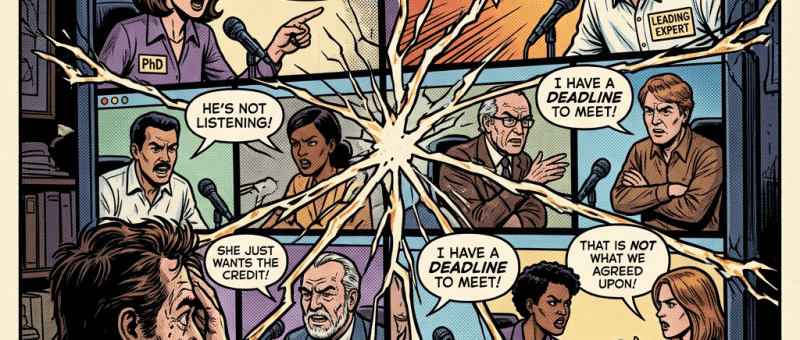
Comic titled "THE APOLLO EFFECT" showing arguing experts in video-call windows; text explains accomplished individuals failed by defending ideas and competing for influence, with speech bubbles claiming superiority, deadlines, credit, and leadership.

By Dr. Stephanie Diana Eubank, DBA 

Organizations often make the same mistake when building remote teams. They assemble a dream team of highly qualified subject matter experts, assume expertise will automatically lead to success, and then wonder why projects become delayed, fragmented, or plagued by miscommunication. 

The Apollo Effect, sometimes called Apollo Syndrome, found that teams composed entirely of highly intelligent and accomplished individuals often underperformed because members focused on defending their own ideas, pursuing individual objectives, and competing for influence instead of collaborating around shared goals. 

The Hidden Risk of Expertise 

Subject matter expertise is valuable. Organizations need specialists, analysts, engineers, project managers, and technical professionals. However, expertise alone does not guarantee effective teamwork. 

Apollo teams frequently struggle because members work within professional silos. Each individual may be highly capable, but without strong communication and coordination practices, the collective intelligence of the team becomes diluted. Decisions become slower, priorities become misaligned, and accountability becomes unclear. 

Why Remote Teams Need Even More Communication 

In a traditional office environment, many communication gaps are filled through informal interactions. Employees overhear conversations, stop by a coworker’s desk, or clarify questions in hallway discussions. 

Remote work changes that dynamic. 

Successful remote teams require intentional communication practices. Team members must document decisions, send follow-up emails, maintain project records, participate in meetings, and communicate progress regularly. Video calls, instant messaging, shared documents, and written procedures become essential tools for ensuring everyone remains aligned. 

Contrary to popular belief, remote work often requires more communication rather than less. Leaders cannot assume alignment simply because a meeting occurred. Teams must create communication systems that reinforce understanding and accountability. 

Documentation Is a Leadership Tool 

One of the greatest advantages of remote work is the emphasis on documentation. Clear written communication creates institutional knowledge, reduces misunderstandings, supports onboarding, and increases transparency. 

When communication is documented, organizations become less dependent on individual employees holding critical knowledge. Processes can be repeated, knowledge can be transferred, and teams can continue operating effectively even during turnover or growth. 

The Retention and Productivity Advantage 

While increased communication may initially seem like additional work, it produces significant long-term benefits. Research consistently shows that well-managed hybrid and remote teams can experience strong engagement, improved work-life balance, and stable productivity when expectations and communication structures are clear. 

Employees who feel informed, connected, and trusted are more likely to remain with their organizations. Clear communication also reduces rework, confusion, duplicated effort, and project delays. 

Moving Beyond the Apollo Effect 

The solution is not to avoid hiring experts. The solution is to balance expertise with collaboration. 

Organizations should evaluate communication skills, emotional intelligence, documentation habits, teamwork capabilities, and leadership potential alongside technical expertise. Leaders should establish communication norms, clarify team goals, create shared accountability mechanisms, and ensure knowledge sharing occurs regularly. 

The most successful remote teams are not simply collections of brilliant individuals. They are systems of connected professionals who understand how their work contributes to a larger collective objective. 

Conclusion 

Remote work has amplified the importance of communication. As organizations continue building distributed teams, leaders must avoid creating Apollo teams that prioritize individual brilliance over collective success. 

The future belongs to organizations that intentionally teach communication, collaboration, documentation, and leadership alongside technical expertise. When these elements work together, remote teams become more resilient, productive, and capable of delivering sustainable results. 

References 

Belbin. (n.d.). Belbin Apollo Teams. https://www.belbin.com/resources/articles-directory/belbin-apollo-teams 

Gallup. (2025). A Strategic Guide for Managing Hybrid and Remote Teams. https://www.gallup.com/workplace/316313/understanding-and-managing-remote-workers.aspx 

Gallup. (n.d.). Hybrid Workplace Strategies for Leaders and Managers. https://hr.uoregon.edu/sites/default/files/hybrid_workplace_strategies_gallup.pdf 

Gershkov, A., & Schweinzer, P. (2021). Dream Teams and the Apollo Effect. Journal of Mechanism and Institution Design, 6(1), 113-148. 
 

Book Information   
 Remote Work Is Here to Stay: Rethinking Operations Management in the Modern Work Era   
 Available on Amazon: https://www.amazon.com/dp/B0H5BPJCHJ   

If you enjoy this content like and subscribe.  Additionally, if you are interested in consulting services, please feel free to reach out to me through my social media channels.  Remember remote is here to stay.    

YouTube: https://www.youtube.com/@Wickedbofthewest    

Website: wickedbofthewestremoteconsulting.com    

Facebook: https://www.facebook.com/WickedBoftheWestBusinessConsulting    

Instagram: https://www.instagram.com/wickedbofthewestconsulting/    

Blog: drstephaniebeardbaremoteresearch.org    

LinkedIn: https://www.linkedin.com/in/stephanie-diana-eubank-dba/    

TikTok: https://www.tiktok.com/@ DrStephanieDEubank    

New Website: wickedbofthewestconsulting.com    

Email: stephaniedeubank@gmail.com    

TikTok: @ DrStephanieDEubank  

New Website: wickedbofthewestconsulting.com   

Also, be sure to check out my first textbook on Operations Management. The book is titled “Remote Work Is Here to Stay: Rethinking Operations Management in the Modern Work Era.” You can purchase the textbook on Amazon at the link below.