Society Needs To Show More Respect To Remote Working Parents and Stay-At-Home-Parents.

By Stephanie Diana Eubank

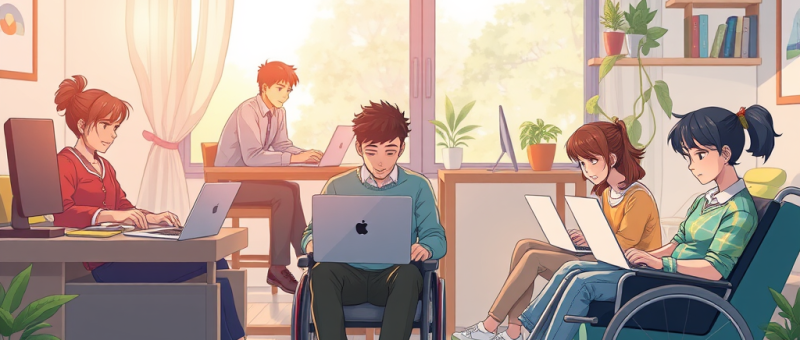
I want to start out by saying there is no shame or blame negativity towards those who are stay-at-home parents or Stay-at-home moms, also known as SAHM or SAHP.  The fact is that for many families the ability to have a stay-at-home parent that does not work remotely is a luxury not all can afford.  Remote work is a way for a working parent to have some work-life balance, have more time with family, and have the benefits of throwing a load of laundry in the wash during breaks or throwing some food in the crockpot so dinner is ready after work.  Although I have been a mother with an infant while working from home there is a difference between the two.

Speaking from previous experiences and the current experiences relayed to me by friends, colleagues, and in my research, many remote workers with a partner who worked in person or hybrid, especially before COVID, were regarded as being SAHP and viewing their work and finances as less than.  Which is the root of my post today.  This being the last week of Women’s History Month in the US, it is customary (unfortunately) to deem household and childcare responsibilities squarely on a woman’s shoulders and to devalue these contributions.  The fact that SAHM/ SAHP are disregarded for the hard work they do for their family is unfair and inappropriate.  However, so is devaluing working parents who work remotely to attempt to have a work-life balance to provide for and support their family.    

Speaking from my personal experience when I was first working from home, and my sons were infants and toddlers in my first marriage, the verbalized opinion from family and my ex-partner was that as a remote worker, I should also be able to care for my children, have a spotless home, and dress up like a 1950’s housewife and serve drinks for those working in person.  All while keeping my business productivity high and being happy about my extra-earned responsibilities as a mother and primary breadwinner. But that is not sustainable!  Even for SAHM/ SAHP, that view is not sustainable.  Parenthood comes with ups and downs, and the acceptance that nothing will ever be perfect is a full-time job as well. Remote workers forced into this social view are expected to work three plus jobs at once. 

I am truly blessed my current husband has no such expectations of me and instead works with me to help coordinate help in our home so that I can relax, work, study, research, and be a wonderful mom.  I am really lucky my children and my husband all support my work and value the importance of my research to help other working parents have the opportunity to keep showing their love for their family through the hard work to provide for them and still being able to be present and at the moment with their families.

As Women’s History Month comes to a close, let us all work together to support both working parents and stay-at-home parents as they show love to their families through hard work and dedication.

Seeing how society views remote working parents and devaluing stay-at-home parents, I am seeking volunteers who are either remote working parents or stay-at-home parents to participate in a survey to look at this devaluation of work.  My theory is that once we understand the hard work both sides put into raising a family and talk about it publicly the sooner, we can see the truth of remote work being a great tool for helping with mental health in the workplace by creating a work-life balance and not an excuse to shame people for having children.

If you are interested in participating in this research, please send an email with your name, contact information and a link to one of your social media sites preferably LinkedIn to stephanie.eubank@wickedbofthewestremoteconsulting.com With the subject Remote v SAHP. 

If you enjoyed this content, like and subscribe.  Also, if you are interested in consulting services, please contact me through my social media.  Remember, remote work is here to stay.

YouTube: https://www.youtube.com/@Wickedbofthewest

Website: wickedbofthewestremoteconsulting.com

Facebook: https://www.facebook.com/WickedBoftheWestBusinessConsulting

Instagram: https://www.instagram.com/wickedbofthewestconsulting/

Twitter: @SDEubank

Blog: drstephaniebeardbaremoteresearch.org

LinkedIn: https://www.linkedin.com/in/stephanie-diana-eubank-dba/

TikTok: @stephaniedianaeubank

Remember, The Best Way To Show A Company is Pro Women Is To Encourage Remote Work

By Stephanie Diana Eubank

With March being Women’s History Month, we have to remember the long-standing fights women have had to endure that have gotten us here today. From suffragettes to women demanding to wear pants in the workplace and moving towards more education and a seat at the boardroom table, women have come a long way. And yet, they have not come far enough.

As women, we still take on a large part of the risks when having children, and this includes workplace discrimination.  There are so many companies under fire for firing women and besmirching them to get them to quit when a woman announces her pregnancy.  Unfortunately, this stems from old-school myths.

The myth is that women are less devoted to their jobs when they have kids.  Numerous studies on this and data from the Bureau of Labor and Statistics have been disproven for decades. With 75% of all care taking in this country that is unpaid being done by women we need to make sure that the business world makes room for women to participate and afford to care for their loved ones.  This makes remote work a great pro-women business culture tool.  When we understand women’s struggles in the workplace, even when working hard to gain advanced degrees and skills, we make a more inclusive and profitable workplace.

Reddit is a great market research tool, but it has also become a mirror for the Business World on toxic leadership and business practices. We need to remember some things women are still dealing with:

  • Less likely to be promoted than their male counterparts.
  • Less likely to find mentors willing to help guide them through their careers.
  • Making less money even with higher degrees.
  • And more likely to be pushed out of a job when announcing a pregnancy or other family changes than their male counterparts.
  • Being socially judged if one works and is a mother.
  • The statistical likeliness to be sexually harassed than male counterparts.

Once we understand these constant issues that are still prevailing in the business world, we will better understand how remote work is an organizational culture tool to increase diversity and inclusion and make an organization pro-women.

If you enjoyed this content, like and subscribe.  Also, if you are interested in consulting services, please reach out through my social media.  Remember, remote is here to stay.

YouTube: https://www.youtube.com/@Wickedbofthewest

Website: wickedbofthewestremoteconsulting.com

Facebook: https://www.facebook.com/WickedBoftheWestBusinessConsulting

Instagram: https://www.instagram.com/wickedbofthewestconsulting/

Twitter: @SDEubank

Blog: drstephaniebeardbaremoteresearch.org

LinkedIn: https://www.linkedin.com/in/stephanie-diana-eubank-dba/

Remote Work and Mixed Modalities Reveals Easier Way To Bond With Your Team

By Stephanie Eubank

Remote work has helped organizational culture evolve and change to fit the natural changes to the business world, such as making remote work more accessible and dynamic. However, there is a small change that has been growing since the early 2000s in business culture, and it actually has helped business leadership bond with their teams. Ironically, this change is the change to business fashion.

In remote and hybrid work, many dress to be zoom-ready.  This means wearing a top-up dress that is presentable and comfortable clothing from the waist down.  This allows employees and leadership to focus on comfort and getting the job done.  This is yet another example of how remote work helps make the actual work stand out.  This also allows more inclusivity to those like me who have physical disabilities along with those also like me who are neurodivergent and certain fabrics and cuts are distracting and uncomfortable.  This is yet another opportunity for my work and expertise to shine when I can focus on the work instead of the beauty pageant of the office.

Also, having a Zoom-ready/ business casual dress code helps low-income workers feel less obligated to try and spend every penny to follow all the most expensive business wardrobe trends.  This practice particularly hurts young women entering the workforce and working single moms. Remote work allows these demographics to stand out for their work and creativity instead of standing out while trying to fit into corporate culture.

This also allows an interesting benefit for those in leadership roles. Traditionally, business leaders will dress up to distinguish themselves from their followers/ employees. However, this practice also creates boundaries within an organization, which helps when using harsher leadership practices linked with Toxic Leadership. 

However, dressing business casual psychologically makes a leader more approachable to their employees and the community serving clients.  It shows leadership on the same level as the workers as another worker in the trench.  This also helps facilitate communication and transparency among teams.  Reliability and comfort are great ways to help bond with teams, encouraging better morale and lowering turnover. 

Now, dressing down isn’t going to make a toxic leader less toxic, but it is a step in the right direction toward a new normal definition of leadership. It’s about meeting people where they are and learning how to be truly human.

If you enjoyed this content, like and subscribe.  Also, if you are interested in consulting services, please reach out through my social media.  Remember, the remote is here to stay.

YouTube: https://www.youtube.com/@Wickedbofthewest

Website: wickedbofthewestremoteconsulting.com

Facebook: https://www.facebook.com/WickedBoftheWestBusinessConsulting

Instagram: https://www.instagram.com/wickedbofthewestconsulting/

Twitter: @SDEubank

Blog: drstephaniebeardbaremoteresearch.org

LinkedIn: https://www.linkedin.com/in/stephanie-diana-eubank-dba/

Gifts and Remote Work

By Stephanie Diana Eubank

While discussing supply chain management and the effects on customer and vendor relationships during pandemics, the topic of sending Valentine’s Day gifts to one workplace came up. I remember being sad and jealous of coworkers whose partners and family could send them flowers. Still, security had to dismantle and reassemble the gifts because of safety guidelines, especially in the financial sector, where security was heightened after 9/11. 

However, after working remotely for over 12 years now, I and others like me have been able to enjoy gift-giving and receiving without issues. However, this does not mean there are no risks in working remotely and others knowing your address. This is a topic to be mindful of, and that is a different TED talk. But my husband is able to send flowers, and there are no issues as he’s just sending them to the house. 

For all those who are celebrating Valentine’s Day or Galentine’s Day, etc., enjoy the holiday and Thursday of savings on Valentine’s Day candy.

If you enjoyed this content, like and subscribe.  Also, if you are interested in consulting services, please reach out through my social media.  Remember remote is here to stay.

YouTube: https://www.youtube.com/@Wickedbofthewest

Website: wickedbofthewestremoteconsulting.com

Facebook: https://www.facebook.com/WickedBoftheWestBusinessConsulting

Instagram: https://www.instagram.com/wickedbofthewestconsulting/

Twitter: @SDEubank

Blog: drstephaniebeardbaremoteresearch.org

LinkedIn: https://www.linkedin.com/in/stephanie-diana-eubank-dba/

TikTok: @stephaniedianaeubank

Sustainability In Relation To Remote Work

By Stephanie Diana Eubank

I talk a lot on my YouTube channel about teaching within the California State University (CSU) system.  As national news reported, the CFA (the Teachers’ Union representing the faculty of all 23 CSUs) went on strike this past week.  Where I am a member of the CFA Union, I will stay away from political criticism or other commentary.  I will comment on one trend noticed on both sides of the negotiation table, which kept repeating the topic of sustainability.

In business, when discussing sustainability, there are three categories discussed.  The three categories are:

  • Financial,
  • Business Longevity, and
  • Ecologically.

When discussing all three types of sustainability, remote work is a positive benefit to ensuring sustainability in business. Yet, the narrative from leadership is that remote work is a hindrance to all aspects of business.  Even though COVID proved all that spin from leadership and concerns noted in research from the leadership perspective since 1985, it is and has always been wrong. 

So, using the controversy of the teachers’ strike as an example, I want to look at how remote work could have been used to address sustainability concerns at the negotiating table.

  • Financial, Offering more remote or hybrid course options would help teachers save money on commuting, clothes, and other resources professors must provide to teach. Offering more remote and hybrid courses will help the university save money. Money on utilities was spent on faculty, staff, and students taking time off due to the COVID-19 resurgence. More remote therapists’ options allow the universities to afford more mental health services and generally at a less expensive rate. No longer needed buildings can be retrofitted to provide housing for students, staff, and faculty. This would create many financial opportunities for the university and keep land usage in line, helping to
    • provide more enrichment to all.
    • Making more room for remote and hybrid learning and the money the whole university system makes and saves would leave room for lower tuition costs, enhancing student enrollment. It will also create room for more returning students who are in their careers and want to finish their degrees, opening up more student demographics.
  • Business Longevity and students and faculty are screaming out for more remote and hybrid work and courses, which will boost enrollment. Remote and hybrid courses and remote work would help give students and staff more of a work-life balance.  Which has been proven to decrease issues of Workplace PTSD and workplace violence (this includes school shootings).  It will also help students be set up for success and lower stress in higher education.  Both for faculty and students.  So, many faculty members work more than one job,
    • and so do our students to afford life with inflation.  Remote work would lower commutes for all involved.
    • Decreased traffic and commuting to campus will also help reduce stress for students and faculty.
  • Economically.
    • With more students going to class remotely and more opportunities for remote work for faculty and staff, there are several ways the campus can evolve and become even more of a sanctuary of knowledge for the community, such as developing on-campus housing for faculty and students, keeping affordability in mind, and allowing faculty to spend less on coming to campus. We often forget the costs of going into the office, and many professors do not make that much, so any cost saving helps a lot.

If you enjoyed this content, like and subscribe.  Also, if you are interested in consulting services, please reach out through my social media.  Remember, the remote is here to stay.

YouTube: https://www.youtube.com/@Wickedbofthewest

Website: wickedbofthewestremoteconsulting.com

Facebook: https://www.facebook.com/WickedBoftheWestBusinessConsulting

Instagram: https://www.instagram.com/wickedbofthewestconsulting/

Twitter: @SDEubank

Blog: drstephaniebeardbaremoteresearch.org

LinkedIn: https://www.linkedin.com/in/stephanie-diana-eubank-dba/

Remote Work Requires More Networking

By: Stephanie Diana Eubank

For those who are new to my channel, I teach Business Administration and Operations Management at Stan State.  However, for the past 20 years, I have worked in the mortgage compliance arena, specializing in Condo Mortgage Underwriting.  Which is a whole TED talk of its own.  I was lucky that one of my mentors took a shot at me when she was developing a department from scratch and was doing so remotely.  She had disabilities, and remote work helped her make her work the focus instead of her disabilities. This is one of the wonders of remote work that I champion working from home, allowing the disabled community room to focus on their work and how remote work increases diversity and inclusion.  Although this opportunity stems from the adage, “It is not what you know or who you know.  It is about who knows you”. 

I have been fortunate enough to be a millennial in the financial industry, which means I have been experiencing Myspace, LinkedIn, and Facebook in my formative years. This helped me learn an important lesson I try to teach my students.  That lesson is the importance of networking.

In my doctoral research, I learned about the types of isolation common in remote work.  Specifically, professional isolation is prevalent.  I got to see firsthand how companies, especially during the reconstruction era after the financial crisis of 2008 how contractors were unceremoniously laid off with no notice.  However, my research found that remote workers also have experienced the feeling of being treated as a number and being treated as expendable. This is because remote workers tend to be isolated from leadership it was easier for leadership to not become attached and lay off remote workers indiscriminately. 

Fast forward to 2024, we see the onslaught of forced Return to Office, also called RTO.  Which has an added insidious business practice. The practice of RTO attempts to force remote workers back to the office or to quit so that companies can have a layoff without following the WARN Act and steal workers’ insurance, like unemployment rights, from their workforce.

This is where networking becomes necessary for our remote workforce’s career health and growth.

Networking is a great way to help the workforce regardless of modality gain:

  • Better mental health,
  • Skills in self-advocacy and connecting with leadership to stave off professional isolation,
  • Develop community,
  • Help find jobs, cultivate references, and
  • Stay up to date with changes in the industry.

I have been lucky to have so many friends and mentors (they all know who they are) in my field with whom I have stayed in touch remotely for over two decades. A couple I have not even met face to face outside of Zoom, Microsoft Teams, or Skype.  Having my circle of friends in my field to talk about issues and successes has not only been good for my and their mental health but also helped us survive the now two economic downturns and changes that welcomed remote workers into the norm of the workforce.  We have worked remotely for between five and twelve years each.  We have all gotten to experience the benefits of remote work creating a work-life- balance. This has made many of us more connected to our families and friends and lowered stress.  Not to mention that we have all helped each other with our job hunts and references.  Community is an important part of developing work culture. Unfortunately, while business trends and laws adjust to this new norm in remote work, the workforce must learn to develop their community. 

.    If you enjoyed this content, like and subscribe.  Also, if you are interested in consulting services, please reach out through my social media.  Remember, remote is here to stay.

YouTube: https://www.youtube.com/@Wickedbofthewest

Website: wickedbofthewestremoteconsulting.com

Facebook: https://www.facebook.com/WickedBoftheWestBusinessConsulting

Instagram: https://www.instagram.com/wickedbofthewestconsulting/

Twitter: @SDEubank

Blog: drstephaniebeardbaremoteresearch.org

LinkedIn: https://www.linkedin.com/in/stephanie-diana-eubank-dba/

Remote Work and Accommodations: How to advocate for yourself.

By: Stephanie Diana Eubank

Many companies are still pushing the Return to Office or RTO as a method of dodging the WARN Act to violate workers’ rights.  This tactic has continued since 2013 when Yahoo CEO Marissa Mayers banned remote work with a mandatory RTO.  This is detailed in the Forbes article by Goudreau (2021), where the then-CEO Mayer discusses (and I so hate this word) increasing workplace synergy as the reason for calling back remote workers.  Many workers at that time were women and working parents who could not afford to return to the office and were forced to resign without unemployment benefits. This is the first example of leadership working to skirt the Warn Act, although, at the time, remote work wasn’t as pervasive as it is now.

Fast forward to today, and many companies are dealing with having low application turnouts and complaining that “no one wants to work anymore” due largely to return to office/ RTO policies and harsh hybrid policies. However, many, like me as consultants, have strict contracts that many HR companies overlook.  Several companies are trying to bully remote workers by forcing RTO or forcing requirements not detailed in their contracts.  For being in stand-up meetings not detailed as a requirement in their contracts on time zones three plus hours ahead (sorry, 6AM is not a reasonable time to want anyone to present in a meeting if they are consultants or researchers), trying to force duties outside of the worker’s skill set and contract, among other well-known methods to basically force someone to leave an organization.  These tricks are so well known they are borderline cliché, and the media wonders why the workforce has developed a disloyalty and distrust of business leadership.

Although the laws are still trying to catch up to remote workers’ rights on the federal side, there are ways to advocate for yourself.  Such as:

  • If you have a contract that details you are being hired only as a 100% remote worker, have a lawyer review.  Often, companies that draft those contracts leave open-ended language to allow them to shift you to in-person work.  However, ambiguity benefits the person who did not draft the contract. Be prepared to stand your ground and be sure to always have savings to obtain legal representation.
  • Remember that HR is not your friend.  As HR reps are often trained in several aspects of employment benefits, we forget their job is to protect the company.  My students often freak out when I point out that companies developed HR as a method of Union Busting, as people are less inclined to join a union if the company has a representative who is meant to help them. It drives home my husband’s saying, “Don’t trust the people you are not directly paying.”
  • If you have a documented disability, note in writing if you are being asked to return to the office or RTO for continued remote work because it is disability accommodation.  Ensure a worker’s rights lawyer is in line and all items are in writing.  The company can file against it, showing that it is an undue hardship, but it will be required to prove how it would be.  Again, always make sure that you talk to a lawyer.
  • You can also petition to negotiate remote work.  Point out if you have high performance, and include a lawyer in the process. 
  • You can work to get your company to unionize if they are not already.  This will create better negotiating power for you and your company to protect your rights.
  • You can always look for a company that respects your time and skills and is willing to have remote work.

In the end, sometimes the answer is no, and if you want and thrive in remote work, the best thing is to look elsewhere. Always know your workers’ rights and speak with local legal professionals to better help you protect yourself.  Especially if you are a business owner or an independent contractor.    If you enjoyed this content, like and subscribe.  Also, if you are interested in consulting services, please reach out through my social media.  Remember, the remote is here to stay.

YouTube: https://www.youtube.com/@Wickedbofthewest

Website: wickedbofthewestremoteconsulting.com

Facebook: https://www.facebook.com/WickedBoftheWestBusinessConsulting

Instagram: https://www.instagram.com/wickedbofthewestconsulting/

Twitter: @SDEubank

Blog: drstephaniebeardbaremoteresearch.org

LinkedIn: https://www.linkedin.com/in/stephanie-diana-eubank-dba/

Work Cited

Goudreau, J. (2021, June 30). Back to the stone age? New Yahoo CEO Marissa Mayer bans working from home. Forbes. https://www.forbes.com/sites/jennagoudreau/2013/02/25/back-to-the-stone-age-new-yahoo-ceo-marissa-mayer-bans-working-from-home/?sh=f81353416672

York, J. (2022, August 22). How workplace bullying went remote. BBC News. https://www.bbc.com/worklife/article/20220819-how-workplace-bullying-went-remote

Abril, D. (2022, May 13). If I take a remote job, can I be forced into an office? – the … http://www.washingtonpost.com. https://www.washingtonpost.com/technology/2022/05/13/return-to-office-hybrid-remote/

Why Do The Amount of Remote Work Meetings Feel Like an Oprah Giveaway?

By Stephanie Diana Eubank

So, it is common in both remote and in-person modalities that there are a lot of meetings that are just unnecessary.  We have all dealt with this issue at one point or another.  You may be dealing with this now.  However, this need for constant needless meetings is a carry-on from in in-person-only-only modality. 

Constant meetings that could or should be meetings are bygone concepts often used within in-person work to help people who have no quantifiable way to justify their employment to be seen.  However, in the age of remote and hybrid work, there are easier ways to quantify your necessity in an organization. Such as:

  • Organizing Zoom meetings with leadership on quick status updates on your projects.
  • Make time with your manager to discuss contributions and where you can develop skills or find additional challenges to help you stand out.
  • Make time with team members to have a group Zoom lunch to socialize and see where there are opportunities for collaboration.
  • Keep logs of your work and projects and share them regularly with leadership to show your work, as some software systems that track work only track how many files you open per day instead of how many times you must open them per day.  In project management, this sort of quantified tracking is important for CYOB (COVER YOUR OWN BUM) but can help show your skills.

This brings us back to the constant meetings that, in all honesty, could just be a well-detailed email.  Or shorter meetings were broken up into multiple days just to show support on projects. The old-school methods of morning stand-up meetings can be broken down a bit more, so people have more room to get actual work done. That way, employees don’t feel like it’s Oprah giving away.  These tips are as follows:

  • Make a clear agenda and allow people who are not pivotal to miss the meeting if they must.
  • Limit how many are held in a month and how long for all-hands meetings.  These boundaries give more room to get actual work done.
  • Make pre-recorded videos of detailed emails to help those who learn auditorily and not visually.  But be sure to make room for questions.
  • Give meetings with leadership so that if a company is keeping a ladder method of leadership instead of a flat one, this helps give leaders room to lead. If you are doing flat leadership or shared leadership meetings with each team, it is better so items that don’t apply to one group are not slowing down another.

These are great ways leaders and followers can address communication and meetings to keep flowing productively without stressing from meetings.  If you enjoyed this content, like and subscribe.  Also, if you are interested in consulting services, please reach out through my social media.  Remember, the remote is here to stay.

YouTube: https://www.youtube.com/@Wickedbofthewest

Website: wickedbofthewestremoteconsulting.com

Facebook: https://www.facebook.com/WickedBoftheWestBusinessConsulting

Instagram: https://www.instagram.com/wickedbofthewestconsulting/

Twitter: @SDEubank

Blog: drstephaniebeardbaremoteresearch.org

LinkedIn: https://www.linkedin.com/in/stephanie-diana-eubank-dba/

Remote Leadership Needs To Learn To Stop Only Looking For The Faults In Their Teams.

By Stephanie Diana Eubank

So, one of the questions that came up in my dissertation focus groups and comes up a lot in consulting on leadership is the home life distractions.  A lot of Bossware and leaders in remote work spend a lot of time trying to catch employees who have already completed their work trying to take their government 20-minute break and do a load of laundry or put food into a crock pot or air fryer, read a book, do some yoga, etc., during business hours.
Now I understand when leadership is upset about poor performance, that is a cause for concern when a team member is seeming distracted with other household things.  But in most cases, it is more common to see team members and leaders take a couple minutes to rotate the laundry, order some groceries, and throw some food together.  These little home chores are a form of self-care and have been studied to lower stress levels in the workplace and declutter the mind. This tactic for stress relief is especially good for employees who work in a high emotional labor capacity and those who work in leadership.  Especially those in leadership.  We have all had a manager who was mad in front of us and not at us.  This can become toxic in a remote workplace as remote workers deal with a totally different atmosphere and can become turned off to leadership if they must manage their managers’ emotions. This concept becomes a toxic leadership trait when leaders are in “I am gonna get ya” mode.  This is where a leader is more concerned with catching employees doing something they shouldn’t instead of being more concerned about the productivity and quality of the work being done. When, as leaders, we seek faults in our team members, we ignore the achievements of our team.  This neglect can bring morale down and ruin the organizational culture in remote work. When we learn to nurture and help our teams grow as staff members, we grow as leaders.  If all we look for is weeds in the garden, we ignore the flowers.  This is a typical concept when studying x and y theory leadership. So, the lesson today is for leaders and followers to take breaks. Remember self-care and break up the monotony with quick tasks in your home while remote to help decrease stress. If you enjoyed this content, like and subscribe.  Also, if you are interested in consulting services, please reach out through my social media.  Remember, remote is here to stay. YouTube: https://www.youtube.com/@Wickedbofthewest Website: wickedbofthewestremoteconsulting.com Facebook: https://www.facebook.com/WickedBoftheWestBusinessConsulting Instagram: https://www.instagram.com/wickedbofthewestconsulting/ Twitter: @SDEubank Blog: drstephaniebeardbaremoteresearch.org LinkedIn: https://www.linkedin.com/in/stephanie-diana-eubank-dba/


Interruptions: The Rage Inducing Distraction

By Stephanie Diana Eubank

With the influx of women being diagnosed later in life due to advancements in research on ADHD, we are now seeing new management methods. And not just for the management of symptoms but how, as managers, we can use these concepts to better help a diverse community of organizational teams.  The Neurodivergent topic I want to tackle today is called ADHD RAGE. 

ADHD rage can stem from untreated ADHD and what is called emotional dysregulation.  This symptom needs to be addressed with a medical professional.  However, ADHD rage is one aspect that every business professional has had to deal with, regardless of whether it is neurodivergent or not.  And that’s when people interrupt or break one’s focus.  We have all experienced it.  In the office, this looks like being in a zone working on a consuming project, and someone comes up to you and starts talking to you.  Or you are talking to a group or leading a meeting, and someone jumps in while you are speaking.  It feels like Luna Lovegood from “Harry Potter” describes an idea fading behind our eyes. And this can trigger anger that would inspire William Shakespeare to write, “Hell Hath No Fury Like a Woman Scorn”. 

In remote work, I have found it easier to put boundaries up and stay in my hyper focused to keep my productivity high.  However, the interruptions come in the form of phone calls.  Which can be rage-inducing, but there are ways to set boundaries to make sure that distractions are kept to a minimum and keep productivity high.  However, these methods only really work well in remote work.  For a lack of a better way to explain why these methods don’t work in person and hybrid methodologies is because well… the workplace is too peoplely. 

  • Using Microsoft Teams to establish regular quiet time is helpful to create space to control the interruptions.
  • Setting your phone on silent after letting teams and those who may need you know you need space to get the work done.
  • Turing off notifications during quiet times.

This comes with the caveat of business communications of needing to know how your team prefers to be communicated with. An example of this can be found in the Forbes article, (Baskin, 2023); where it was studied that in remote workplaces there are clear statistical differences in preference of communication depending on generation. Which is part of why the old concepts in business to hire teams to revolve around managers instead of managers to revolve and evolve with their teams is a change in leadership we need.  Toxic leadership concepts of managers needing to be in control and making teams bend to their communication tactics is not acceptable. It makes for high turnover in person and in remote modality.  We can’t design workplace structures that mirror the 49ers and make a team revolve around the quarterback’s skills instead of a flexible quarterback that revolves around the talents of the whole team.

Using these methods can help create calm and more focus in the workplace remotely.  Remote work has shown an increase in productivity and mental health benefits for those who know how to manage it.  Once we learn better skills as leaders and followers, we can have a more inclusive work culture.

If you enjoyed this content like and subscribe.  Also, if you are interested in consulting services please reach out through my social media.  Remember remote is here to stay.

YouTube: https://www.youtube.com/@Wickedbofthewest

Website: wickedbofthewestremoteconsulting.com

Facebook: https://www.facebook.com/WickedBoftheWestBusinessConsulting

Instagram: https://www.instagram.com/wickedbofthewestconsulting/

Twitter: @SDEubank

Blog: drstephaniebeardbaremoteresearch.org

LinkedIn: https://www.linkedin.com/in/stephanie-diana-eubank-dba/

Work Cited

Villines, Z. (2021, June 16). ADHD and anger in adults: Management, tips, and more. Medical News Today. https://www.medicalnewstoday.com/articles/adhd-and-anger-in-adults

Baskin, E. (2023, March 14). Council post: Generational preferences in the employee digital experience. Forbes. https://www.forbes.com/sites/forbescommunicationscouncil/2023/03/13/generational-preferences-in-the-employee-digital-experience/?sh=30ed0c376778