Integrating AI in Business: Beyond Replacement

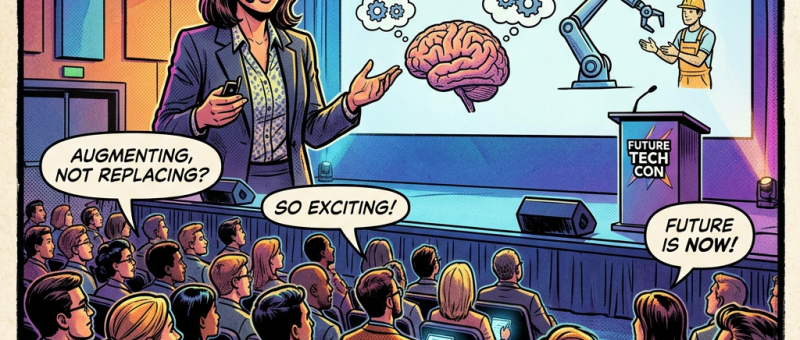
Presenter discussing AI augmenting workforce at conference

By Dr. Stephanie Diana Eubank 

When I wrote Remote Work Is Here to Stay: Rethinking Operations Management in the Modern Work Era, one of the topics I explored was how emerging technologies would reshape business operations. Today, artificial intelligence is becoming one of the most significant forces affecting organizations. 
 
Many companies initially approached AI as a workforce replacement strategy. However, recent evidence suggests that AI is most effective when it augments employees rather than replaces them. Several organizations that reduced staffing in favor of AI later discovered that the technology struggled with judgment, customer relationships, complex problem-solving, and decision-making. 


The real challenge is not replacing people with AI. The challenge is helping employees learn how to use AI effectively, ethically, and securely. 
 
Organizations face several risks when adopting AI, including data leakage, intellectual property exposure, inaccurate outputs, regulatory compliance issues, and overreliance on automation. Employees frequently receive access to AI tools without sufficient governance, training, or security guidance. 
 
To reduce risk, organizations should establish formal AI policies, provide ongoing AI literacy training, protect sensitive information, maintain human oversight for critical decisions, and focus on augmentation instead of replacement. 
 
AI can improve productivity, accelerate research, automate repetitive tasks, and support decision-making. However, the most successful organizations will be those that combine human expertise with artificial intelligence rather than viewing the technology as a replacement for people. 
 
This theme is discussed throughout my book, Remote Work Is Here to Stay: Rethinking Operations Management in the Modern Work Era. The future belongs to organizations that successfully integrate people, processes, and technology into cohesive operational systems. 
 
Available on Amazon: https://a.co/d/0iVtORjO 
 

APA 7 References 

Autio, C., et al. (2024). Artificial Intelligence Risk Management Framework: Generative Artificial Intelligence Profile. NIST. 

Gallup. (2023). 72% of top CHROs see AI replacing jobs and workers are not ready. 

MIT Sloan School of Management. (2025). AI is more likely to complement, not replace, human workers. 

NIST. AI Risk Management Framework. 

Stanford Human-Centered AI. (2025). What workers really want from artificial intelligence. 

CNBC. (2026). Employers who laid off workers citing AI are already starting to regret it. 

Book Information  
Remote Work Is Here to Stay: Rethinking Operations Management in the Modern Work Era  
Available on Amazon: https://www.amazon.com/dp/B0H5BPJCHJ  

If you enjoy this content like and subscribe.  Additionally, if you are interested in consulting services, please feel free to reach out to me through my social media channels.  Remember remote is here to stay.   

YouTube: https://www.youtube.com/@Wickedbofthewest   

Website: wickedbofthewestremoteconsulting.com   

Facebook: https://www.facebook.com/WickedBoftheWestBusinessConsulting   

Instagram: https://www.instagram.com/wickedbofthewestconsulting/   

Blog: drstephaniebeardbaremoteresearch.org   

LinkedIn: https://www.linkedin.com/in/stephanie-diana-eubank-dba/   

TikTok: https://www.tiktok.com/@stephanie.eubank6   

New Website: wickedbofthewestconsulting.com   

Email: Drstephaniedeubank@wickedbofthewestconsulting.com or stephaniedeubank@gmail.com   

TikTok: @stephaniedianaeubank   

New Website: wickedbofthewestconsulting.com  

Also, be sure to check out my first textbook on Operations Management. The book is titled “Remote Work Is Here to Stay: Rethinking Operations Management in the Modern Work Era.” You can purchase the textbook on Amazon at the link below.   
The Rise of Quiet Cutting: Impact on Employee Morale

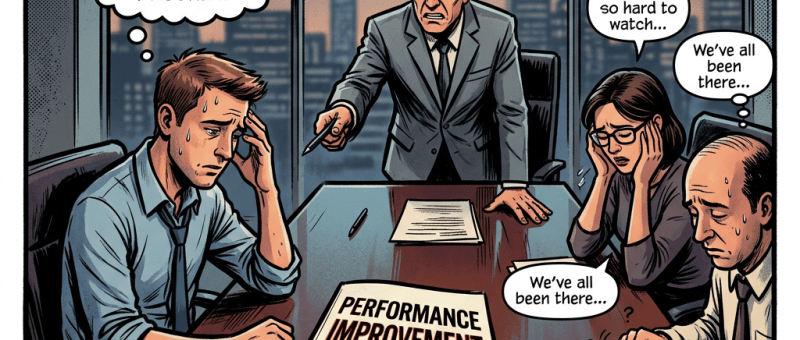
Corporate meeting about performance improvement plan tension

By: Stephanie Diana Eubank DBA 

For decades, Performance Improvement Plans (PIPs) were intended to help struggling employees improve performance and succeed in their roles. Increasingly, however, many employees, including long-term high performers, report finding themselves unexpectedly placed on PIPs despite previously positive performance reviews. 
 
Organizations facing economic uncertainty, shareholder pressure, restructuring, and return-to-office mandates may seek ways to reduce labor costs without formal layoffs. This practice is often referred to as quiet cutting or quiet firing. 
 
Research suggests that approximately 15% to 20% of employees placed on a PIP remain in their roles long-term, meaning most eventually leave through resignation or termination. Other workforce surveys have found survival rates closer to 41%, but even these findings suggest substantial risk once an employee is placed on a PIP. 


Employees frequently report experiencing unclear expectations, shifting responsibilities, inconsistent feedback, and moving goalposts. In many cases, workers describe receiving positive feedback for months before suddenly being told they are not meeting evolving expectations. 
 
The rise of quiet cutting has raised concerns among employees and workplace researchers. Some organizations have been accused of using reassignment, increased performance pressure, return-to-office requirements, and aggressive performance management as alternatives to layoffs. 
 
Research indicates that nearly 24% of surveyed employers acknowledged practicing some form of quiet cutting. Studies also found that approximately 40% of employees subjected to these practices eventually leave their organizations, while many others actively seek new opportunities. 
 
A key issue underlying many PIP experiences is a lack of transparency. Employees often report limited communication regarding changing job responsibilities, altered performance metrics, and shifting organizational priorities. When performance standards are unclear, employee trust can deteriorate quickly. 
 
Performance Improvement Plans can provide value when used as developmental tools. However, when organizations use them as a workforce reduction strategy without openly communicating business realities, they risk damaging morale, retention, engagement, and organizational culture. 
 
The future of effective leadership depends on transparency, trust, clear expectations, and honest conversations. Employees perform best when they understand how success is measured and when organizations communicate organizational challenges openly. 
 

APA 7 References 

Forbes. (2023). The quiet cutting trend is a controversial leadership strategy, new study shows. 

HT Group. (2024). Can you survive a performance improvement plan (PIP) at work? 

Innovative Human Capital. (2024). Quiet cutting is just as bad as loud layoffs. 

WorkLife. (2024). Are you being quietly cut with a performance improvement plan? 

The Economic Times. (2026). Employee moved from a 30-day PIP to just 6 days after a three-week vacation. 

Book Information  
Remote Work Is Here to Stay: Rethinking Operations Management in the Modern Work Era  
Available on Amazon: https://www.amazon.com/dp/B0H5BPJCHJ  

If you enjoy this content like and subscribe.  Additionally, if you are interested in consulting services, please feel free to reach out to me through my social media channels.  Remember remote is here to stay.   

YouTube: https://www.youtube.com/@Wickedbofthewest   

Website: wickedbofthewestremoteconsulting.com   

Facebook: https://www.facebook.com/WickedBoftheWestBusinessConsulting   

Instagram: https://www.instagram.com/wickedbofthewestconsulting/   

Blog: drstephaniebeardbaremoteresearch.org   

LinkedIn: https://www.linkedin.com/in/stephanie-diana-eubank-dba/   

TikTok: https://www.tiktok.com/@stephanie.eubank6   

New Website: wickedbofthewestconsulting.com   

Email: Drstephaniedeubank@wickedbofthewestconsulting.com or stephaniedeubank@gmail.com   

TikTok: @stephaniedianaeubank   

New Website: wickedbofthewestconsulting.com  

Also, be sure to check out my first textbook on Operations Management. The book is titled “Remote Work Is Here to Stay: Rethinking Operations Management in the Modern Work Era.” You can purchase the textbook on Amazon at the link below.   
Driving Productivity in Remote Teams: Key Findings

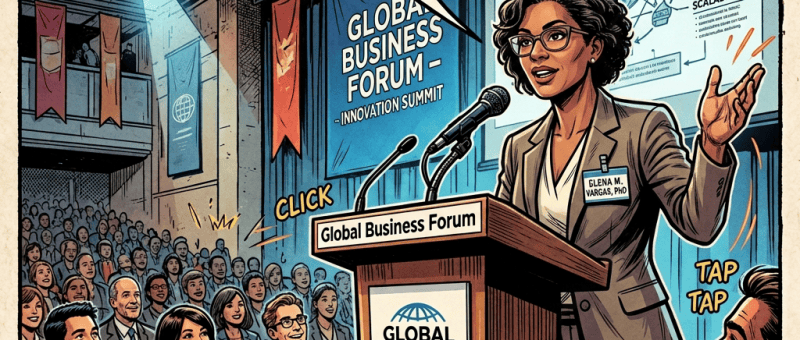
Mark J. Chen giving a presentation on AI-driven logistics and global markets at the Global Business Forum

By: Dr. Stephanie Diana Eubank DBA 

On July 31, 2026, I had the privilege of presenting my published doctoral dissertation, The Double-Edged Sword: A Study in Remote Work from the Perspectives of Leadership and Followership on the Topics of Communication, Team Design, and Productivity, at the Academy of Business Research Summer 2026 Conference. 


The presentation provided an opportunity to share findings from my doctoral research examining remote work through both leadership and followership perspectives. The study was developed to address significant gaps in the literature, including limited recent academic research and the lack of followership-focused perspectives in remote work studies. 
 
During the presentation, I discussed three primary research questions examining team design, communication, and productivity in remote work environments. Findings revealed that communication remains one of the most important drivers of productivity in remote teams. Participants consistently reported that communication quality mattered more than communication quantity, with platforms such as Microsoft Teams and Zoom serving as critical collaboration tools. 
 
Another key finding involved team design. While leaders frequently cited the importance of subject matter expertise, many participants indicated that team design was rarely intentional in remote environments. This led to discussion of Dream Team Theory and the Apollo Effect, which suggests that teams composed entirely of high-performing experts may experience communication and collaboration challenges if complementary skills and team dynamics are not considered. 
 
Perhaps the most significant finding was the clear perception gap between leadership and followership. Participants reported differing viewpoints regarding communication effectiveness, productivity evaluation, career advancement opportunities, and organizational transparency. These differences highlight the need for organizations to better align leadership practices with employee experiences. 
 
One of the strongest themes to emerge from the research was the preference for workplace flexibility. Regardless of whether participants strongly preferred remote work, both leaders and followers frequently expressed that they would not want to give up the benefits associated with remote and hybrid work arrangements. Flexibility, work-life integration, caregiving support, and autonomy were repeatedly identified as valuable aspects of the modern workplace. 
 
The presentation concluded with practical recommendations for organizations, including improving transparency around productivity measurement, developing remote leadership competencies, adopting intentional team-design practices, and maintaining flexibility as a workforce strategy. 
 
I am attaching both the conference PowerPoint presentation and the PDF version of my published dissertation to this post for anyone interested in exploring the research in greater detail. 
 
Presenting at the Academy of Business Research Conference was an honor and an opportunity to contribute to ongoing discussions regarding the future of work. The conversations that followed reinforced an important conclusion from the research: remote work is here to stay, and organizations that understand both leadership and followership perspectives will be best positioned to succeed. 
 

References 

Academy of Business Research. (2026). Summer 2026 Conference Program. 

Eubank, S. D. (2025). The Double-Edged Sword: A Study in Remote Work from the Perspectives of Leadership and Followership on the Topics of Communication, Team Design, and Productivity (Doctoral dissertation, Concordia University Chicago). 

Book Information  
Remote Work Is Here to Stay: Rethinking Operations Management in the Modern Work Era  
Available on Amazon: https://www.amazon.com/dp/B0H5BPJCHJ  

If you enjoy this content like and subscribe.  Additionally, if you are interested in consulting services, please feel free to reach out to me through my social media channels.  Remember remote is here to stay.   

YouTube: https://www.youtube.com/@Wickedbofthewest   

Website: wickedbofthewestremoteconsulting.com   

Facebook: https://www.facebook.com/WickedBoftheWestBusinessConsulting   

Instagram: https://www.instagram.com/wickedbofthewestconsulting/   

Blog: drstephaniebeardbaremoteresearch.org   

LinkedIn: https://www.linkedin.com/in/stephanie-diana-eubank-dba/   

TikTok: https://www.tiktok.com/@stephanie.eubank6   

New Website: wickedbofthewestconsulting.com   

Email: Drstephaniedeubank@wickedbofthewestconsulting.com or stephaniedeubank@gmail.com   

TikTok: @stephaniedianaeubank   

New Website: wickedbofthewestconsulting.com  

Also, be sure to check out my first textbook on Operations Management. The book is titled “Remote Work Is Here to Stay: Rethinking Operations Management in the Modern Work Era.” You can purchase the textbook on Amazon at the link below.   
The Impact of Remote Work on Women’s Careers

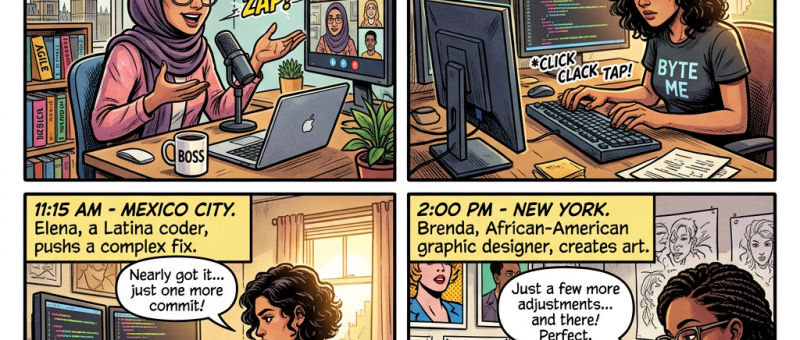
Women working remotely from London, Mexico City, and New York on computers

By: Dr. Stephanie Diana Eubank DBA 

As organizations continue to implement return-to-office (RTO) mandates, many leaders frame the debate as a question of productivity, culture, and collaboration. Yet the growing body of research suggests that the real impact of mandatory office attendance extends far beyond workspace preferences. For women, caregivers, and families, the loss of workplace flexibility can mean reduced career opportunities, increased stress, and difficult choices between professional advancement and personal responsibilities. 
 
The pandemic demonstrated that knowledge work can be performed effectively from virtually anywhere. Remote work created new opportunities for women to remain engaged in the workforce while balancing caregiving responsibilities that continue to fall disproportionately on them. Research examining workplace inequality warns that return-to-office mandates disproportionately affect women, caregivers, employees with disabilities, and other workers who depend on flexibility to participate fully in the workforce (Kalmanovich-Cohen, 2025). 
 
This concern is reinforced by findings from The Women in the Workplace report, which consistently identifies flexibility as one of the most important workplace factors influencing women’s retention, engagement, and career decisions (McKinsey & Company & LeanIn.Org, 2024). When flexibility is removed, organizations risk losing talented women at every level of leadership. 
 
My doctoral dissertation research produced findings that align closely with this broader literature. Both organizational leaders and employees in non-management roles reported that they would consider leaving their employer if forced to return to the office full time. Importantly, this sentiment was expressed not only by individuals who strongly favored remote work. Participants repeatedly emphasized that flexibility, work-life balance, and the ability to support family responsibilities were the primary drivers of their preferences. The value of remote work was not simply about avoiding a commute; it was about creating sustainable integration between professional and personal responsibilities (Eubank, unpublished dissertation). 
 
These findings challenge a common misconception that remote work appeals only to a small group of employees. Instead, flexibility emerged as a universal workforce concern. Employees recognized that remote work provides greater autonomy in managing caregiving responsibilities, appointments, school schedules, and unexpected family needs. Leaders similarly acknowledged that flexibility improved recruitment, retention, and employee satisfaction. 
 
Research on hybrid and remote work further supports these observations. In Returning to the Office and Leading Hybrid and Remote Teams, Tsipursky (2021) argues that flexible, hybrid-first models produce stronger outcomes in retention, engagement, productivity, and organizational effectiveness than traditional office-centric approaches. Rather than viewing flexibility as an employee perk, organizations should recognize it as a strategic workforce advantage. 
 
For women, the stakes are particularly high. Decades of research demonstrate that women often perform a disproportionate share of unpaid caregiving and household labor. Remote work can help offset some of these challenges by reducing commute time and increasing scheduling flexibility. As employers revoke remote work options, they may unintentionally recreate barriers that previously pushed talented women out of leadership pipelines. 
 
The future of work should not be defined by where employees sit. It should be defined by outcomes, inclusion, and organizational effectiveness. If employers genuinely want to support women, strengthen families, and build resilient workplaces, flexibility must remain a central component of workforce strategy. The evidence increasingly suggests that remote and hybrid work arrangements are not temporary accommodations. They are critical tools for fostering equity, retention, and long-term organizational success. 
 
Remote work is more than a workplace policy. It is a workforce inclusion strategy. It is a family-support strategy. And for many women, it remains one of the most significant advancements in workplace accessibility and opportunity in recent decades. 
 

References 

Eubank, S. (Unpublished doctoral dissertation). Research on employee and leadership perceptions of remote work, work-life balance, and return-to-office mandates. 

Kalmanovich-Cohen, H. (2025). Return-to-office mandates and workplace inequality: Implications for industrial-organizational psychology. Industrial and Organizational Psychology, 18, 287-293. https://doi.org/10.1017/iop.2025.10019 

McKinsey & Company, & LeanIn.Org. (2024). Women in the workplace 2024. 

Tsipursky, G. (2021). Returning to the office and leading hybrid and remote teams: A manual on benchmarking to best practices for competitive advantage. Intentional Insights. 

Book Information  
Remote Work Is Here to Stay: Rethinking Operations Management in the Modern Work Era  
Available on Amazon: https://www.amazon.com/dp/B0H5BPJCHJ  

If you enjoy this content like and subscribe.  Additionally, if you are interested in consulting services, please feel free to reach out to me through my social media channels.  Remember remote is here to stay.   

YouTube: https://www.youtube.com/@Wickedbofthewest   

Website: wickedbofthewestremoteconsulting.com   

Facebook: https://www.facebook.com/WickedBoftheWestBusinessConsulting   

Instagram: https://www.instagram.com/wickedbofthewestconsulting/   

Blog: drstephaniebeardbaremoteresearch.org   

LinkedIn: https://www.linkedin.com/in/stephanie-diana-eubank-dba/   

TikTok: https://www.tiktok.com/@stephanie.eubank6   

New Website: wickedbofthewestconsulting.com   

Email: Drstephaniedeubank@wickedbofthewestconsulting.com or stephaniedeubank@gmail.com   

TikTok: @stephaniedianaeubank   

New Website: wickedbofthewestconsulting.com  

Also, be sure to check out my first textbook on Operations Management. The book is titled “Remote Work Is Here to Stay: Rethinking Operations Management in the Modern Work Era.” You can purchase the textbook on Amazon at the link below.   

AI Layoffs Reversed: The Human Factor in Workforce Strategy

Employees returning to office shaking hands under a banner about rehiring former employees and AI collaboration

By: Dr. Stephanie Diana Eubank DBA

For the past several years, organizations across industries have been captivated by promises that artificial intelligence would dramatically reduce labor costs and replace large portions of the workforce. Executives announced layoffs, hiring freezes, and workforce restructurings built on the expectation that AI systems could perform work once handled by experienced employees. However, the reality emerging in 2026 is far more complex. A growing number of organizations are quietly reversing those decisions, rehiring employees, and acknowledging that human expertise remains indispensable.

Recent reporting by Bruce Crumley (2026) highlights a significant shift in executive thinking. According to Forrester research cited in the article, 55% of business leaders regret technology driven layoffs, and analysts predict that many AI related workforce reductions will ultimately be reversed. Companies such as Ford and IBM have begun restoring positions after discovering that AI systems often require extensive human oversight, subject matter expertise, and institutional knowledge to deliver acceptable business outcomes.

The challenges encountered by organizations attempting to replace workers with AI reveal a critical misunderstanding about the purpose of technology in business. AI can accelerate processes, automate routine tasks, and enhance productivity. However, technology is most effective when it augments human talent rather than replaces it. Ford’s experience demonstrates this reality. After relying heavily on AI driven processes, the company recognized the value of experienced engineers whose knowledge had been undervalued. Rehiring and expanding technical teams became necessary to improve product quality and performance.

IBM reached a similar conclusion. Leaders recognized that eliminating too many entry level positions created a long term talent pipeline problem. Businesses require new professionals who can learn, develop expertise, and become future leaders. When organizations remove the human development pathway, they jeopardize their own sustainability. AI may perform specific tasks today, but it cannot replace the leadership development, mentorship, judgment, creativity, and organizational culture that people create over time.

Harvard Business Review further argues that many workforce reductions were driven not by proven AI performance but by expectations about future AI capabilities. This distinction is important. Many companies made decisions based on projected efficiencies rather than demonstrated results. As implementation challenges emerged, leaders discovered that predictions about AI replacing workers often exceeded reality. Human beings continued to provide value in decision making, customer service, quality assurance, innovation, relationship building, and organizational learning.

The reversal currently occurring across multiple industries offers an important lesson for business leaders. For decades, successful companies invested heavily in people through training, mentorship, career development, and organizational culture. These traditional business practices were not outdated. They represented recognition that employees are the most valuable asset any company possesses. Financial capital, equipment, and technology all contribute to success, but people transform those resources into meaningful outcomes.

Organizations that embrace a people first philosophy are often more resilient during periods of disruption. Employees provide context, ethical judgment, empathy, adaptability, and creativity. They understand customers, identify emerging opportunities, and solve problems that technology alone cannot address. While AI can support these activities, it cannot fully replicate the human qualities that drive long term organizational success.

The emerging hiring reversals should not be viewed as evidence that AI has failed. Rather, they demonstrate that technology works best when paired with skilled, engaged employees. The future of business is unlikely to be a choice between people and artificial intelligence. Instead, it will belong to organizations that effectively combine human expertise with technological capability.

As businesses rethink their workforce strategies, many are rediscovering an enduring truth: people are not merely a cost center to be minimized. They are the source of innovation, culture, trust, and competitive advantage. The current AI backpedal serves as a reminder that sustainable business success begins and ends with valuing human beings. Companies that return to this tradition will be better positioned to thrive in an increasingly technological world.

References

Crumley, B. (2026, July 28). 55 percent of leaders regret AI layoffs and a major hiring reversal has begun. Inc. https://www.inc.com/bruce-crumley/55-percent-of-leaders-regret-ai-layoffs-and-a-major-hiring-reversal-has-begun/91380901

Harvard Business Review. (2026). Companies are laying off workers because of AI’s potential, not its performance. https://hbr.org/2026/01/companies-are-laying-off-workers-because-of-ais-potential-not-its-performance

CNBC. (2026, July 1). Employers who laid off workers for AI are reversing their decisions. https://www.cnbc.com/2026/07/01/employers-who-laid-off-workers-for-ai-are-reversing-their-decisions.html

Google Share article provided by user. (2026). Retrieved from https://share.google/vrUrLnFnBA3F8HdtK

 
Book Information 
Remote Work Is Here to Stay: Rethinking Operations Management in the Modern Work Era 
Available on Amazon: https://www.amazon.com/dp/B0H5BPJCHJ 

If you enjoy this content like and subscribe.  Additionally, if you are interested in consulting services, please feel free to reach out to me through my social media channels.  Remember remote is here to stay.  

YouTube: https://www.youtube.com/@Wickedbofthewest  

Website: wickedbofthewestremoteconsulting.com  

Facebook: https://www.facebook.com/WickedBoftheWestBusinessConsulting  

Instagram: https://www.instagram.com/wickedbofthewestconsulting/  

Blog: drstephaniebeardbaremoteresearch.org  

LinkedIn: https://www.linkedin.com/in/stephanie-diana-eubank-dba/  

TikTok: https://www.tiktok.com/@stephanie.eubank6  

New Website: wickedbofthewestconsulting.com  

Email: Drstephaniedeubank@wickedbofthewestconsulting.com or stephaniedeubank@gmail.com  

TikTok: @stephaniedianaeubank  

New Website: wickedbofthewestconsulting.com 

Also, be sure to check out my first textbook on Operations Management. The book is titled “Remote Work Is Here to Stay: Rethinking Operations Management in the Modern Work Era.” You can purchase the textbook on Amazon at the link below.  
Transforming Microsoft Teams: Collaboration vs. Surveillance

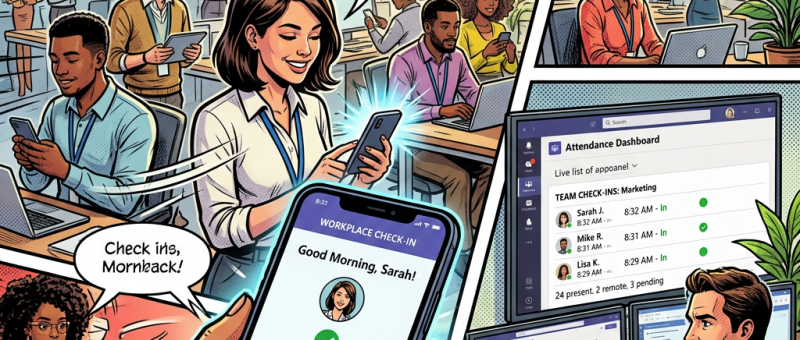
Employees checking in digitally and manager monitoring attendance dashboard

By: Dr. Stephanie Diana Eubank DBA

For years, I have argued that Microsoft Teams was designed as a collaboration and communication platform, not as a surveillance tool. Yet organizations continue trying to transform communication software into a form of digital bossware. The latest example is Microsoft Places Workplace Check-In, a feature that can automatically update work location information through Teams when employees connect to approved office networks or peripherals. 

To be fair, Microsoft specifically states that Workplace Check-In is not a tracking tool and is intended to facilitate collaboration rather than compliance or employee oversight. The feature was developed to help coworkers understand where colleagues are working and to simplify location updates. Nevertheless, some organizations may view the feature as an opportunity to monitor attendance and employee presence rather than improve collaboration. 

The problem with using Teams as a bossware is that it was never designed for accurate productivity measurement. Teams’ presence indicators frequently fail to reflect actual work activity. For example, employees using Teams primarily on mobile devices may appear as away or unavailable to coworkers using desktop clients, even when they are actively working. Presence indicators are communication signals, not productivity metrics. 

Another issue is the behavioral response created by excessive monitoring. Employees who believe management is watching their status indicators may spend valuable time returning to the Teams application simply to keep the presence icon green. Instead of focusing on meaningful work, problem-solving, customer service, or innovation, workers can become distracted by maintaining the appearance of activity. Productivity becomes performative rather than outcome-based. 

Organizations should also remember that employee monitoring technologies have resulted in legal disputes. Several employers have faced challenges over surveillance practices, privacy concerns, and disciplinary actions based on questionable monitoring data. When software designed for communication becomes evidence in employment decisions, organizations can expose themselves to significant legal and reputational risk. 

The existence of an entire market of mouse jigglers and similar devices demonstrates another weakness in digital surveillance strategies. These inexpensive products are widely available through online retailers and are specifically marketed to prevent systems from showing idle status. When workers can easily manipulate monitoring signals, organizations gain little meaningful insight while potentially damaging trust and morale. 

As discussed in my book, Remote Work Is Here to Stay: Rethinking Operations Management in the Modern Work Era, organizations achieve better outcomes when they focus on both qualitative and quantitative productivity measures. Quantitative metrics can include deadlines met, projects completed, customer response times, or operational results. Qualitative measures can evaluate innovation, teamwork, customer satisfaction, leadership, communication effectiveness, and overall value creation. 

Leaders must ask an important question: Are we measuring activity or accomplishment? A green Teams status icon does not tell us whether an employee solved a difficult problem, retained a customer, developed a new process, or improved organizational performance. Meaningful productivity measurement requires context, judgment, and an understanding of outcomes. 

Microsoft Teams remains one of the most powerful communication and collaboration platforms available. Its value comes from helping people connect, share information, and work together. Using it as a low-cost substitute for effective management undermines its intended purpose. Rather than turning collaboration software into bossware, organizations should invest in clear expectations, strong leadership, trust, and balanced productivity measurement systems that recognize both quality and quantity of work. 

References 

Microsoft. (2026). Configure workplace check-in. Microsoft Learn. https://learn.microsoft.com/en-us/microsoft-365/places/configure-auto-detect-work-location 

Eubank, S. (2025). Remote Work Is Here to Stay: Rethinking Operations Management in the Modern Work Era. Amazon KDP. https://www.amazon.com/dp/B0H5BPJCHJ 

As I prepare for the Academy of Business Research Fall Conference, I look forward to sharing my findings, learning from fellow scholars, and continuing important conversations about the future of leadership, followership, communication, and productivity in remote work environments. I hope to see many of you at the conference, and I invite you to check out my new book on Amazon as we continue exploring the future of work together. 

Conference Information 
Academy of Business Research Fall Conference Online 
July 30–31, 2026 
Registration: https://www.aobronline.com/ 

 
Book Information 
Remote Work Is Here to Stay: Rethinking Operations Management in the Modern Work Era 
Available on Amazon: https://www.amazon.com/dp/B0H5BPJCHJ 

If you enjoy this content like and subscribe.  Additionally, if you are interested in consulting services, please feel free to reach out to me through my social media channels.  Remember remote is here to stay.  

YouTube: https://www.youtube.com/@Wickedbofthewest  

Website: wickedbofthewestremoteconsulting.com  

Facebook: https://www.facebook.com/WickedBoftheWestBusinessConsulting  

Instagram: https://www.instagram.com/wickedbofthewestconsulting/  

Blog: drstephaniebeardbaremoteresearch.org  

LinkedIn: https://www.linkedin.com/in/stephanie-diana-eubank-dba/  

TikTok: https://www.tiktok.com/@stephanie.eubank6  

New Website: wickedbofthewestconsulting.com  

Email: Drstephaniedeubank@wickedbofthewestconsulting.com or stephaniedeubank@gmail.com  

TikTok: @stephaniedianaeubank  

New Website: wickedbofthewestconsulting.com 

Also, be sure to check out my first textbook on Operations Management. The book is titled “Remote Work Is Here to Stay: Rethinking Operations Management in the Modern Work Era.” You can purchase the textbook on Amazon at the link below.  
Exploring the Apollo Effect: A Landmark Research Achievement

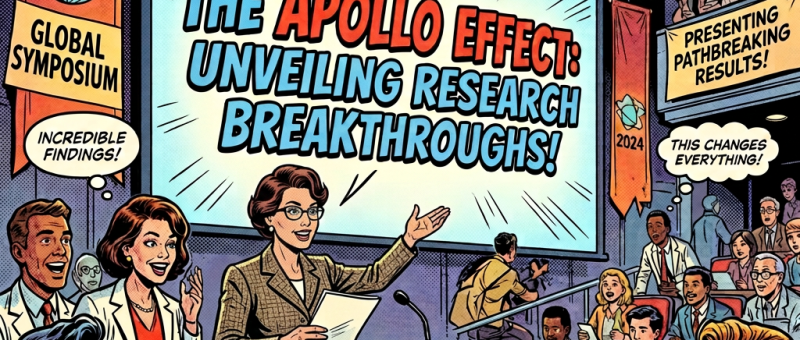
Scientist presenting Apollo Effect research breakthroughs to excited audience at academic conference

By: Dr. Stephanie Diana Eubank DBA

I am thrilled to share an exciting professional milestone in my academic journey. My postdoctoral research on the Apollo Effect has successfully completed peer review and has been selected for presentation and publication at the Multidisciplinary Conference on Business, Economics, Strategy, and Technology (BEST Virtual 2026), scheduled for October 2026. 
 
Having research selected through a peer-review process is both validating and humbling. It represents recognition from fellow scholars who believe this work contributes meaningful insight to ongoing conversations surrounding business, organizational behavior, leadership, innovation, and the evolving workplace. The opportunity to present and publish at BEST Virtual 2026 provides an international platform to discuss the implications of the Apollo Effect and engage with researchers and practitioners from multiple disciplines. 
 
This achievement is especially meaningful because it follows another significant accomplishment. On July 30, 2026, I will be presenting my dissertation research at the Academy of Business Research Online Conference 2026. Presenting at ABR allows me to continue sharing findings that challenge traditional assumptions about operations management, workplace structures, and organizational effectiveness. 
 
Adding to this exciting season of professional growth is the publication of my book, Remote Work Is Here to Stay: Rethinking Operations Management in the Modern Work Era. The book explores how remote and hybrid work arrangements continue to reshape organizations, leadership practices, employee experiences, and operational strategies. Together, the dissertation, the Apollo Effect research, and the book represent a consistent commitment to exploring how modern organizations can adapt, innovate, and thrive in changing environments. 
 
The selection of the Apollo Effect research underscores the importance of interdisciplinary scholarship. As organizations face increasingly complex challenges, solutions often emerge at the intersection of business, technology, strategy, leadership, and human behavior. I am honored to contribute to these conversations and look forward to exchanging ideas with fellow researchers and practitioners during the conference. 
 
For those interested in participating in BEST Virtual 2026, additional information is available at https://www.bestconference.net/. 
 
For information about the Academy of Business Research Online Conference 2026, visit https://www.aobronline.com/ or contact info@academyofbusinessresearch.com. 
 
My book, Remote Work Is Here to Stay: Rethinking Operations Management in the Modern Work Era, is available through Amazon at https://www.amazon.com/dp/B0H5BPJCHJ. 
 
Thank you to everyone who has supported this journey. These opportunities reinforce the value of curiosity, persistence, and the pursuit of research that creates meaningful impact within organizations and communities. 

If you enjoy this content like and subscribe.  Additionally, if you are interested in consulting services, please feel free to reach out to me through my social media channels.  Remember remote is here to stay.  

YouTube: https://www.youtube.com/@Wickedbofthewest  

Website: wickedbofthewestremoteconsulting.com  

Facebook: https://www.facebook.com/WickedBoftheWestBusinessConsulting  

Instagram: https://www.instagram.com/wickedbofthewestconsulting/  

Blog: drstephaniebeardbaremoteresearch.org  

LinkedIn: https://www.linkedin.com/in/stephanie-diana-eubank-dba/  

TikTok: https://www.tiktok.com/@stephanie.eubank6  

New Website: wickedbofthewestconsulting.com  

Email: Drstephaniedeubank@wickedbofthewestconsulting.com or stephaniedeubank@gmail.com  

TikTok: @stephaniedianaeubank  

New Website: wickedbofthewestconsulting.com 

Also, be sure to check out my first textbook on Operations Management. The book is titled “Remote Work Is Here to Stay: Rethinking Operations Management in the Modern Work Era.” You can purchase the textbook on Amazon at the link below.  
Why Bossware Fails: The Misconception of Visibility in Remote Work

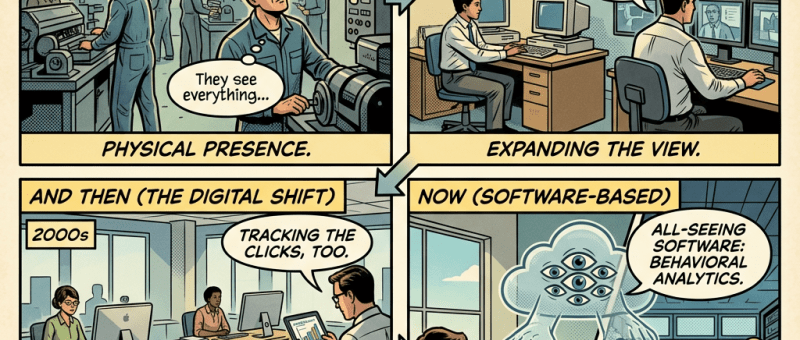
Comic panels depicting workplace surveillance evolution from 1950s factory monitoring to modern software analytics.

By: Dr. Stephanie Diana Eubank DBA

The current debate surrounding workplace surveillance often treats ‘bossware’ as a new phenomenon created by remote work. In reality, organizations have monitored employees for decades. Long before software tracked keystrokes, screenshots, mouse movements, and online activity, employers relied on physical observation systems such as cameras on manufacturing floors, warehouse monitoring systems, security checkpoints, and direct supervisory oversight. While the tools have evolved, the underlying goal remains largely unchanged: management seeks visibility into employee activity. 

Today’s bossware has expanded beyond cameras and supervisors. Many organizations deploy activity-monitoring software that measures keyboard usage, application activity, idle time, login durations, and other quantitative metrics. These technologies are often marketed as productivity solutions. However, their primary focus is activity measurement rather than outcome measurement. The assumption that more visible activity automatically translates into better performance can create a false sense of control while overlooking the true drivers of organizational effectiveness. 

Research from the U.S. Bureau of Labor Statistics (BLS) has identified positive relationships between remote work and productivity growth across multiple industries. The BLS found that industries experiencing greater increases in remote work also demonstrated positive associations with total factor productivity growth. These findings challenge the assumption that physical visibility is required for performance and suggest that well-designed remote work arrangements can contribute positively to productivity outcomes. 

As discussed in Stephanie Eubank’s book, bosses often focus on management style while overlooking work modality. Micromanagers exist in both traditional offices and remote environments. Effective leadership can reduce turnover, increase engagement, and improve retention, but management style alone does not determine productivity. Organizations that concentrate exclusively on oversight mechanisms frequently miss opportunities to redesign work in ways that maximize employee effectiveness. 

A practical distinction exists between retention and productivity. Management type can help stop the revolving door of constant hiring and replacement by creating stable, supportive workplaces. Work modality, however, can directly influence output by reducing interruptions, eliminating unnecessary commuting time, and allowing employees to structure work around periods of peak concentration. Whether a manager is highly involved or hands-off, employees still require conditions that support meaningful work. 

Proponents of surveillance software often emphasize quantitative measurements such as keystrokes, active minutes, time online, or application usage. While these metrics may provide useful operational data, they do not capture qualitative productivity. An employee may spend fewer hours typing yet produce innovative solutions, improve customer relationships, streamline processes, or generate higher-quality deliverables. Likewise, an employee who appears constantly active on monitoring dashboards may not necessarily create meaningful value. 

The future of performance management requires a more balanced framework. Organizations should evaluate both quantitative and qualitative indicators. Quantitative measures can assess volume, timeliness, and operational efficiency. Qualitative measures can evaluate innovation, problem-solving, collaboration, customer satisfaction, quality of work, and strategic impact. Together, these measures provide a more complete understanding of employee contributions. 

Bossware is not a revolutionary management tool—it is simply the latest version of a decades-old surveillance tradition. From factory cameras to keyboard trackers, organizations have continually searched for ways to observe workers. Yet observation alone has never guaranteed productivity. The evidence increasingly suggests that organizations achieve better outcomes when they focus on trust, results, effective leadership, and work modalities that support sustained performance. Rather than asking how closely employees can be monitored, leaders should ask whether they are measuring the outcomes that actually matter. 

References 

Pabilonia, S. W., & Redmond, J. J. (2024). The rise in remote work since the pandemic and its impact on productivity. Beyond the Numbers, U.S. Bureau of Labor Statistics. https://www.bls.gov/opub/btn/volume-13/remote-work-productivity.htm 

U.S. Bureau of Labor Statistics. (2025). Productivity and remote work. https://www.bls.gov/productivity/articles-and-research/remote-work/productivity-and-remote-work.htm 

Eubank, S. (2025). [Referenced book by the author]. Amazon Kindle Direct Publishing. https://www.amazon.com/dp/B0H5BPJCHJ 

If you enjoy this content like and subscribe.  Additionally, if you are interested in consulting services, please feel free to reach out to me through my social media channels.  Remember remote is here to stay.  

YouTube: https://www.youtube.com/@Wickedbofthewest  

Website: wickedbofthewestremoteconsulting.com  

Facebook: https://www.facebook.com/WickedBoftheWestBusinessConsulting  

Instagram: https://www.instagram.com/wickedbofthewestconsulting/  

Blog: drstephaniebeardbaremoteresearch.org  

LinkedIn: https://www.linkedin.com/in/stephanie-diana-eubank-dba/  

TikTok: https://www.tiktok.com/@stephanie.eubank6  

New Website: wickedbofthewestconsulting.com  

Email: Drstephaniedeubank@wickedbofthewestconsulting.com or stephaniedeubank@gmail.com  

TikTok: @stephaniedianaeubank  

New Website: wickedbofthewestconsulting.com 

Also, be sure to check out my first textbook on Operations Management. The book is titled “Remote Work Is Here to Stay: Rethinking Operations Management in the Modern Work Era.” You can purchase the textbook on Amazon at the link below.  

Rethink Operations Management for Remote Success

Be sure to check out my first textbook on Operations Management. The book is titled "Remote Work Is Here to Stay: Rethinking Operations Management in the Modern Work Era." You can purchase the textbook on Amazon at the link below. https://www.amazon.com/gp/aw/d/B0H5BPJCHJ/ref=tmm_pap_swatch_0

By: Dr. Stephanie Diana Eubank DBA

I am excited to announce that my new book, ‘Remote Work Is Here to Stay: Rethinking Operations Management in the Modern Work Era,’ is now available on Amazon. This book explores how organizations can successfully adapt to remote and hybrid work while maintaining productivity, engagement, and operational excellence. 

Whether you are a business leader, manager, HR professional, researcher, educator, or student, this book provides practical insights into leadership, productivity measurement, communication, organizational design, and the future of work. The workplace has changed dramatically over the past several years, and organizations need new strategies to remain competitive in an increasingly flexible work environment. 

One of the key themes throughout the book is that productivity should be measured using both qualitative and quantitative metrics. Organizations that focus solely on activity tracking often miss the larger picture. Success comes from measuring outcomes, innovation, collaboration, customer satisfaction, and business impact—not simply monitoring employee activity. 

If you are interested in learning more about the future of remote work and modern operations management, I invite you to pick up a copy today. Better yet, you may be able to save money by ordering through my Amazon Associates link: https://amzn.to/3QGf8WS. 

Thank you for your continued support of my research, writing, and consulting work. I hope this book provides valuable insights and practical tools that you can apply within your own organization.

Conference Information 
Academy of Business Research Fall Conference Online 
July 30–31, 2026 
Registration: https://www.aobronline.com/ 

 
Book Information 
Remote Work Is Here to Stay: Rethinking Operations Management in the Modern Work Era 
Available on Amazon: https://www.amazon.com/dp/B0H5BPJCHJ 

If you enjoy this content like and subscribe.  Additionally, if you are interested in consulting services, please feel free to reach out to me through my social media channels.  Remember remote is here to stay.  

YouTube: https://www.youtube.com/@Wickedbofthewest  

Website: wickedbofthewestremoteconsulting.com  

Facebook: https://www.facebook.com/WickedBoftheWestBusinessConsulting  

Instagram: https://www.instagram.com/wickedbofthewestconsulting/  

Blog: drstephaniebeardbaremoteresearch.org  

LinkedIn: https://www.linkedin.com/in/stephanie-diana-eubank-dba/  

TikTok: https://www.tiktok.com/@stephanie.eubank6  

New Website: wickedbofthewestconsulting.com  

Email: Drstephaniedeubank@wickedbofthewestconsulting.com or stephaniedeubank@gmail.com  

TikTok: @stephaniedianaeubank  

New Website: wickedbofthewestconsulting.com 

Also, be sure to check out my first textbook on Operations Management. The book is titled “Remote Work Is Here to Stay: Rethinking Operations Management in the Modern Work Era.” You can purchase the textbook on Amazon at the link below.  
Realistic Productivity Goals for Effective Leadership

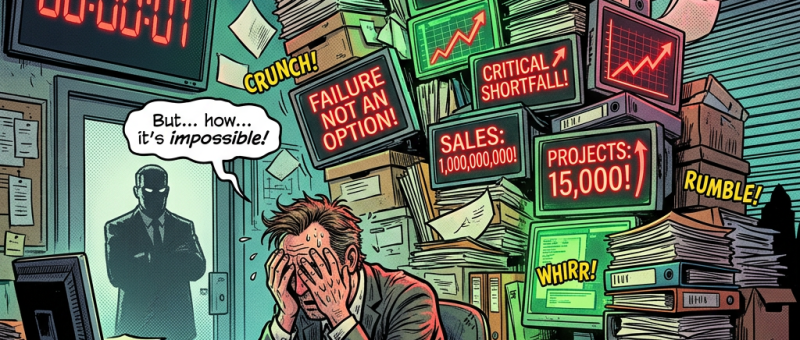
Stressed office worker overwhelmed by stacks of paperwork and urgent quota screens

By: Dr. Stephanie Diana Eubank, DBA 

The first chapter of my book introduces a critical business concept: productivity is not guesswork; it is a measurable, data-driven construct rooted in established management science. Productivity, in its simplest form, is the ratio of outputs to inputs, and it serves as a cornerstone for operational efficiency and workforce planning. Yet, in practice, many organizations fail to apply this concept correctly, leading to unrealistic expectations, employee burnout, and high turnover. 

From a standard business perspective, productivity and quotas are typically calculated using quantitative data, historical performance trends, and industry benchmarks. Operations management literature emphasizes that effective productivity metrics must be grounded in time studies, workload analysis, and empirical evidence (Heizer, Render, & Munson, 2017). Similarly, quotas should reflect achievable performance levels based on realistic capacity, not aspirational or arbitrary targets. 

However, in my consulting practice, I have encountered leaders who abandon these principles entirely. Instead of aligning quotas with data, they impose astronomical expectations that exceed industry norms. The result is predictable: a revolving door of hires, employee disengagement, and long-term damage to organizational culture. 

One particularly telling example stands out. When I asked a leader how quotas and productivity standards were determined for her team, she responded, “People never learn their limits until you set unrealistic goals.” While this statement may sound motivational on the surface, it reflects a fundamental misunderstanding of organizational behavior and performance management. 

Research in organizational psychology demonstrates that excessively difficult or unrealistic goals can actually decrease performance, particularly when employees perceive them as unattainable (Locke & Latham, 2002). Instead of motivating employees, such goals often lead to stress, disengagement, and eventual turnover. Goal-setting theory clearly indicates that goals should be challenging yet attainable, supported by feedback and resources. 

Unrealistic quota systems also create structural harm. They distort performance evaluation, encourage counterproductive work behaviors, and erode trust between leadership and staff. Over time, organizations that rely on inflated expectations rather than data-driven planning struggle to retain talent and maintain operational consistency. 

Effective leaders understand that productivity systems must be designed with both precision and empathy. This includes using quantitative data to establish baselines, validating assumptions against industry standards, and continuously refining metrics based on actual performance outcomes. More importantly, it requires recognizing that employees are not variables to be pushed beyond limits, but contributors whose sustainability directly impacts organizational success. 

This is why I included this analysis in the first chapter of my book. Misaligned productivity expectations are not just a technical issue; they are a leadership issue. Organizations that prioritize clarity, fairness, and data-driven decision-making are far more likely to achieve long-term success than those driven by unrealistic demands. 

About the Book 

My book explores the intersection of productivity, leadership, and organizational design, focusing on practical strategies for creating sustainable and effective workplaces. It is currently available for purchase on Amazon. Readers can learn more and order their copy here: https://www.amazon.com/dp/B0H5BPJCHJ 

References (APA 7) 

Eubank, S. D. (2026). Remote Work Is Here to Stay: Rethinking Operations Management in the Modern Work Era. ISBN-13-979-8181361850

Heizer, J., Render, B., & Munson, C. (2017). Operations management (12th ed.). Pearson. 

Locke, E. A., & Latham, G. P. (2002). Building a practically useful theory of goal setting and task motivation. American Psychologist, 57(9), 705–717. 

If you enjoy this content like and subscribe.  Additionally, if you are interested in consulting services, please feel free to reach out to me through my social media channels.  Remember, remote is here to stay.  

YouTube: https://www.youtube.com/@Wickedbofthewest  

Website: wickedbofthewestremoteconsulting.com  

Facebook: https://www.facebook.com/WickedBoftheWestBusinessConsulting  

Instagram: https://www.instagram.com/wickedbofthewestconsulting/  

Blog: drstephaniebeardbaremoteresearch.org  

LinkedIn: https://www.linkedin.com/in/stephanie-diana-eubank-dba/  

TikTok: https://www.tiktok.com/@stephanie.eubank6  

New Website: wickedbofthewestconsulting.com  

Email: Drstephaniedeubank@wickedbofthewestconsulting.com or stephaniedeubank@gmail.com  

TikTok: @stephaniedianaeubank  

New Website: wickedbofthewestconsulting.com 

Also, be sure to check out my first textbook on Operations Management. The book is titled “Remote Work Is Here to Stay: Rethinking Operations Management in the Modern Work Era.” You can purchase the textbook on Amazon at the link below.